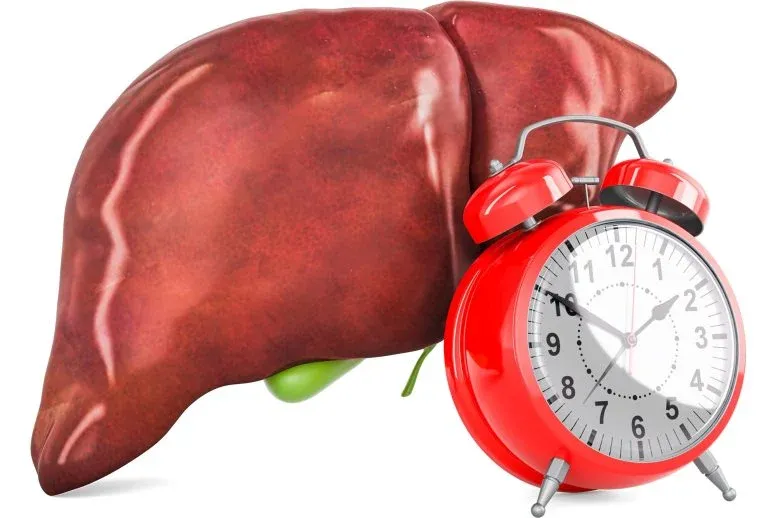
Turns out your liver isn't just toiling away in there, processing everything you throw at it. It's on a schedule. A very, very precise schedule, according to new research from UT Health San Antonio.
This isn't just about being punctual. Scientists discovered that the liver's internal clock dictates when it releases crucial signaling proteins that regulate your entire metabolism. Many of these proteins follow a daily rhythm, like tiny, biochemical commuters clocking in and out.
Think of it as the liver's way of texting other organs, like your fat tissue, at exactly the right moment. Understanding this metabolic choreography could completely re-write how we approach everything from metabolic diseases to meal timing and even when you should pop your meds.
We're a new kind of news feed.
Regular news is designed to drain you. We're a non-profit built to restore you. Every story we publish is scored for impact, progress, and hope.
Start Your News DetoxYour Liver's Punctual Party Planner
Almost every cell in your body has its own molecular clock, a kind of miniature grand central station coordinating daily functions. Metabolism is a big one. But how these cellular clocks all sync up has been a bit of a mystery.
Kevin Koronowski, an assistant professor on the team, puts it simply: the clock helps the body run efficiently. Which, if you've ever tried to function after a night of disrupted sleep or irregular eating, you know is a big deal. Those habits are linked to a higher risk of obesity, diabetes, and other metabolic disorders.
So, the researchers zeroed in on the liver, the undisputed maestro of metabolism, to see how its internal clock orchestrates the release of proteins to other organs. As PhD student Christopher Litwin noted, while we knew the liver secreted these proteins, we didn't have a detailed way to track the when.
They suspected that the time-dependent release of these proteins was crucial for coordinating metabolism across the body's tissues, from fat to muscle.
And they were right. One star player in this liver-orchestrated symphony is a protein called endostatin. It was most effective at breaking down fat when its release followed the liver's natural daily rhythm. This is a pretty big deal, suggesting that any future treatments using this protein might have wildly different effects depending on the time of day they're administered.
Now, the researchers are looking into new approaches that could lead to therapeutic uses. Koronowski is hoping to discover new drugs, maybe even something better than the current GLP-1 drugs that are making headlines. Because apparently, even your liver knows that timing is everything.