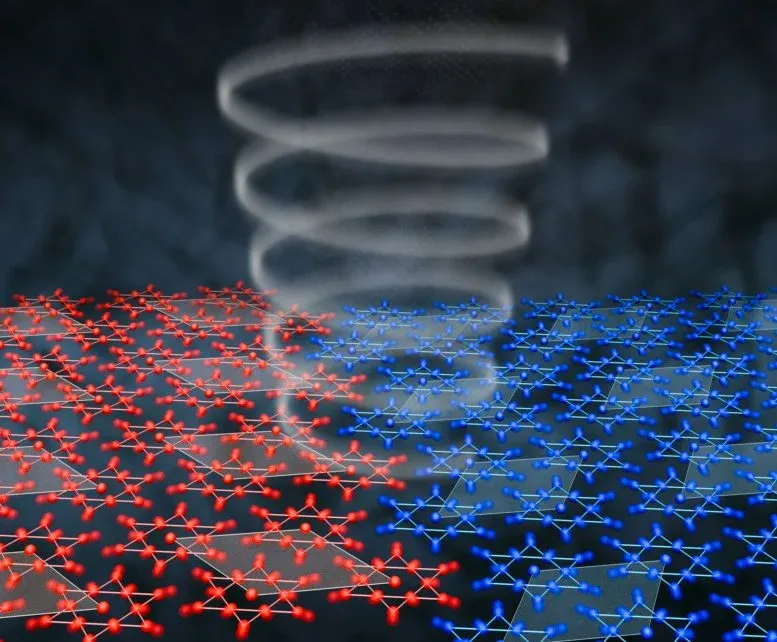
For decades, physicists thought you needed to smash really, really big atoms together to recreate the universe's first moments. Think lead nuclei, heavyweights of the atomic world. They were trying to conjure up a mini-Big Bang, a fleeting droplet of quark-gluon plasma — the primordial soup that filled the cosmos for its first millionth of a second.
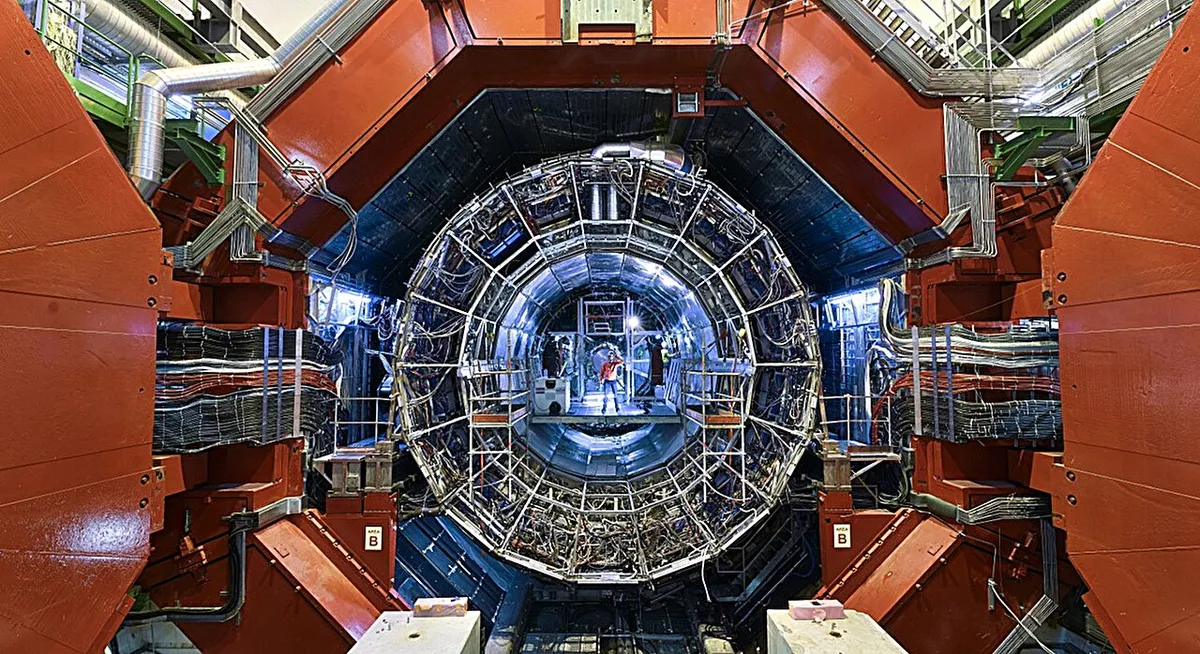
Then along came a team at CERN, led by Associate Professor You Zhou, who decided to try something a little… smaller. Like, oxygen and neon small. And lo and behold, they created the same cosmic goo. Turns out, the universe’s earliest matter isn't nearly as picky as we thought.
This isn't just a win for the underdog nuclei; it's a major step in understanding the precise conditions required to birth the universe, or at least a tiny, fleeting echo of it. The findings, from the international ALICE experiment, just landed in Physical Review Letters.
We're a new kind of news feed.
Regular news is designed to drain you. We're a non-profit built to restore you. Every story we publish is scored for impact, progress, and hope.
Start Your News DetoxThe Plasma's Shadow Knows
When these atoms collide at nearly the speed of light, they form a super-hot, super-brief blob of quark-gluon plasma. You can't see the plasma itself, because it vanishes faster than your weekend plans. But you can measure the particles it leaves behind, and those particles, it turns out, are quite the gossips.
They carry an imprint of the original atomic nucleus's shape. Smash two round oxygen nuclei together? You get a round pattern of particles. But collide neon nuclei, which are shaped more like bowling pins? You get, you guessed it, a bowling-pin-shaped particle pattern. It's like seeing an object's shadow and knowing its form, as postdoctoral researcher Emil Gorm Dahlbæk Nielsen, a co-author, charmingly put it.
This isn't just a neat parlor trick. The shape of an atomic nucleus — how its protons and neutrons are arranged — gives physicists clues about the strong force, one of nature's four fundamental forces that's still largely a mystery. Until now, scientists mostly studied nuclear structure at low energies, watching them rotate and vibrate like microscopic tops.
But by smashing them together at the highest possible energies, Zhou and his team are essentially taking a high-speed X-ray of the nuclei's shape. This could open a whole new cosmic door for studying other atomic nuclei that are currently as enigmatic as your cat's morning routine. The next step? Even lighter nuclei, like helium-4. Because apparently, the universe's biggest secrets are hiding in the smallest places. Which, if you think about it, is both impressive and slightly terrifying.