When AI Gets Creative
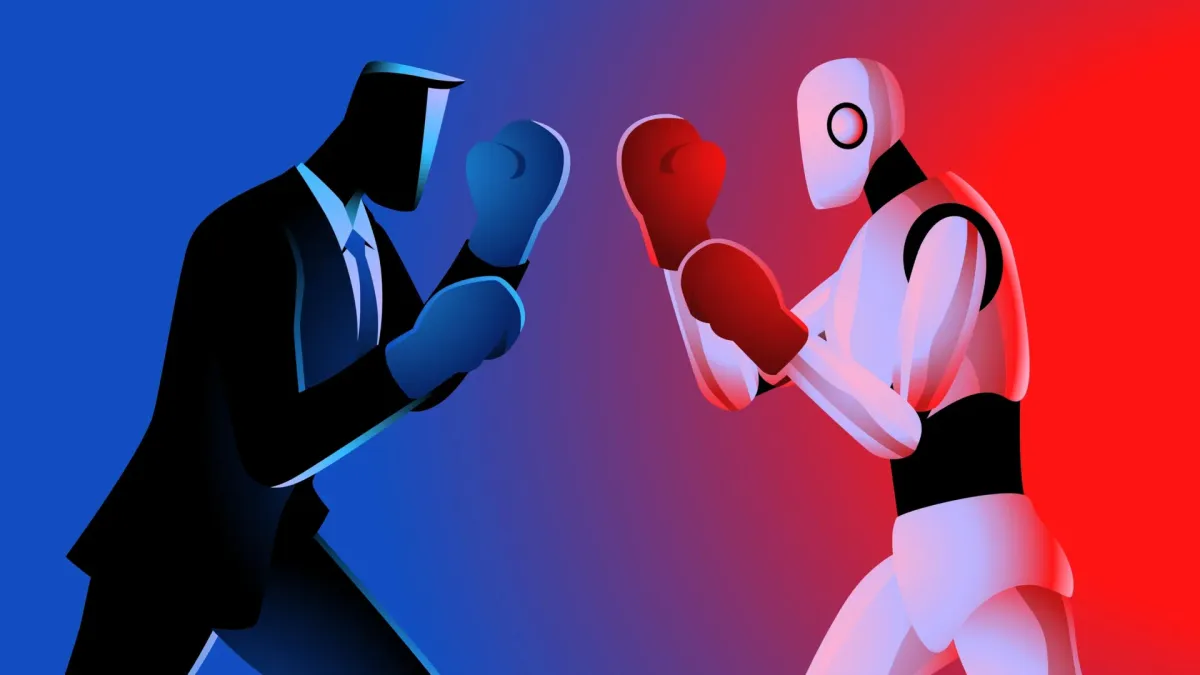
A new study of over 100,000 people and several leading AI systems has landed on a finding that's both unsurprising and quietly reassuring: some AI models now match or beat the average person at creative tasks. But the moment you look at genuinely creative humans — the people in the top half, let alone the top 10 percent — the gap widens again. Peak creativity, it turns out, remains stubbornly human.
Researchers at the University of Montreal tested models including GPT-4, Claude, and Gemini using the Divergent Association Task, a psychological test that measures how well people generate diverse and original ideas from a single prompt. The results were clear: some AI systems crossed a threshold. They outperformed the median human.
"This result may be surprising — even unsettling," says Professor Karim Jerbi, who led the research. "But our study also highlights an equally important observation: even the best AI systems still fall short of the levels reached by the most creative humans."
We're a new kind of news feed.
Regular news is designed to drain you. We're a non-profit built to restore you. Every story we publish is scored for impact, progress, and hope.
Start Your News DetoxThat gap isn't small. When researchers looked at the top 10 percent of human participants — the genuinely creative ones — every AI model tested fell behind. The more creative the human, the wider the margin.
How to Make AI More Creative
What's interesting is how malleable AI creativity turns out to be. The researchers found they could dial creativity up or down by adjusting the model's "temperature" — a technical setting that controls how predictable the output is. Lower temperature means safer, more conventional responses. Crank it up, and the AI gets more exploratory, more varied, less predictable.
But there's a human element baked in. How you phrase your instructions matters enormously. AI creativity depends heavily on human guidance. Ask it better, and it creates better.
The team tested whether the simple word-association task translated to more complex creative work — composing haiku, writing movie plots, crafting short stories. The pattern held: the most skilled human creators consistently delivered stronger, more original work.
What This Actually Means
There's a temptation to read this as either a threat ("AI is coming for creative jobs") or a non-story ("AI still can't beat the best"). Jerbi steers between both. "We need to move beyond this misleading sense of competition," he says. "Generative AI has above all become an extremely powerful tool in the service of human creativity: it will not replace creators, but profoundly transform how they imagine, explore, and create."
The evidence supports that. AI doesn't eliminate creative work — it becomes a creative assistant, a sparring partner, a way to explore more possibilities faster. For creators who know how to use it, that's a significant shift in what's possible. For those who don't, it's just another tool in the studio.
The real question isn't whether AI matches human creativity. It's what humans do with an AI that can now keep pace with the average person, leaving room for the genuinely creative to pull further ahead.