NASA-supported scientists have brought back to life an enzyme that microorganisms used 3.2 billion years ago. The achievement does more than satisfy scientific curiosity about Earth's earliest life — it hands explorers a reliable tool for hunting signs of ancient life on Mars, Venus, or worlds we haven't even discovered yet.
The enzyme is called nitrogenase, and it does something almost magical: it takes nitrogen gas from the air — something most organisms can't use — and transforms it into ammonia and other compounds that all life needs to survive. Only a specialized group of microbes, called diazotrophs, can pull off this trick. When they do, they leave a chemical fingerprint.
A Fingerprint Written in Isotopes
When nitrogen gets fixed by nitrogenase, the atoms are altered in a subtle but detectable way. The isotopic signature — the ratio of different nitrogen atoms — shifts. As these microbes died over millions of years, that altered nitrogen sank into rocks. Today, scientists can read those rocks like a history book, spotting the isotopic signature of nitrogen fixation in Earth's oldest stone layers and estimating when the enzyme first evolved.
We're a new kind of news feed.
Regular news is designed to drain you. We're a non-profit built to restore you. Every story we publish is scored for impact, progress, and hope.
Start Your News DetoxBut there was a problem. Enzymes change over time. Modern nitrogenase looks different from what it might have looked like billions of years ago. So how could scientists trust that the isotopic signatures in ancient rocks actually came from nitrogenase at all, rather than some other process?
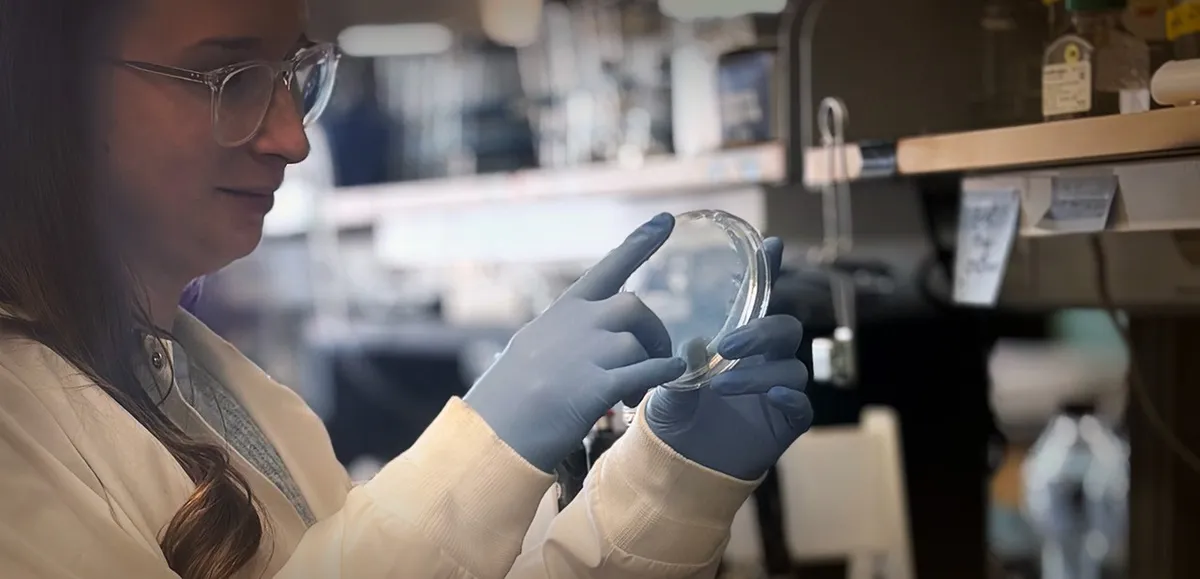
Betül Kaçar and her team solved this by working backward. Using synthetic biology, they reverse-engineered modern nitrogenase to figure out what simpler, ancestral versions might have looked like. Then they brought those ancient enzymes back into existence in the lab.
The result was striking: despite their structural differences, the resurrected ancient enzymes produced the exact same isotopic signatures as modern nitrogenase. This confirmed that the nitrogen isotope record in Earth's oldest rocks really does reflect the work of early life — not some abiotic chemical process.
Looking Outward
Now the real payoff. If nitrogen isotope signatures are a reliable marker of ancient life on Earth, they could work the same way on other worlds. A rover or human explorer on Mars, or on one of the moons of Jupiter or Saturn, could look for those same chemical fingerprints in rocks and soil. Similar signatures could point to ancient metabolisms — ways of life completely different from anything on Earth — that once thrived under alien conditions.
"If we want to recognize life beyond Earth, we can't limit ourselves to life as we know it today," Kaçar said. "Studying these systems helps us understand not just where life can exist, but what life can be."
The next generation of Mars rovers and deep space missions will carry instruments designed to read isotope ratios. This research gives them something concrete to look for.