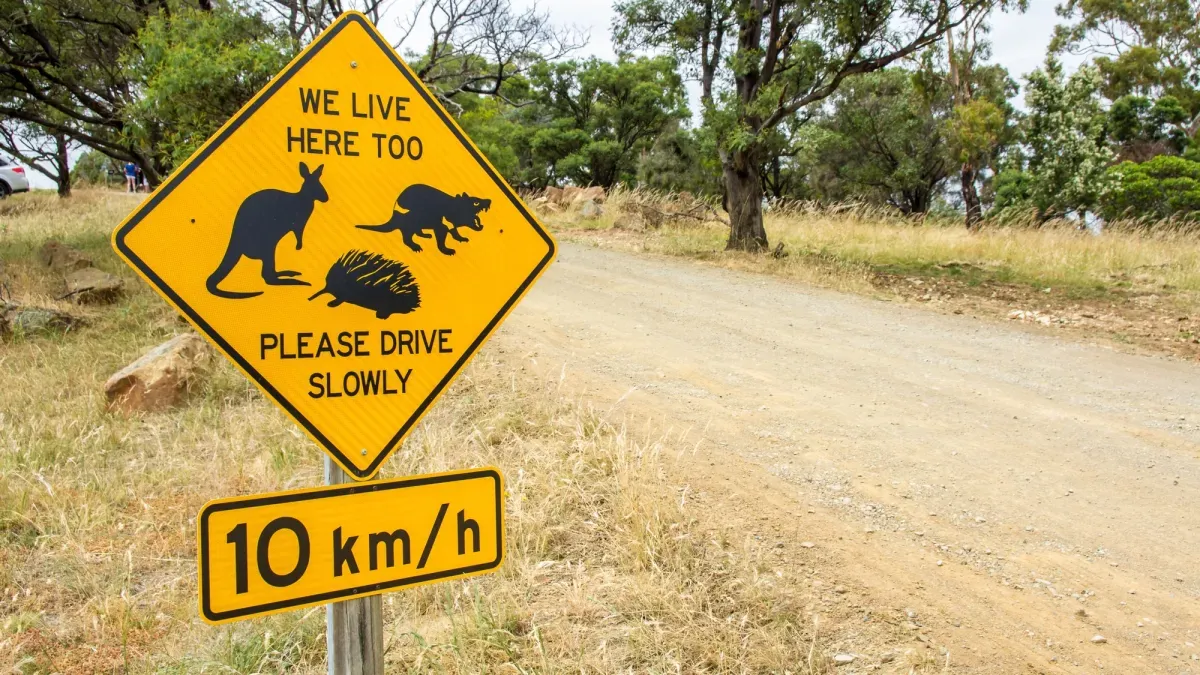
Every animal hit on a road represents a loss. But researchers have discovered that these deaths, tragic as they are, contain data that could help save species.
A new analysis of over 300 peer-reviewed studies found that roadkill has become an unexpected goldmine for conservation science. Across 67 countries, researchers have used animal carcasses to map where species live, track disease outbreaks, monitor pollution, study what animals eat, and even identify species thought to be extinct or entirely new to science.
"Because the animals are already dead, researchers can often avoid live capture and handling," explains Christa Beckmann, a biologist at RMIT who led the study. "It aligns perfectly with global animal-ethics principles that encourage replacing invasive methods wherever possible." This matters more than it might seem — capturing wild animals for study can stress them, spread disease, or disrupt ecosystems. Using roadkill sidesteps those problems entirely.
We're a new kind of news feed.
Regular news is designed to drain you. We're a non-profit built to restore you. Every story we publish is scored for impact, progress, and hope.
Start Your News DetoxMining tragedy for insight
Beckmann's team examined 312 studies across mammals, reptiles, birds, amphibians, and invertebrates — at least 650 species in total — being studied for roughly 117 different research projects. The applications are genuinely diverse. A carcass on a highway tells you that species lives in that region. A dead animal can be tested for parasites, pesticides, or pathogens. Its stomach contents reveal diet. Its presence in an area where it "shouldn't be" flags an invasive species problem.
In some cases, roadkill has been the only evidence that a species still survives in a region where it was thought to have vanished. Sometimes it's revealed a species entirely new to science.
This isn't to romanticize roadkill — Beckmann is clear that it comes with real constraints. Biosafety is a genuine concern. Not every research question can be answered by a dead animal on a highway. But her point is simpler: we're wasting an opportunity. Right now, thousands of carcasses decompose by the roadside every day, carrying information that could help us understand and protect wildlife.
"While roadkill will always be tragic, using these losses wisely could help drive scientific discovery and conservation forward, rather than letting valuable information decompose by the roadside," Beckmann says.
The research suggests we're still in the early stages of recognizing what roadkill can tell us. As climate change forces species to shift their ranges and invasive species spread faster, the ability to track animal populations quickly and cheaply becomes more urgent. A dead animal on a road, properly documented, might be exactly the data point that changes a conservation strategy.