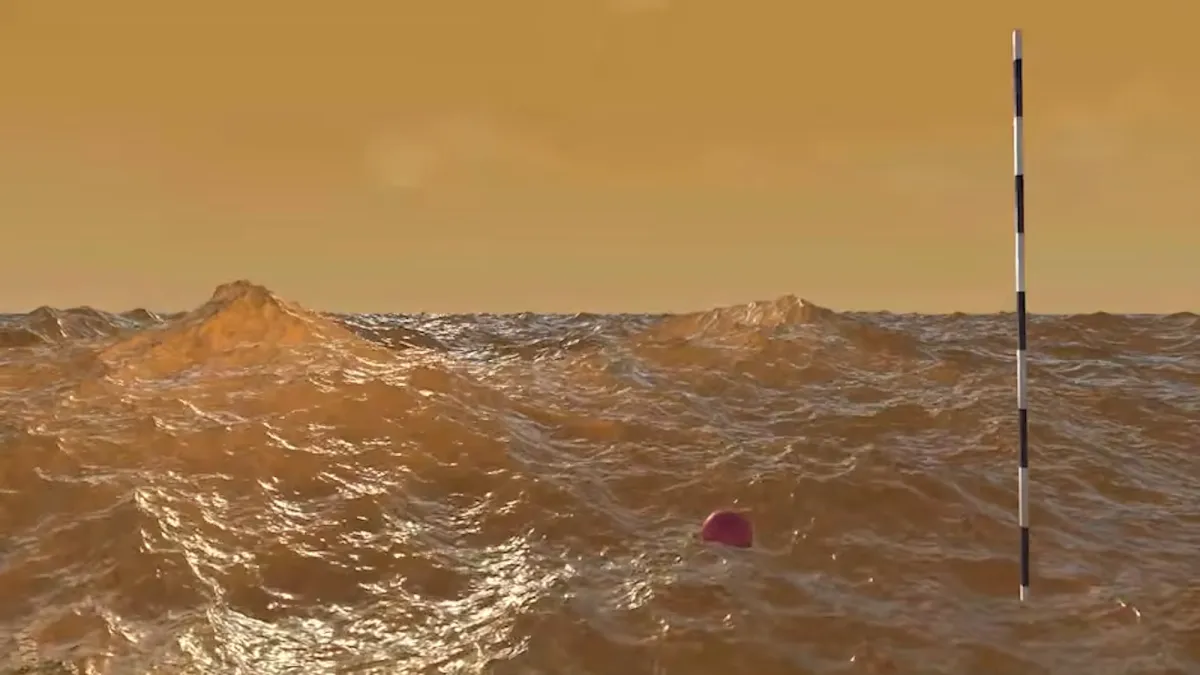
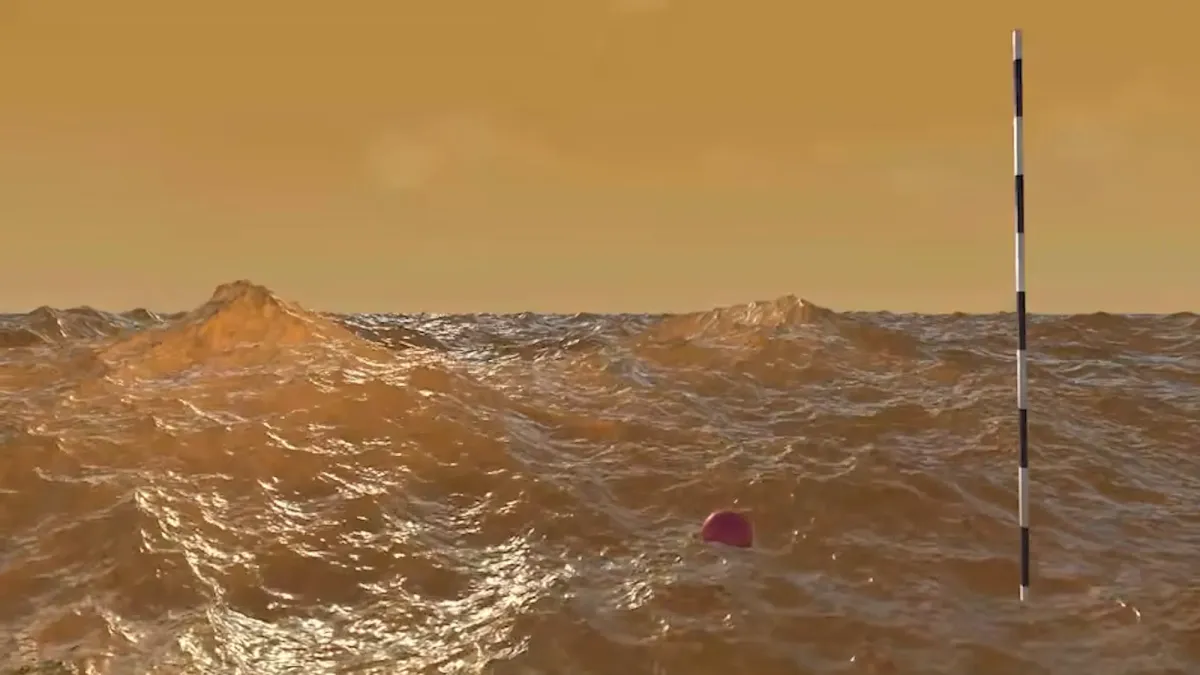
Imagine standing on a beach. A soft breeze rustles your hair. And then, a 10-foot wave, moving in what feels like slow motion, rolls in. On Earth, that's the stuff of dreams (or nightmares, depending on your surfing skills). On Titan, Saturn's largest moon, it's just Tuesday.
Turns out, this colossal moon—which is bigger than Mercury and sports its own liquid seas, albeit of hydrocarbons like methane and ethane—has some very peculiar fluid dynamics. A new model suggests that even the gentlest puff of wind could whip up massive waves in its frigid, alien oceans. Because apparently that's where we are now: worrying about rogue waves on another planet.
Titan is already a bit of an overachiever. It's the only place in our solar system, besides Earth, with standing liquid on its surface. And beneath its icy crust? Scientists suspect there might be hidden oceans teeming with prebiotic compounds, the chemical precursors to life. So, naturally, we want to know how its surface acts.
We're a new kind of news feed.
Regular news is designed to drain you. We're a non-profit built to restore you. Every story we publish is scored for impact, progress, and hope.
Start Your News DetoxNot Your Average Beach Day
For years, scientists assumed that Titan's liquid bodies, much like Earth's, would generate waves that sculpt its coastlines. But actually seeing these waves is a bit of a challenge, what with Titan's thick, smoggy atmosphere and its general unwillingness to pose for pictures from 900 million miles away.
Enter PlanetWaves, a new simulator from MIT and Woods Hole Oceanographic Institution. This isn't just about gravity, which was the previous focus for wave models. This one factors in all the juicy details: a liquid's surface tension, its viscosity, and its density. And the results for Titan's methane seas? Surprising, to say the least.
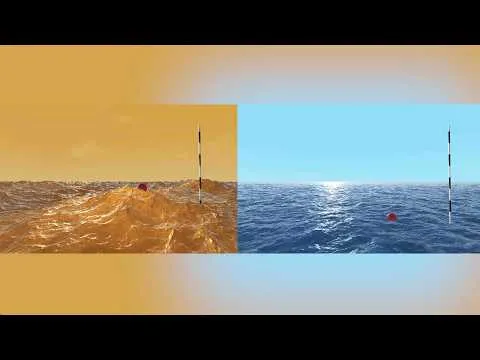
Andrew Ashton, a geophysicist and co-author, points out that we're all a bit biased by Earth's waves. But when you throw in different liquids, atmospheres, and gravity, things get weird. Una Schneck, an MIT planetary scientist, describes Titan's waves as “tall waves moving in slow motion.” So, yes, that gentle breeze, those enormous, lumbering waves. Very different from your typical beach read.
Waves Across the Cosmos
The PlanetWaves model isn't just for Titan's hydrocarbon surf. It's a universal wave-maker, testing conditions on ancient Mars (which likely needed strong winds for waves) and even some exoplanets light-years away.
Take LHS1140b, a "cool super-Earth." If it has water, its beefy gravity would squash large waves unless hurricane-force winds showed up. Kepler 1649b, a Venus-like exoplanet with sulfuric acid lakes, demands even stronger gusts. And then there's 55-Cancri e, with its molten lava oceans and crushing gravity. You'd need a cosmic category 5 storm just to get a ripple.

Beyond making us feel unprepared for a Titan surfing trip, this model is actually pretty critical. Understanding how fluids behave on distant worlds helps engineers design the next generation of spacecraft and probes. As the Artemis program gears up for a long-term human presence on the Moon by 2028, knowing what to expect from the universe's more eccentric bodies becomes less of a theoretical exercise and more of a practical necessity.
Because when you're planning to send humans to other planets, you probably want to know if a gentle gust of wind can create a 10-foot wall of liquid methane. Just a thought.