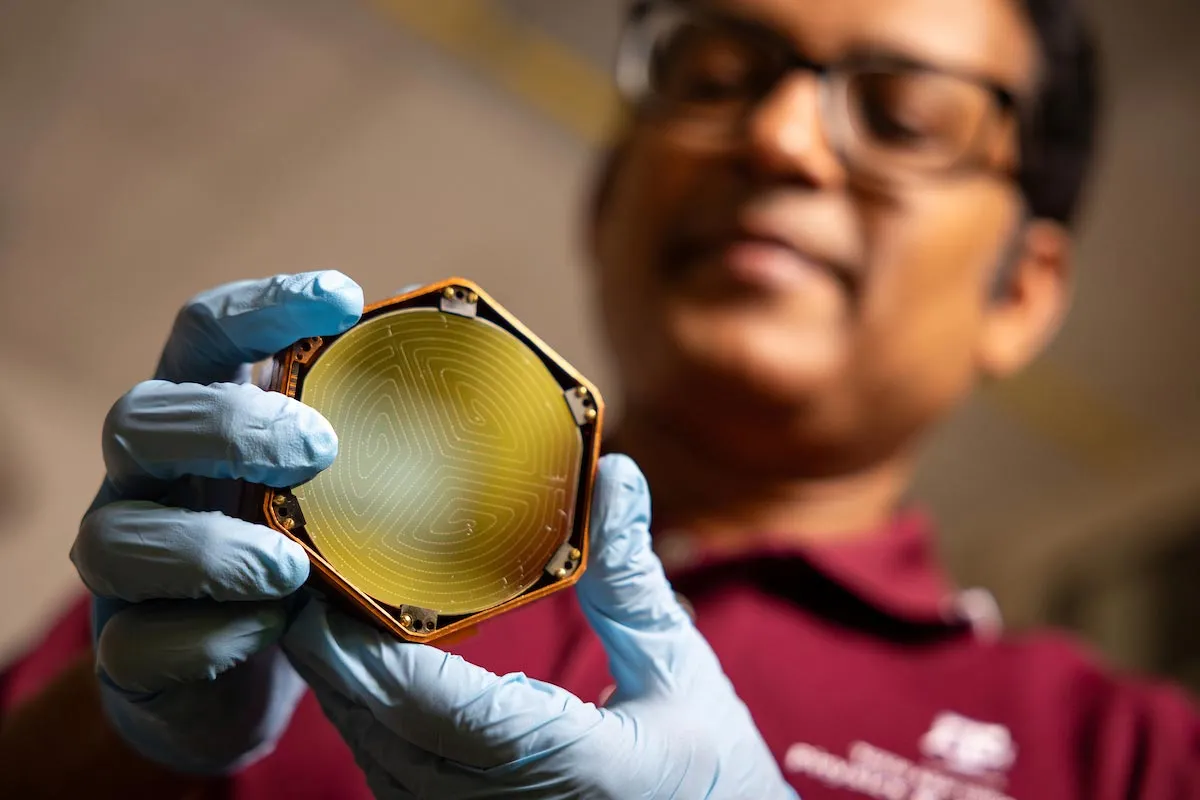
We can see 5% of the universe. The other 95% is made of something we don't understand at all.
Dark matter and dark energy aren't names we chose because they're mysterious — they're names we chose because we have no idea what they actually are. Dark matter holds galaxies together through gravity. Dark energy pushes them apart. Between them, they make up nearly everything that exists. And we're still mostly blind to both.
Rupak Mahapatra, a physicist at Texas A&M University, describes the problem with a metaphor that sticks: "It's like trying to describe an elephant by only touching its tail. We sense something massive and complex, but we're only grasping a tiny part of it."
We're a new kind of news feed.
Regular news is designed to drain you. We're a non-profit built to restore you. Every story we publish is scored for impact, progress, and hope.
Start Your News DetoxHe's spent the last 25 years trying to build better ways to touch that tail.
The challenge: detecting whispers in a hurricane
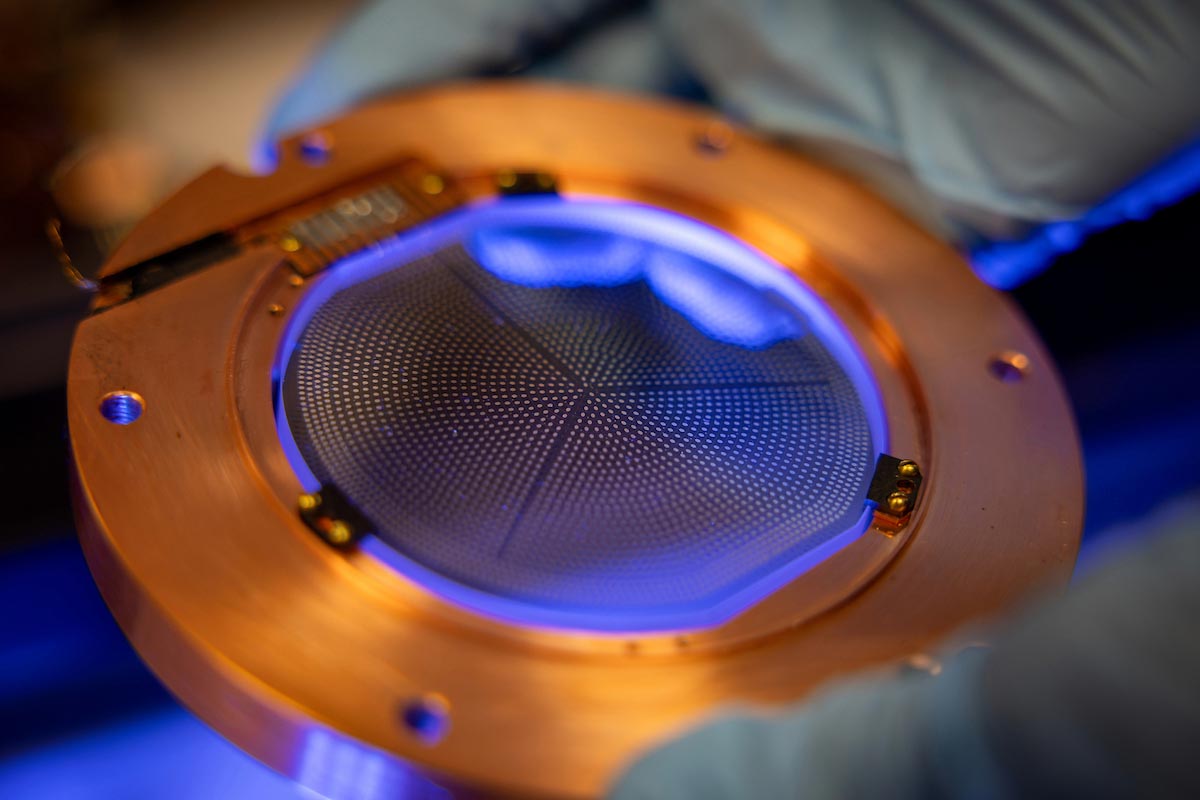
Dark matter doesn't emit light, absorb it, or reflect it. It barely interacts with ordinary matter at all — which is precisely why it's so hard to find. Mahapatra's team is developing semiconductor detectors cooled to near absolute zero, sensitive enough to register the incredibly rare moments when dark matter particles might brush against normal atoms. These interactions might happen once a year. Or once a decade.
"The challenge is that dark matter interacts so weakly that we need detectors capable of seeing events that might happen once in a year, or even once in a decade," Mahapatra said. "It's about innovation. We're finding ways to amplify signals that were previously buried in noise."
Texas A&M is one of a handful of institutions worldwide participating in TESSERACT, a leading global dark matter search. The work builds on two decades of progress through the SuperCDMS experiment, which has conducted some of the most sensitive dark matter searches ever attempted.
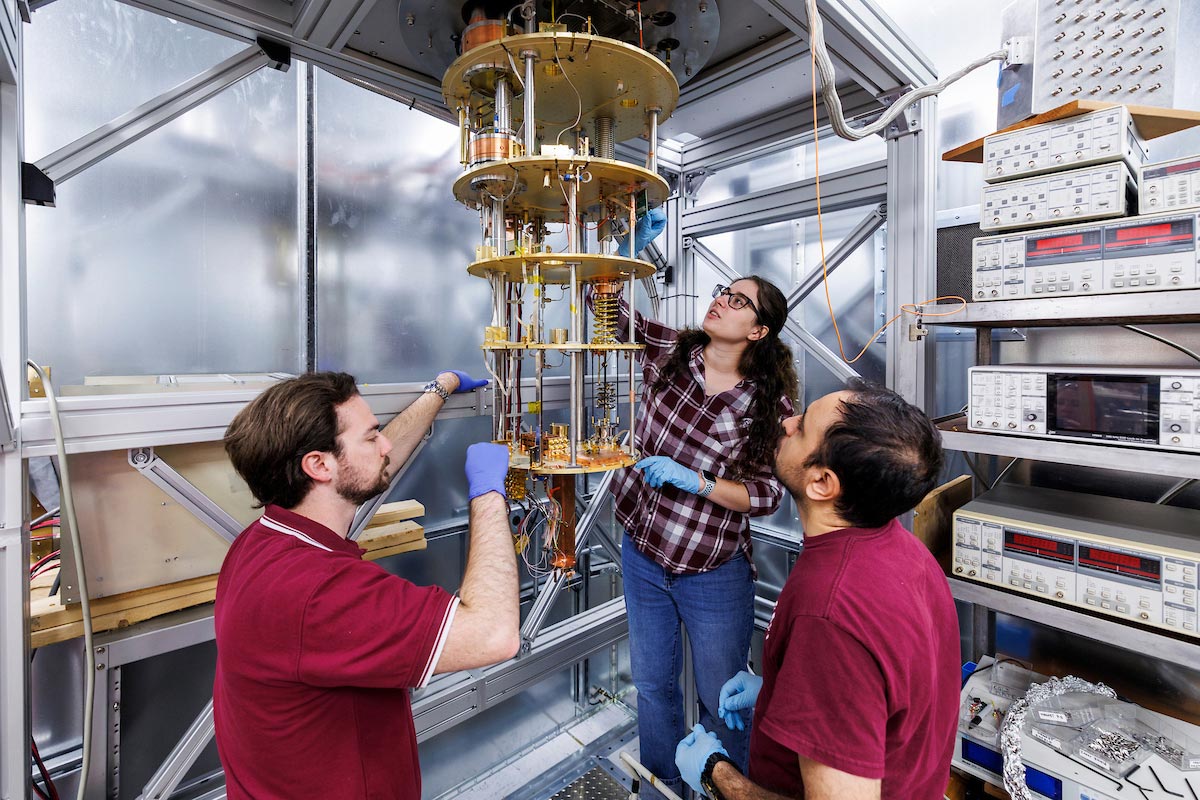
In 2014, Mahapatra and colleagues published a breakthrough in Physical Review Letters: a new detection method that let them search for low-mass WIMPs — Weakly Interacting Massive Particles, one of the leading candidates for what dark matter actually is. The innovation expanded the range of particles experiments could theoretically detect. By 2022, his team was examining multiple approaches simultaneously: direct detection (waiting for particles to hit detectors), indirect detection (looking for the signature of dark matter decay), and collider searches (creating conditions where dark matter might appear).

"No single experiment will give us all the answers," Mahapatra notes. "We need synergy between different methods to piece together the full picture."
What makes this work matter isn't just the puzzle itself. If dark matter and dark energy can be detected and understood, it would fundamentally rewrite physics. It could reveal laws of nature we haven't even imagined yet. The technologies developed to hunt for these invisible particles often find applications elsewhere — better sensors, more precise measurements, new ways of seeing what was previously hidden.

Mahapatra puts it simply: "If we can detect dark matter, we'll open a new chapter in physics. The search needs extremely sensitive sensing technologies and it could lead to technologies we can't even imagine today."
For now, the detectors keep getting better. The searches keep narrowing down the possibilities. And somewhere in the noise of a supercooled semiconductor, scientists are listening for the whisper that could explain almost everything.