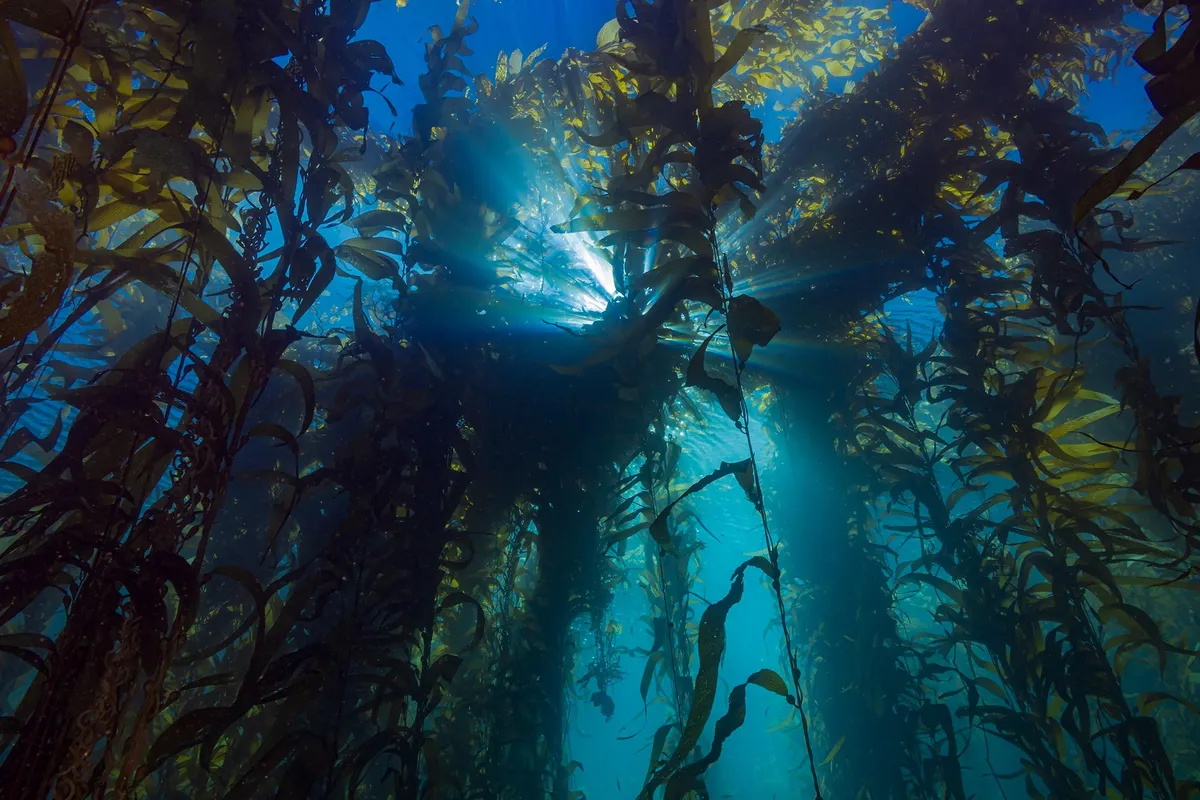
The seafloor goes dark. Not gradually — suddenly. Sediment churns up from a storm, algae blooms explode, organic matter clouds the water. Sunlight that was reaching the seabed yesterday vanishes for weeks or months. These events, which researchers now call marine darkwaves, are reshaping how scientists understand what happens when light disappears underwater.
Until recently, coastal ecologists focused almost entirely on slow, creeping declines in water clarity — the kind that happen over years. But a new study from UC Santa Barbara and the University of Waikato suggests that sudden blackouts can be just as damaging, sometimes in just days.
"Even short periods of reduced light can impair photosynthesis in kelp forests, seagrass, and corals," says François Thoral, the postdoctoral fellow who led the research. "These events can also influence the behavior of fish, sharks, and marine mammals. When darkness persists, the ecological effects can be significant."
We're a new kind of news feed.
Regular news is designed to drain you. We're a non-profit built to restore you. Every story we publish is scored for impact, progress, and hope.
Start Your News DetoxThe team analyzed 16 years of seafloor light measurements from Santa Barbara, 10 years of data from New Zealand's Hauraki Gulf, and 21 years of satellite-derived estimates from New Zealand's East Cape. What they found: between 25 and 80 darkwave events along the East Cape since 2002 alone. Some lasted three days. Others stretched past two months. In extreme cases, almost no sunlight reached the seabed at all.
Many of these episodes lined up with powerful storms — including Cyclone Gabrielle — suggesting that weather systems are a major trigger. But the real insight wasn't just that these events happen. It was that scientists had no consistent way to measure them.
"Light is a fundamental driver of marine productivity, yet until now we have not had a consistent way to measure extreme reductions in underwater light," Thoral explains. The new framework creates a shared language for comparing darkwave events across regions, similar to how scientists already track marine heatwaves or ocean acidification.
For coastal communities and conservation groups, this matters. When kelp forests, seagrass beds, and coral reefs suddenly lose light, the ripple effects move fast — fish behavior changes, predators relocate, entire food webs shift. Having a way to identify and measure these stress events means managers can better prepare and respond.
Researchers at UC Santa Barbara, which runs one of the few long-term seafloor light monitoring programs worldwide, plan to expand the work. Their next focus: understanding how sedimentation and turbidity — driven by California's fires and mudslides — affect the state's kelp forests. The darkwave framework is still new, but it's already changing how scientists see the ocean's hidden rhythms.