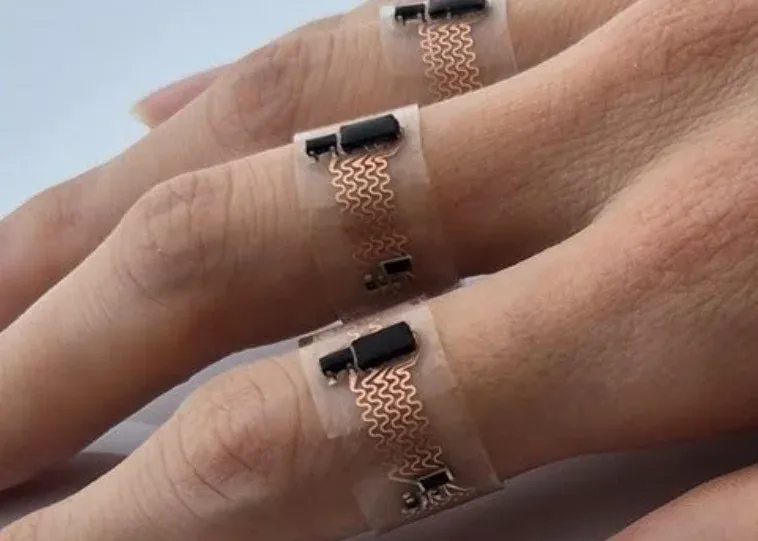
Princeton researchers have created a 3D device that combines living brain cells with advanced electronics. This system can be programmed to recognize patterns.
Previous attempts to use brain cells for computing often involved flat 2D cell cultures or 3D cell clusters. These were usually monitored and stimulated from the outside. The new Princeton system is different because it interacts with the cells from within their network.
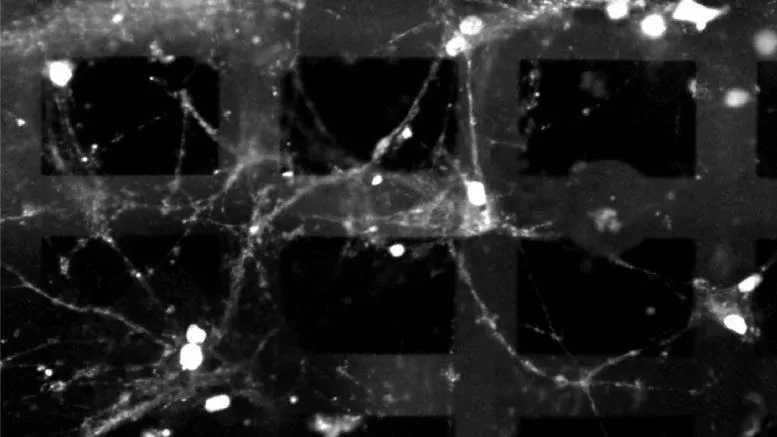
The team built a 3D mesh using tiny metal wires and electrodes. A thin, flexible epoxy coating holds them together. This coating is soft enough for neurons to grow around it. Researchers used this mesh as a base, allowing tens of thousands of neurons to form a large 3D network capable of computation.
We're a new kind of news feed.
Regular news is designed to drain you. We're a non-profit built to restore you. Every story we publish is scored for impact, progress, and hope.
Start Your News DetoxThe findings were published in Nature Electronics.
A Living Network Learns Patterns
This integrated design allowed researchers to record and stimulate neuron activity in much greater detail. They monitored the network for over six months. During this time, they tested ways to strengthen or weaken connections between neurons. Eventually, they trained an algorithm to identify patterns in electrical pulses.
In one test, the system was given pairs of different spatial patterns. In another, it received different temporal patterns. In both cases, the system correctly distinguished between the patterns. The researchers plan to expand this platform to handle more complex tasks.

Brain Biology Meets AI Limits
The project was led by Tian-Ming Fu, James Sturm, and Kumar Mritunjay. It began as a way to explore basic neuroscience questions. However, the team realized it could also help with a major challenge in modern AI: energy use.
Fu noted that the brain uses far less power than current AI systems for similar tasks. He said the brain uses about one-millionth of the power.
Mritunjay, the lead author, explained that these 3D biological neural networks can reveal how the brain computes. They could also help understand and possibly treat neurological diseases.
Deep Dive & References
A three-dimensional micro-instrumented neural network device - Nature Electronics, 2026