
MRI scans often struggle to show clear images of deep or delicate body tissues. Now, researchers at the Max Delbrück Center have created a new, lightweight antenna that can make these images much clearer. This new antenna could also shorten scan times without needing changes to existing MRI machines.
MRI is a vital tool for doctors to diagnose diseases. However, getting sharp images of deep brain regions or the delicate structures of the eye and its surrounding area has been challenging. This isn't due to the MRI scanner itself, but the parts that send and receive radio signals.
A New Antenna for Clearer Images
Nandita Saha, a doctoral student, and Professor Thoralf Niendorf led a team at the Max Delbrück Center to create a new MRI antenna. This antenna uses advanced materials and can produce clearer images in less time. It works with current MRI machines, so hospitals won't need to buy new equipment. Their findings were published in Advanced Materials.
We're a new kind of news feed.
Regular news is designed to drain you. We're a non-profit built to restore you. Every story we publish is scored for impact, progress, and hope.
Start Your News DetoxThe team worked with researchers from Rostock University Medical Center. This collaboration brought together experts in MRI physics, eye care, and imaging. The Rostock team is now helping to test the technology for use with patients.
Professor Niendorf explained that they used ideas from metamaterials to guide radiofrequency fields more effectively. This shows how advanced physics can directly improve medical imaging. He believes this work could lead to faster, clearer MRI scans for many patients.
How Metamaterials Improve MRI
MRI machines create images by sending radiofrequency (RF) signals into the body and measuring how tissues react within a strong magnetic field. Stronger signals mean better images. Standard MRI antennas, called RF coils, often struggle to get enough signal from deep tissues or complex body areas. This can lead to longer scans and images that lack fine details.
To fix this, the researchers built metamaterials directly into the MRI antenna. Metamaterials are specially designed structures that can control electromagnetic waves in ways natural materials cannot. This new RF antenna boosts signals from specific tissues, improves how clearly details are seen, and speeds up data collection.
The team tested the technology by imaging the eye and orbit area in volunteers using a 7.0 Tesla MRI machine.
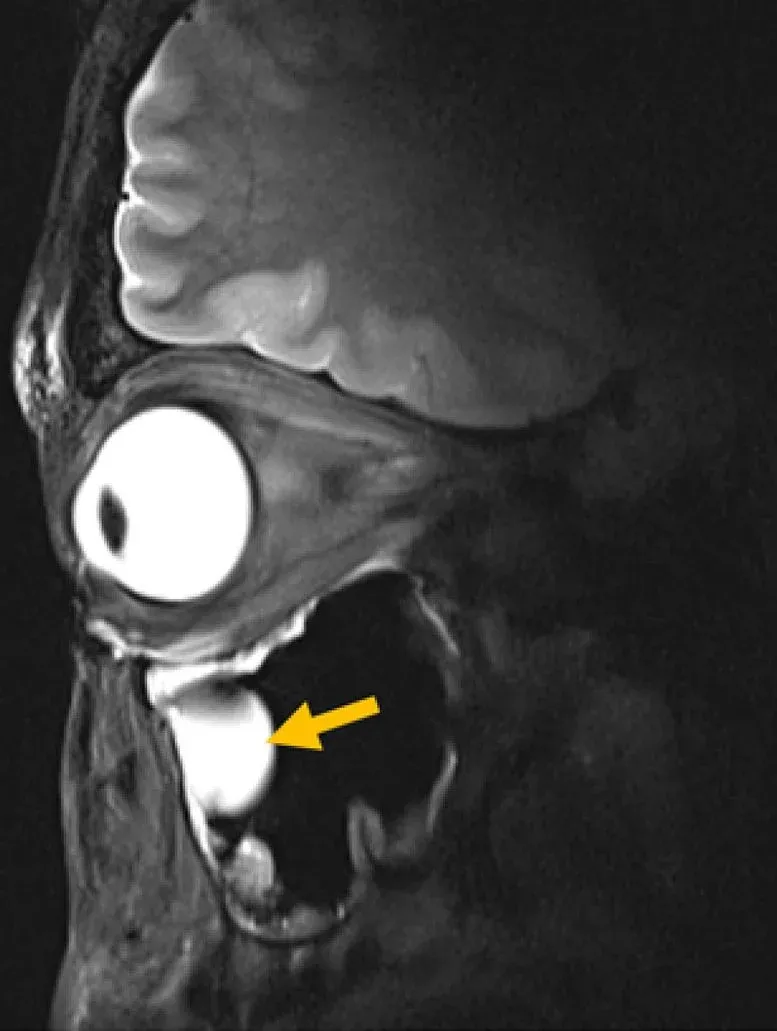
Professor Oliver Stachs, a co-author from University Medicine Rostock, noted that this research is very important for eye care. It can help create detailed, high-resolution MRI images of the eye. This could reveal processes in the eye that were previously hard to see.
Saha added that their goal was to rethink MRI hardware using modern antenna physics. She also mentioned that this technology could protect sensitive body parts during MRI, like reducing heat around medical implants. It might also help focus RF energy more precisely for MRI-guided cancer treatments, such as heating tumors or removing tissue with heat.
Benefits for Patients
MRI exams can be uncomfortable and long, especially if scans need to be redone because important details aren't clear. Shorter scans would mean less time for patients inside the machine. Sharper images would help doctors make more confident diagnoses. The new antenna is also compact and light, so it can be shaped for different body parts, potentially making scans more comfortable.
Niendorf believes this technology could be used with MRI systems of different magnetic field strengths. It could also image other body parts beyond the eye, orbit, or brain. It might even help track metabolism or how drugs move in the body. Specialized MRI methods that detect atoms like sodium or fluorine could also use this technology for stronger signals and clearer images.
Dr. Ebba Beller, another co-author, said that new imaging hardware can change how diseases are diagnosed. She sees this study as a key step toward the next generation of MRI technology.
The researchers are now planning larger studies at several hospitals. They are also adapting the design for other organs, including the heart and kidneys.
Deep Dive & References
Metamaterial Antennas Enhance MRI of the Eye and Occipital Brain - Advanced Materials, 2026