Hydrogen is the clean-burning fuel that could power everything from your Amazon delivery truck to that cruise ship you've been eyeing. Demand for it has practically doubled in the last 20 years. The catch? Most of it comes from fossil fuels, which kind of defeats the purpose.
Meanwhile, we're drowning in plastic. Mountains of the stuff. So, what if you could solve both problems at once? Scientists at the University of Cambridge just said, "Hold my beer...and my plastic bottle."
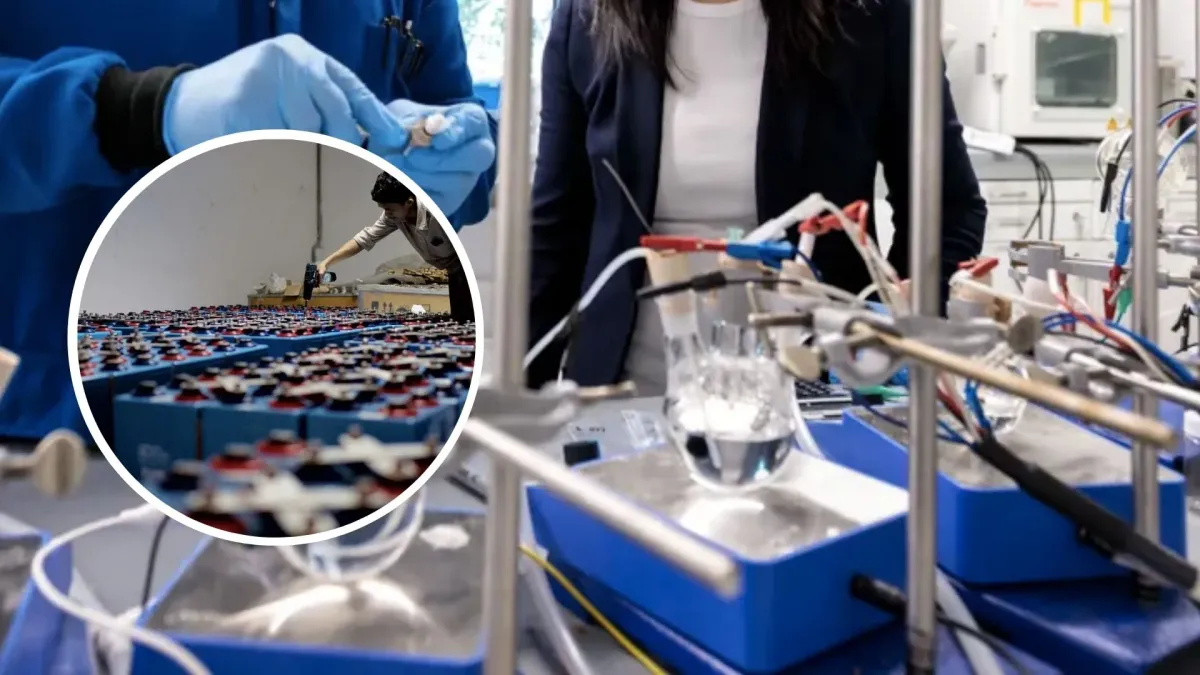
They've created a device that uses sunlight to break down plastic waste into hydrogen. And here's the kicker: it's not some tiny, delicate lab experiment. They built it with simple materials, in a simple way, and tested it outside under actual sunlight. Because apparently, that's where we are now: turning trash into treasure with a little help from the sun.
We're a new kind of news feed.
Regular news is designed to drain you. We're a non-profit built to restore you. Every story we publish is scored for impact, progress, and hope.
Start Your News DetoxFrom Lab Bench to Backyard
Professor Erwin Reisner and his team have been chipping away at this for years. A few years back, they had a smaller solar reactor that could turn CO2 and plastic into fuels. That one was about the size of a coaster, needed artificial light, and was a pain to make.
This new iteration? It's a meter square — roughly the size of a small coffee table — and they tested it outdoors at Cambridge. The secret sauce is how they make the panels. Instead of high temperatures and harsh chemicals, they just use a common paint sprayer at room temperature. First, a light-absorbing layer goes on a glass panel. Then, a second layer with special cobalt and zirconium molecules acts as the catalyst.
This solar wizardry successfully pulled hydrogen from plastic drink bottles. It even worked with glucose and cellulose (think plant waste), with glucose being the overachiever, producing the most hydrogen. So, your old soda bottle could one day be flying a plane.
The Price Tag and the Future
The spray-coating method slashes the cost of making these reactors, making large-scale production a real possibility. Which is good, because while the technology is mind-bendingly cool, the hydrogen it produces is still a bit pricey.
The next steps involve making the reactors last longer and be even more efficient. But the fact that we're talking about taking our plastic problem and turning it into a clean energy solution, all with sunlight and a paint sprayer? That's a future worth investing in. Or at least, one to tell your friends about at your next dinner party.