Researchers at Penn State have created a material that does something octopuses have perfected over millions of years: change what it looks like and how it feels, all on command.
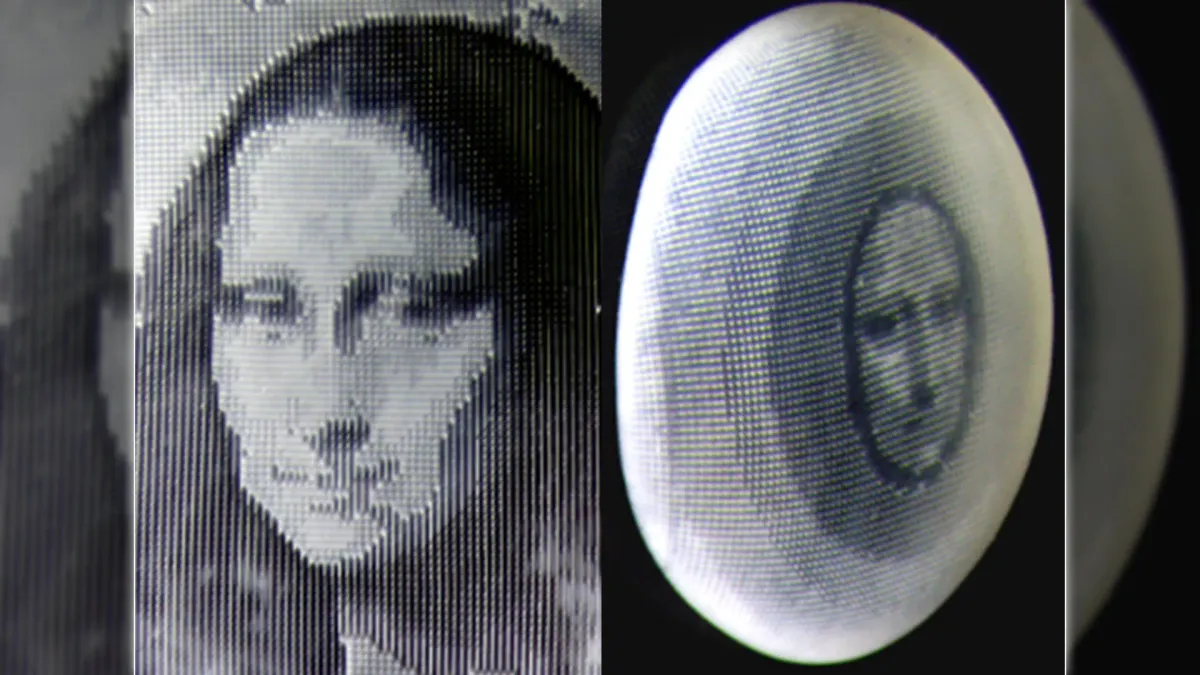
The smart synthetic skin is a programmable hydrogel — essentially a gel infused with digital instructions. When exposed to heat, cold, or moisture, it swells, shrinks, or softens in precise patterns. In one demonstration, the team hid an image of the Mona Lisa inside a flat film. Wash it with ethanol and the image vanishes. Dunk it in ice water and the painting reappears.
How They Printed Instructions Into Matter
The breakthrough lies in how the team encodes the behavior. Led by Hongtao Sun, the researchers use a technique called halftone-encoded printing — the same principle that creates images in old newspapers, but applied at the molecular level. They convert visual data into binary code and embed it directly into the hydrogel during fabrication. The printed patterns act like a set of rules: "When you encounter heat, swell here. When you encounter cold, soften there."
We're a new kind of news feed.
Regular news is designed to drain you. We're a non-profit built to restore you. Every story we publish is scored for impact, progress, and hope.
Start Your News Detox"In simple terms, we're printing instructions into the material," Sun explained. "Those instructions tell the skin how to react when something changes around it."
What makes this different from previous attempts at shape-changing materials is that it works within a single layer. Most adaptive materials require multiple layers stacked on top of each other. This one does everything — hiding images, shifting texture, morphing into 3D shapes — from one thin sheet of gel.
Why This Matters Beyond the Lab
The immediate applications are security and camouflage. Imagine a material that conceals sensitive information and only reveals it under specific conditions — temperature, moisture, or mechanical stress. The hidden patterns can also be detected through analysis, adding a second layer of verification. It's encryption that's physical, not digital.
But the implications run deeper. The researchers are building a platform for stimulus-responsive systems — materials that can think and react. Biomedical devices could adapt to changing conditions inside the body. Soft robotics could become more lifelike. Textiles could change color or texture based on temperature or humidity.
The work is grounded in biomimicry. Octopuses coordinate skin color, texture, and body shape simultaneously using chromatophores and papillae — specialized cells that respond to neural signals. This synthetic skin mimics that coordination, but with printed patterns instead of biology.
The team is now working to expand the platform, encoding multiple stimulus-responsive behaviors into single adaptive materials. The question they're asking isn't just "Can we make materials that change?" but "What happens when we can program those changes with the precision of digital code?"