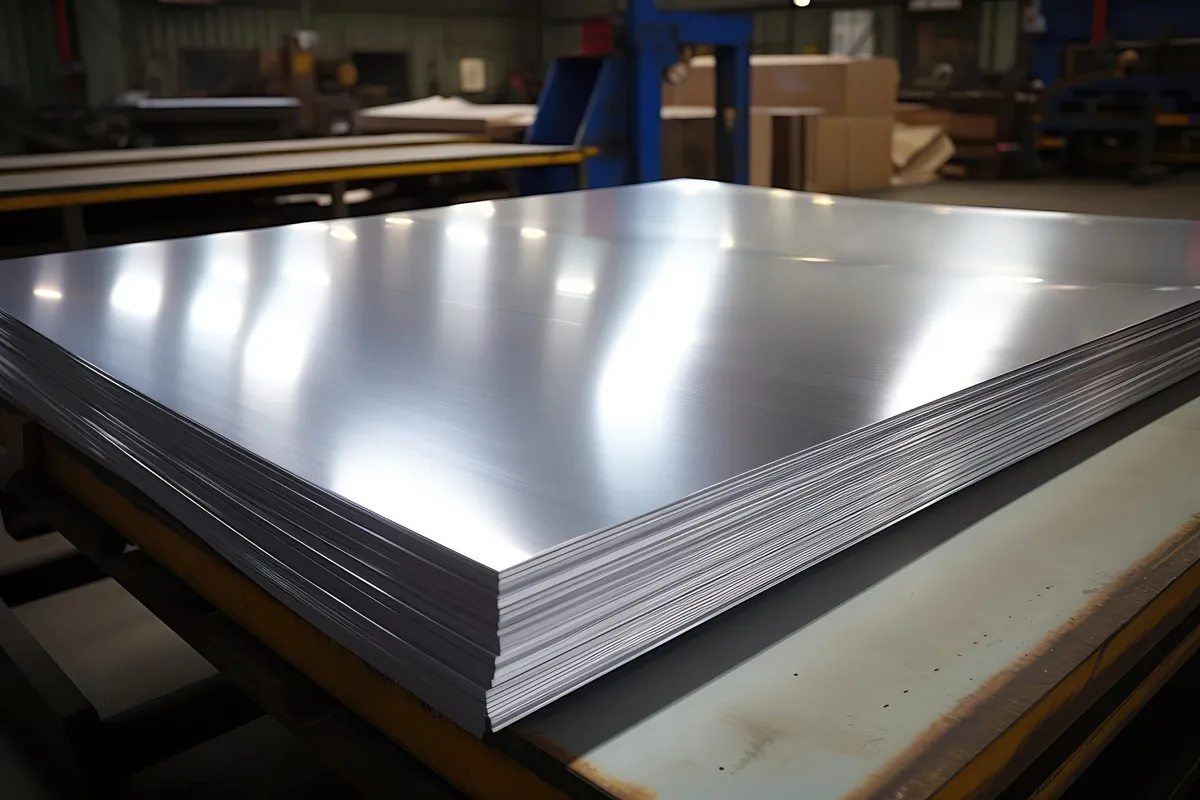
Engineers at the University of Rochester have figured out how to make aluminum do something counterintuitive: stay afloat even after you punch holes in it. The trick involves microscopic laser etching that turns the metal's surface into a water-repelling maze, trapping air inside and creating permanent buoyancy.
The team, led by optics and physics professor Chunlei Guo, discovered that by etching aluminum tubes with precision lasers, they could create millions of tiny pits across the inner surface. These micro- and nano-scale textures make the metal aggressively hydrophobic — water literally bounces off rather than clings to it. When submerged, this textured surface captures a stable air pocket inside the tube, essentially building a flotation device into the metal itself.
The researchers added one crucial detail: a divider running down the center of each tube. This internal wall prevents the trapped air from shifting or escaping, even if the tube is flipped vertically into water. "This design helps maintain the air bubble inside the tube, so it keeps floating no matter the position," Guo explained. The mechanism mirrors strategies nature perfected long ago — diving bell spiders carry air bubbles underwater, and fire ants form buoyant rafts by trapping air between their bodies during floods.
We're a new kind of news feed.
Regular news is designed to drain you. We're a non-profit built to restore you. Every story we publish is scored for impact, progress, and hope.
Start Your News DetoxFrom Lab to Real Water
What sets this approach apart from previous floating materials is its simplicity and durability. The researchers tested their tubes in challenging conditions over several weeks, subjecting them to repeated submersion and rough handling. Even after punching multiple holes into the metal, the tubes continued to float. The design scaled up smoothly too — tubes nearly half a meter long maintained their buoyancy, and the team linked several together to create floating platforms.
That scalability opens practical doors. In one experiment, the researchers built rafts from these tubes and tested their ability to harvest energy from wave motion. For remote or offshore environments where both stability and low maintenance matter, that combination of features could be valuable. An unsinkable buoy that also generates power from the water around it starts to look less like a novelty and more like infrastructure.
The work remains in the research phase, but the applications are already multiplying: unsinkable buoys for navigation, modular docks that assemble from linked tubes, emergency rescue equipment that can't fail catastrophically, even ship designs that prioritize resilience without adding weight or complexity. Each represents a different angle on the same insight — that treating a material's surface at microscopic scales can fundamentally change how it behaves in the world.
Further development will likely focus on cost and manufacturing at scale. But the core technology is proven, and it works.