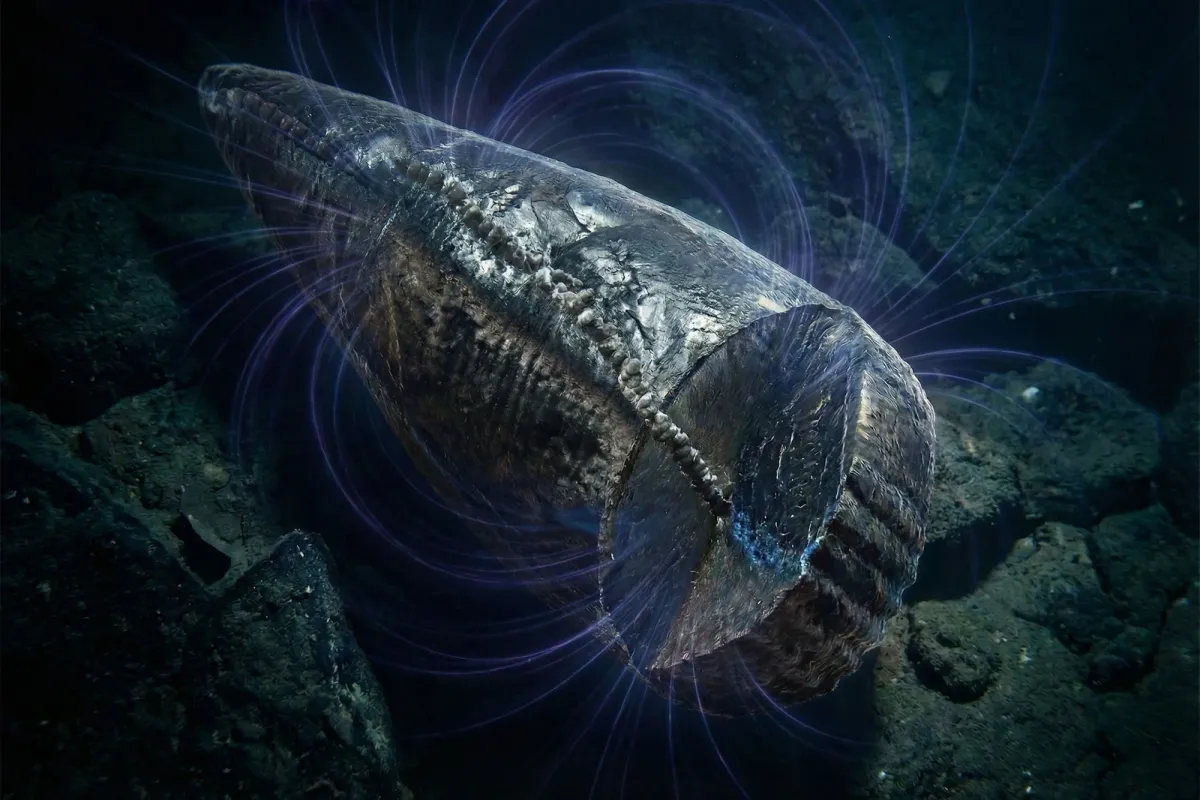
Deep in ancient ocean sediments, researchers found something unexpected: tiny magnetic structures that could have worked like a biological GPS for animals swimming through prehistoric seas.
These magnetofossils, preserved in rocks from the North Atlantic, are about 97 million years old and roughly the size of a bacterial cell — but 10 to 20 times larger than the magnetic particles found in modern bacteria. What makes them remarkable isn't their size. It's their structure. When scientists imaged them closely, they discovered an intricate pattern: magnetic moments spiraling around a central core in a tornado-like vortex, creating what researchers describe as ideal properties for sensing the Earth's magnetic field.
How ancient navigation worked
Many animals today — birds, fish, insects — navigate using Earth's magnetic field, but exactly how they sense it remains one of biology's stubborn mysteries. One leading theory suggests tiny crystals of magnetite inside their bodies act like microscopic compass needles. Simple bacteria in lakes have a primitive version: chains of magnetic particles that align with the field, helping them swim to their preferred depth.
We're a new kind of news feed.
Regular news is designed to drain you. We're a non-profit built to restore you. Every story we publish is scored for impact, progress, and hope.
Start Your News DetoxThese ancient fossils suggest something more sophisticated was happening. The vortex structure creates what researchers call a "wobble" in response to tiny changes in magnetic field strength — essentially translating environmental signals into detailed navigation information. The geometry is stable enough to resist environmental noise that might otherwise scramble the signal. It's the kind of design you'd expect from something that evolved specifically for long-distance navigation.
"Giant magnetofossils mark a key step in tracing how animals evolved basic bacterial magnetoreception into highly-specialized, GPS-like navigation systems," says Professor Rich Harrison from the University of Cambridge, who led the research.
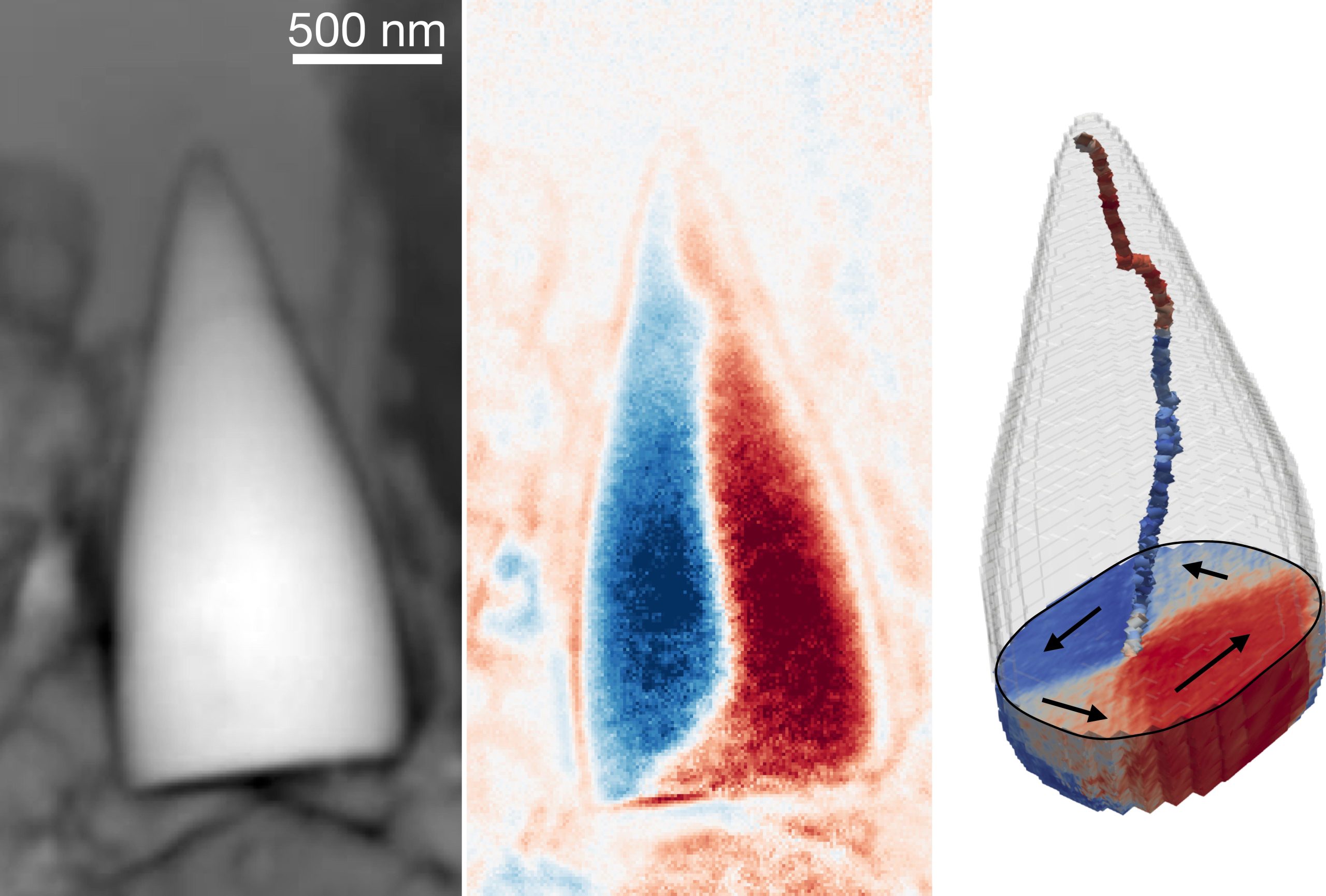
Which animal created these fossils remains a mystery. Researchers point to eels as a possibility — they evolved around 100 million years ago and remain among the least understood creatures in the ocean. But the fossil record is fragmentary, and the organism behind these structures could have been something else entirely, something that left few other traces.
What's clear is that magnetoreception didn't emerge fully formed. It evolved gradually, from simple bacterial systems to the sophisticated internal compasses that guide migrating birds across continents today. These 97-million-year-old structures sit somewhere in that journey, evidence that animals were learning to read the planet's magnetic signature long before humans ever invented instruments to do the same.