A nearly complete skeleton discovered in Canada's High Arctic belongs to a species that shouldn't have been there—at least not according to what scientists thought they knew about how rhinos spread across the planet millions of years ago.
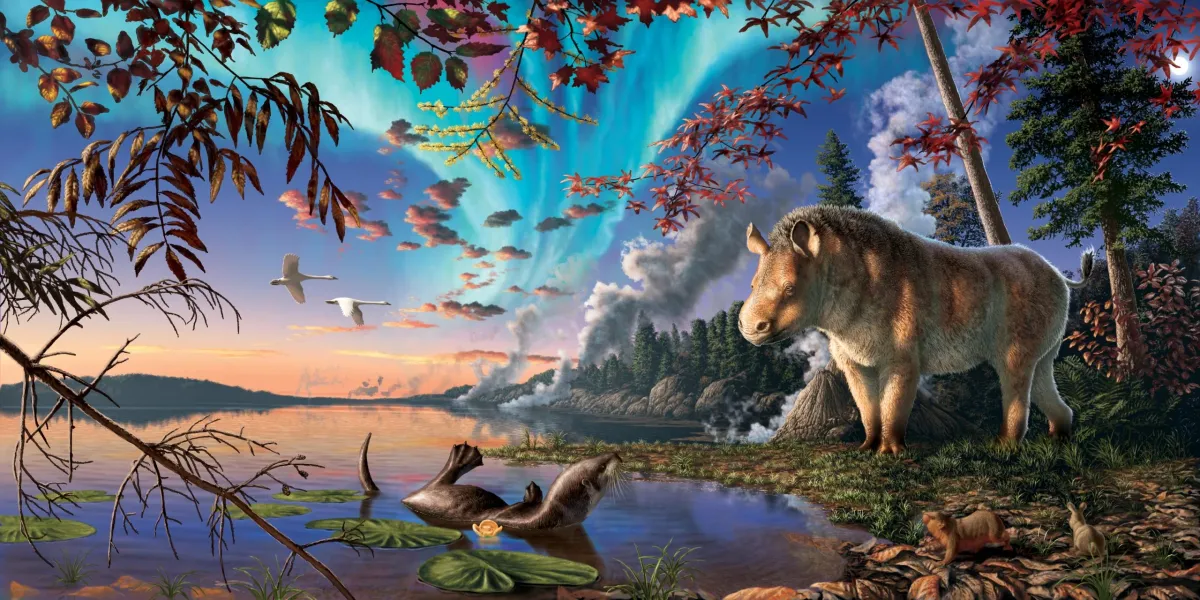
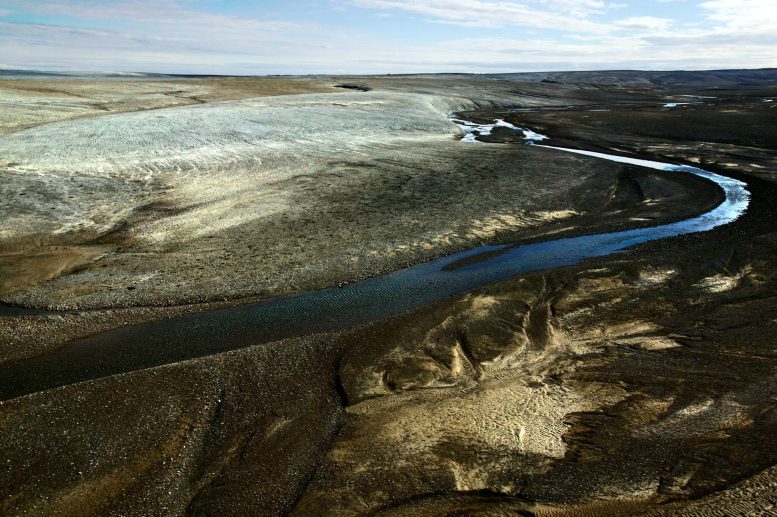
Researchers at the Canadian Museum of Nature have formally described Epiatheracerium itjilik, a previously unknown rhinoceros species that lived roughly 23 million years ago on Devon Island, Nunavut. The find is significant for two reasons: it's the northernmost rhino species ever recorded, and it upends the timeline for how these animals migrated between continents.
A rhino out of place and time
About 75% of the animal's skeleton was recovered from sediment layers within Haughton Crater, including teeth, jawbones, and pieces of the skull. The specimen appears to be a young adult, smaller and lighter than most rhino species—roughly the size of a modern Indian rhinoceros but without a horn. The species name, "itjilik," means "frosty" in Inuktitut, chosen in consultation with Jarloo Kiguktak, an Inuit Elder and former mayor of Grise Fiord, Canada's northernmost Inuit community.
We're a new kind of news feed.
Regular news is designed to drain you. We're a non-profit built to restore you. Every story we publish is scored for impact, progress, and hope.
Start Your News Detox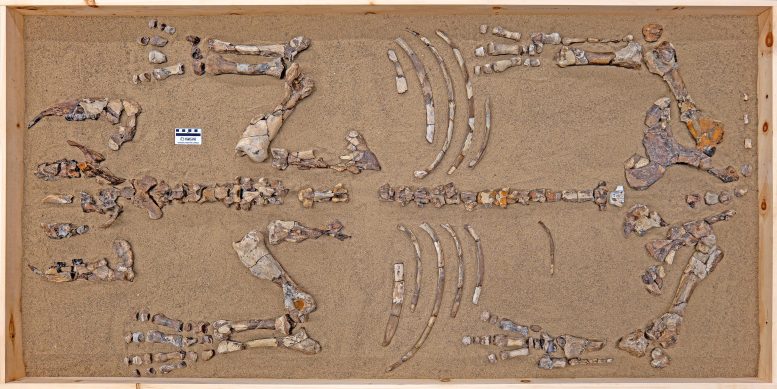
Rhinoceroses have roamed most continents for over 40 million years, evolving into wildly different forms—some hippo-like and massive, others small and hornless. Epiatheracerium itjilik was most closely related to European species that lived several million years earlier, which raises an obvious question: how did its ancestors get from Europe to the Arctic?
Rethinking the land bridge
Previous research suggested the North Atlantic Land Bridge—a now-submerged landmass connecting North America and Europe via Greenland—stopped functioning as a dispersal corridor around 56 million years ago. But the presence of this Arctic rhino, combined with analysis of 57 other extinct rhinoceros species, suggests that rhinos were still using this route much more recently, potentially as late as the Miocene epoch.
The research team mapped where each rhino species lived and used mathematical modeling to calculate dispersal rates between five continental regions over millions of years. The work reveals that the North Atlantic played a far larger role in mammal evolution than previously understood.
Ancient proteins, modern insights
The discovery gained another layer of significance in July 2025 when researchers extracted scientifically useful proteins from the fossil's tooth enamel—extending by millions of years the window for recovering ancient proteins that can inform our understanding of evolution. This opens new possibilities for studying how mammals diversified over deep time.
As researcher Fraser notes, Epiatheracerium itjilik does more than add a new name to the fossil record. It shows that the Arctic continues to reveal surprises about how life spread and adapted across our planet. The fossil is now part of the Canadian Museum of Nature's permanent collection, waiting for the next question someone might ask of it.