Scientists have finally figured out why a fault in the Pacific Ocean has been causing regular "clockwork" earthquakes for decades. They found hidden "brakes" underwater that stop some earthquakes from becoming huge.
For over 30 years, a fault line deep under the eastern Pacific Ocean has produced very consistent earthquakes. This underwater fault is about 1,000 miles off Ecuador's coast. It causes magnitude 6 quakes every five to six years. These quakes hit in almost the same spots and with similar strength each time.
This kind of regularity is very rare for earthquakes. Researchers knew about this pattern but didn't understand why it happened until now.
We're a new kind of news feed.
Regular news is designed to drain you. We're a non-profit built to restore you. Every story we publish is scored for impact, progress, and hope.
Start Your News DetoxA new study in the journal Science explains it. Scientists say the fault has special areas that repeatedly stop earthquakes from growing larger. These areas act like natural braking systems deep beneath the seafloor.
Jianhua Gong, a seismologist and lead author of the study, noted that scientists have known about these barriers for a long time. The main question was what they were made of and why they reliably stopped earthquakes cycle after cycle.
Gong and other researchers studied the Gofar transform fault. This fault is part of the East Pacific Rise, west of Ecuador. Their goal was to solve the mystery of why some underwater faults produce large earthquakes with such precise timing.
Why the Gofar Fault Is Unique
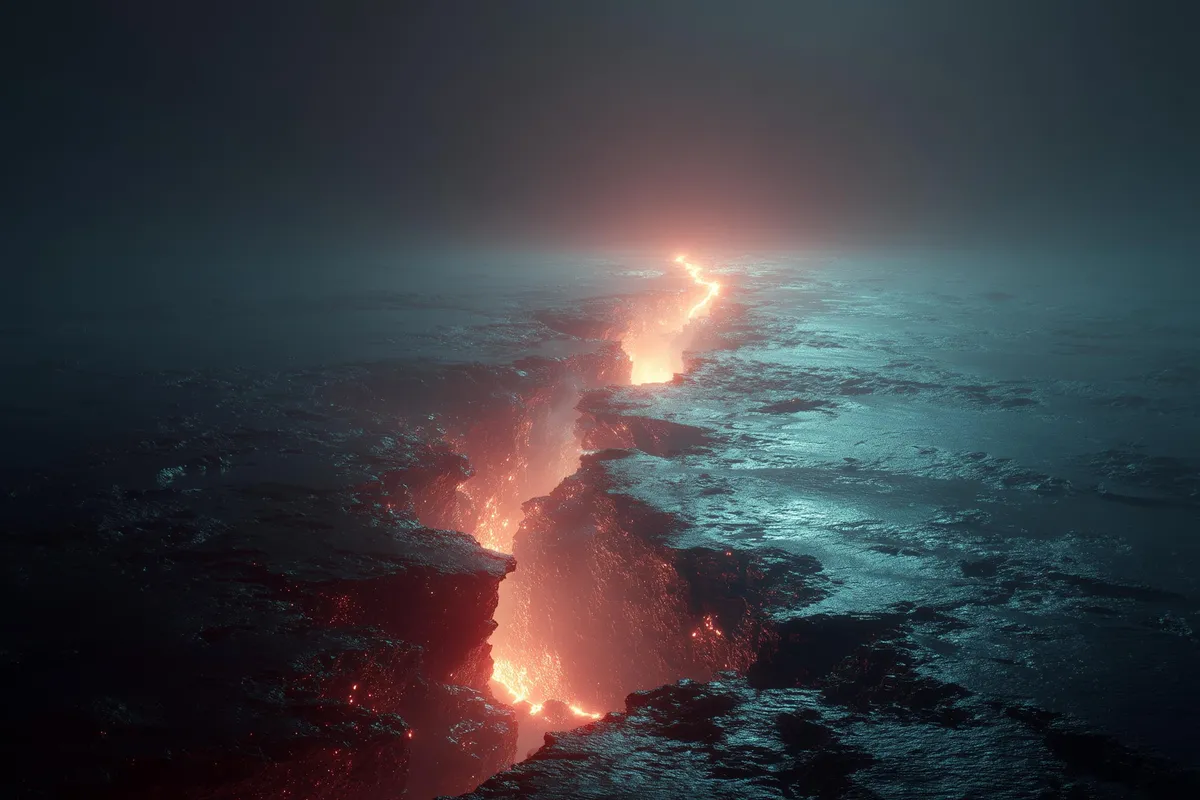
The Gofar fault is a long crack on the ocean floor. Here, the Pacific and Nazca tectonic plates slide past each other. These huge pieces of Earth's outer shell move about 140 millimeters per year, which is roughly the speed fingernails grow.
Transform faults form where tectonic plates move horizontally against each other. The Gofar fault is one of the most studied examples on the ocean floor.
What makes this fault special is how its larger earthquakes always start and end in the same places. Between the active earthquake zones are quieter sections of the fault. These sections absorb stress without causing major quakes. Scientists call these sections "barriers," but their exact role was unclear for years.
Seafloor Tests Show Hidden Activity
To better understand the fault, researchers looked at data from two big ocean-floor studies. One was in 2008, and the other ran from 2019 to 2022.
During both projects, scientists placed seismometers on the seafloor along different parts of the Gofar fault. These tools recorded tens of thousands of small earthquakes before and after two separate magnitude 6 events.
This data gave researchers a very detailed look at how the fault behaves before, during, and after major ruptures.
In both barrier zones, scientists saw almost identical patterns. Small earthquakes became very active days and weeks before a major quake. Then, these same regions became almost silent right after.
This behavior appeared in two different fault sections, 12 years apart. This led researchers to believe the same physical process was happening in both cases.
Natural "Brakes" Inside the Fault
The study found that these barriers are not just inactive rock. Instead, they are complex areas where the fault splits into several strands.
These strands are offset sideways by about 100 to 400 meters. This creates small openings in the fault structure, like tiny gaps in a crack.
Researchers also found that seawater goes deep into these fractured areas. The fault's shape and the trapped fluids create conditions for something called "dilatancy strengthening."
When a major earthquake rupture reaches one of these barrier zones, the sudden movement causes pressure inside the fluid-filled rock to drop quickly. The porous rock then temporarily locks up. This slows or stops the rupture before it can grow larger.
This process acts like a natural braking system that limits the size of earthquakes.
Gong explained that these barriers are not just passive parts of the landscape. They are active, dynamic parts of the fault system. Understanding how they work changes how scientists think about earthquake limits on these faults.
Global Impact for Earthquake Science
The Gofar fault is far from populated coastlines, so its earthquakes don't directly endanger people. However, researchers say these findings could be important worldwide.
Transform faults similar to Gofar exist in oceans around the Earth. Scientists have noticed that many underwater earthquakes stay smaller than expected based on geology alone.
The new research suggests that barrier zones, formed by complex fault structures and seawater, might be common under the oceans. If so, these regions could act as natural brakes that limit the maximum size of earthquakes along many underwater faults.
Scientists believe this discovery could improve earthquake models. These models are used to estimate earthquake risks globally, including near coastal cities.
Deep Dive & References
Predictable seismic cycles result from structural rupture barriers on oceanic transform faults - Science, 2026