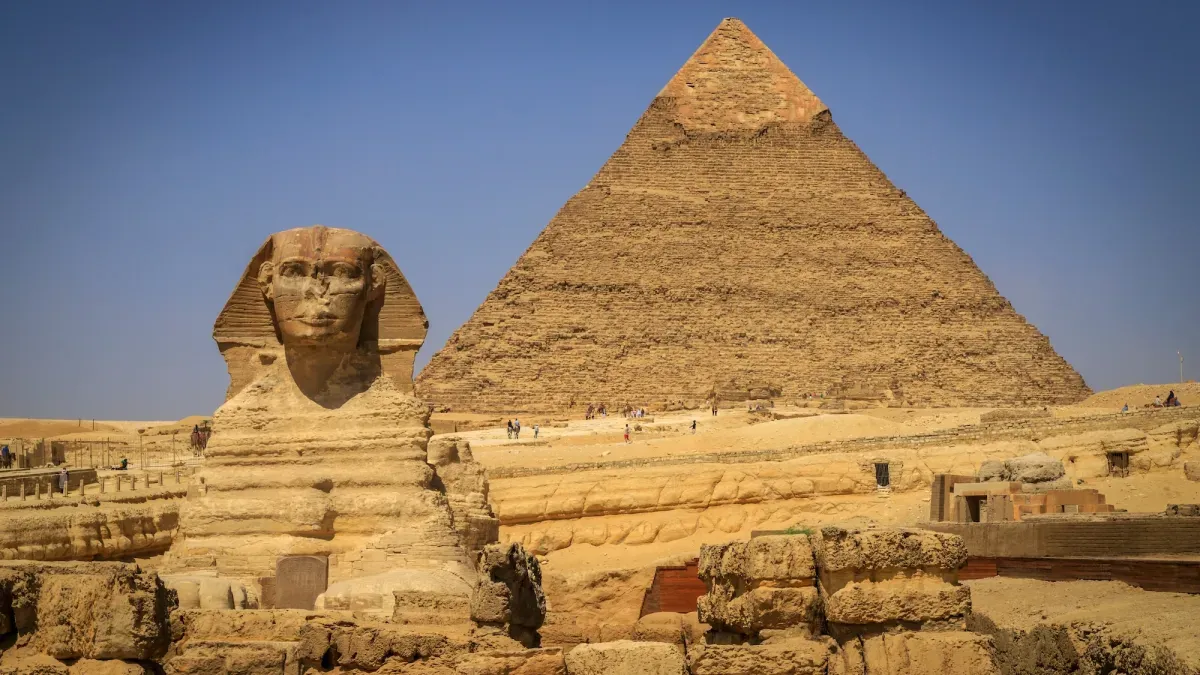
The Great Pyramid of Giza has stood for thousands of years. It has survived not only the harsh desert but also major earthquakes. For example, quakes in 1847 and 1992 hit the area with magnitudes of 6.8 and 5.8.
Seismologists like Asem Salama from Egypt's National Research Institute of Astronomy and Geophysics have studied how the pyramid survived. Salama noted that the pyramid combines huge architecture with amazing stability over millennia. His team wanted to measure this resilience.
How the Pyramid Stays Strong
Salama and his team believe they found the answer. They recorded vibrations at the pyramid site. Their findings suggest that ancient Egyptians perfected earthquake-resistant building methods over centuries. They published their study in Scientific Reports.
We're a new kind of news feed.
Regular news is designed to drain you. We're a non-profit built to restore you. Every story we publish is scored for impact, progress, and hope.
Start Your News DetoxSalama explained that early Egyptian builders experimented a lot. Many early attempts failed, but they learned from each one. They refined their techniques to create more stable designs.
Egyptian pyramids evolved over time. They started with simple structures called mastabas before 3100 BCE. Then came stacked pyramids like Djoser's Step Pyramid around 2650 BCE. Later, experimental forms like the Bent Pyramid at Dahshur (around 2500 BCE) appeared. Some buildings even collapsed, showing that not all projects succeeded.
These examples show how builders improved slope angles through trial and error, Salama said. By the time the Great Pyramid was built, architects had mastered how to build huge monuments.
Measuring Vibrations
To understand the pyramid's strength, Salama's team measured vibrations at 37 spots. These included the surrounding soil, building blocks, and internal chambers.
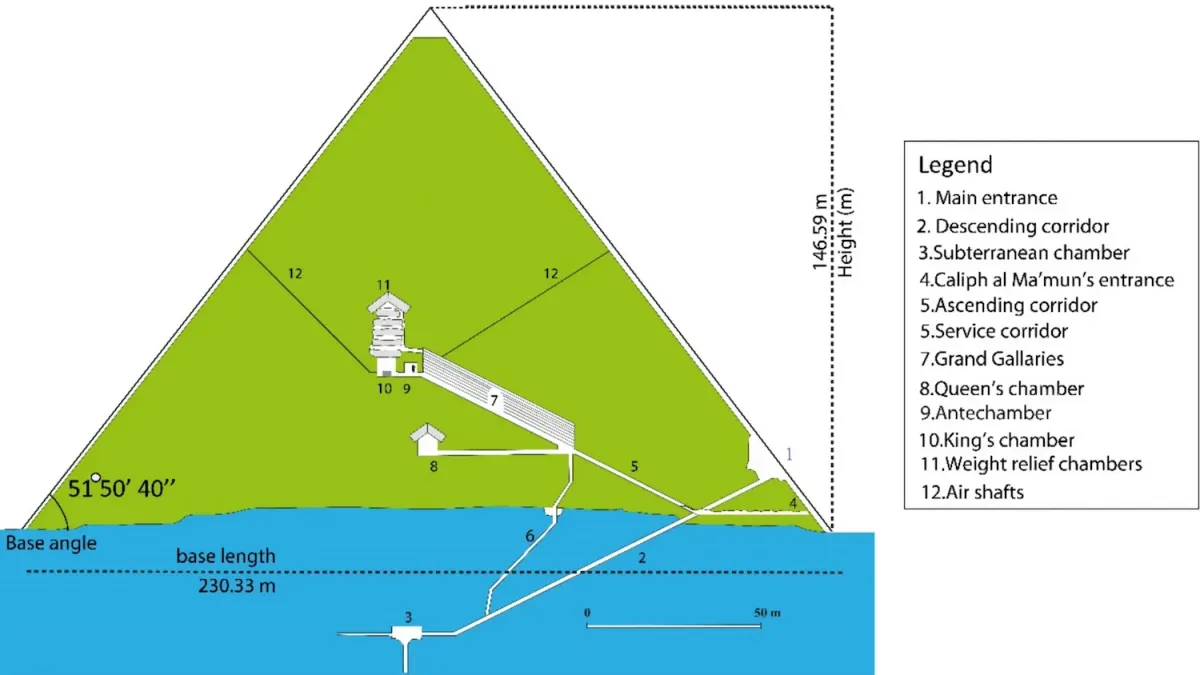
They found that most vibrations (76%) inside the pyramid were between 2.0–2.6 hertz. This means mechanical stress is spread evenly. The nearby soil, however, vibrated at about 0.6 hertz. The team thinks these different frequencies help the pyramid during earthquakes. They limit how much vibrations amplify between the soil and the structure. The Great Pyramid is also built on limestone, which reduces earthquake damage.

The pyramid is also strong against underground vibration increases. Its Subterranean Chamber is carved into the bedrock foundation and does not have boosted frequencies. Readings usually increased with height, peaking in the King's Chamber. However, the Relieving Chambers above the King's Chamber had lower amplification. This suggests builders designed the top chambers to protect against damage.
Intentional Design or Happy Accident?
Salama noted that the pyramid's earthquake resilience might not have been an intentional seismic design. He said it's hard to prove they had a formal earthquake engineering theory.
Instead, the pyramid's strength against earthquakes was likely a side effect of other design choices. This does not lessen the engineering achievement. Many of these achievements were not seen in other cultures for thousands of years.
Salama believes these were effective best practices that improved over generations. They consistently made structures better, more balanced, and durable. Ancient Egyptians had exceptional engineering intuition and a tradition of continuous improvement. This led to incredibly resilient monuments.