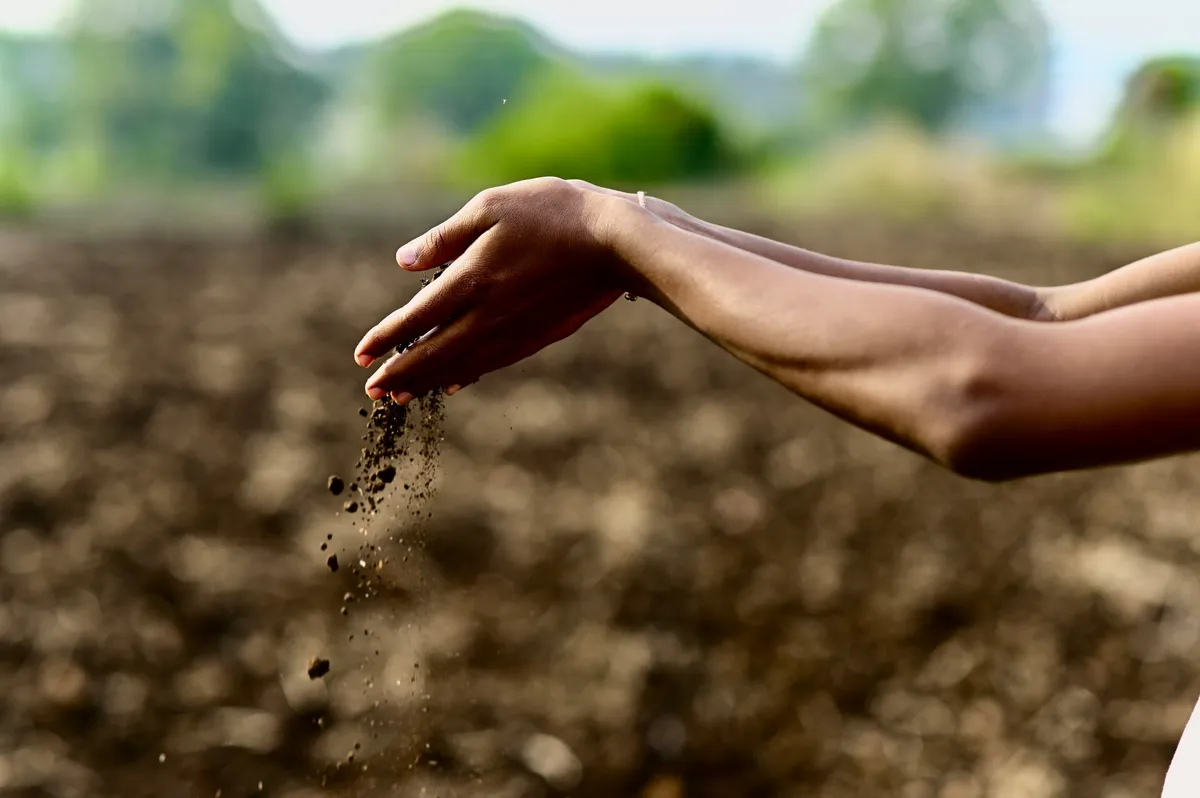
Soils: the unsung heroes of, well, everything. They store carbon, support entire ecosystems, and, oh yeah, make sure we have food and water. But they're also incredibly complex, moody things, constantly changing with the climate, the weather, and whatever farming practices we throw at them. Which makes predicting their future, especially with climate change breathing down our necks, a bit of a nightmare.
Enter a new paper in Frontiers in Science, which suggests that AI isn't just for predicting stock prices or recommending your next binge-watch. It might just be the secret weapon we need to help our soils adapt.
Soil science already dabbles in machine learning for things like digital mapping. But the vision here is bigger: "digital soil twins." Imagine creating a perfect virtual replica of a patch of earth, complete with its microbial residents, all fed by sensor data. You could then test out climate adaptation plans in a computer model, seeing what works (or spectacularly fails) before anyone even gets their boots dirty. Faster results, fewer wasted efforts. Because apparently that's where we are now: giving dirt its own digital doppelgänger.
We're a new kind of news feed.
Regular news is designed to drain you. We're a non-profit built to restore you. Every story we publish is scored for impact, progress, and hope.
Start Your News DetoxYour Digital Dirt Whisperer
To prove this wasn't just a fancy sci-fi plot, a research team tasked a multi-agent AI system with a mission: review scientific papers and brainstorm ideas on how soils store carbon and what stops them. The AI, bless its silicon heart, delivered five distinct ideas, covering everything from climate influence to biological controls and management strategies.
Then, in a move that sounds straight out of a robot reality show, the system even simulated peer review. The AI successfully mimicked crucial parts of the scientific process, going beyond current tools and matching expert research surprisingly well. Professor Alex McBratney from The University of Sydney noted that these AI systems, unlike their simpler machine learning cousins, can actually mimic scientific teamwork, combining reasoning, planning, and diverse knowledge to push the field forward.
Professor Budiman Minasny, also from The University of Sydney, highlighted the practical upshot: faster soil research means a better understanding of our food and climate systems. Think more sustainable farming, better soil management, and earlier detection of nutrient loss, water stress, and erosion. Which, if you think about it, is both impressive and slightly terrifying that a computer can now essentially perform scientific reasoning about dirt.
Of course, it's not all sunshine and perfectly tilled fields. Challenges remain: data quality, model transparency, the sheer cost of computing, and the ever-present ethical questions. Dr. Mercedes Román Dobarco from the Basque Institute for Agricultural Research and Development rightly points out that AI can't replace human judgment, creativity, or critical thinking. It should enhance, not erase, the human element of science.
But by automating tasks like literature reviews, AI can free up soil researchers to focus on the deeper understanding and fieldwork that truly requires a human touch. It's about finding that sweet spot where digital innovation meets real-world application, ensuring our vital soils get the care they need. Because, as Professor McBratney wisely concluded, human knowledge still needs to keep pace. Even if the robots are getting pretty good at talking to the dirt.