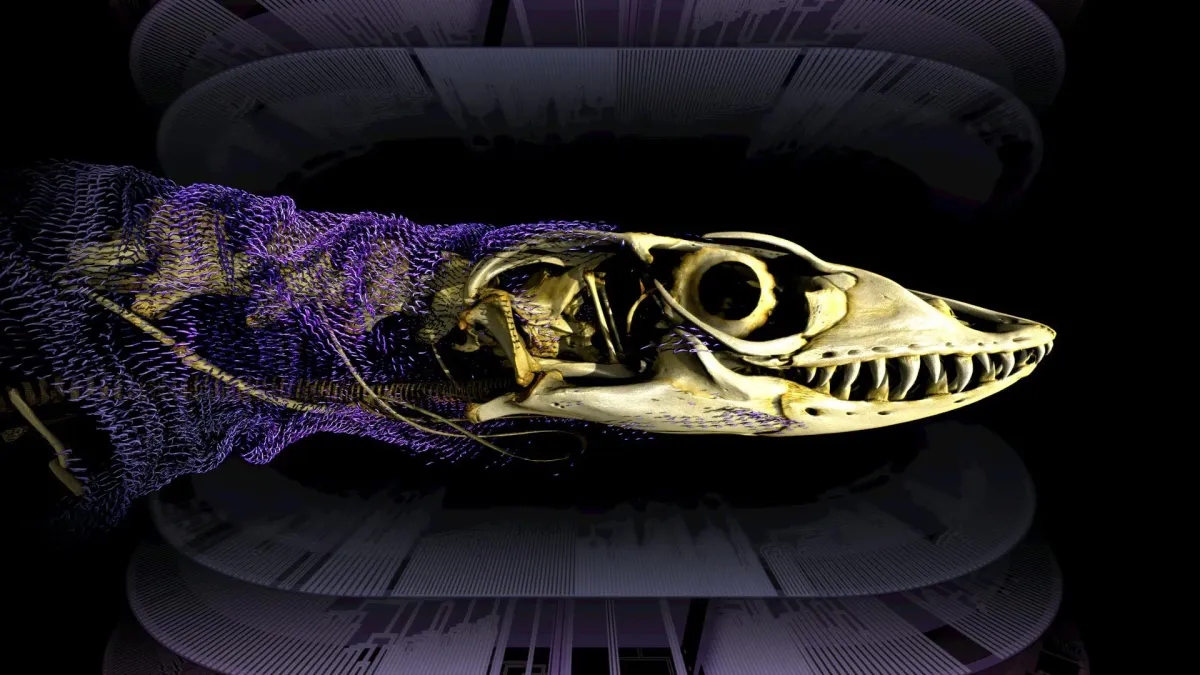
For hundreds of millions of years, reptiles have been rocking built-in body armor. Think turtles, crocodiles, even the occasional dinosaur. But how this bony skin plating, called osteoderms, actually evolved has been a 320-million-year-old head-scratcher. Scientists finally put the pieces together, and the answer is pure evolutionary chaos.
Turns out, this armor didn't come from one super-tough ancestor who passed it down. Oh no. It popped up independently in multiple lizard groups, like a fashion trend that keeps getting reinvented. And here's the kicker: Australian goannas (aka monitor lizards) lost this armor entirely, only to evolve it back millions of years later. Because apparently, that’s just how they roll.
Our own bones actually started in the skin, way back when the first complex animals were figuring things out. Since then, skin bones have been a recurring theme in evolution. Fish scales, for example. But for land animals, especially reptiles, the story was murky. Were they all related by a single armored ancestor? Or did everyone just keep inventing the wheel?
We're a new kind of news feed.
Regular news is designed to drain you. We're a non-profit built to restore you. Every story we publish is scored for impact, progress, and hope.
Start Your News DetoxThe Case of the Vanishing (and Returning) Armor
A new study, published in the Biological Journal of the Linnean Society (the same journal where Darwin dropped his initial ideas, no less), combined fossil records with some serious computer modeling. Their goal: reconstruct 320 million years of reptile skin bone evolution. And they found it was less of a straight line and more of a squiggly mess.
Most lizards first developed their osteoderms during the Late Jurassic and Early Cretaceous periods — over 100 million years ago, when Brachiosaurus was munching leaves and Stegosaurus was... well, doing whatever stegosauruses did. The climate was wild, predators were hungry, and armor was probably a pretty good idea for survival. After this initial boom, things settled down, and most groups kept their bony bling.
Except for one.
Goannas, those speedy Australian lizards, decided the extra weight of osteoderms was cramping their style. So, their ancestors ditched the armor completely. But then, about 20 million years ago, when their descendants made it to Australia and the climate got significantly drier, something truly wild happened: they grew their skin bones back. It's like they remembered they had a perfectly good defense mechanism and decided to reactivate it.
Why the sudden reversal? Scientists think the re-evolved armor helped reduce water loss in the parched Australian landscape and offered protection in open, exposed areas. It also throws a wrench into something called Dollo's law, which basically says a complex trait, once lost, can't just reappear. Goannas, apparently, didn't get that memo.
This epic tale of bone armor appearing, disappearing, and then making a dramatic comeback in Australia (a continent already famous for its evolutionary curveballs) shows that evolution isn't always a one-way street. Sometimes, you just need to re-download an old feature.