You know that feeling when your phone’s at 1% and you desperately need a charger? Your cells feel that too. And scientists just found a way to supercharge their internal power plants, all thanks to a nutrient you probably already eat.
Meet leucine, an amino acid found in your favorite protein-rich foods. Researchers at the University of Cologne just published a study in Nature Cell Biology revealing that leucine doesn't just build muscle; it actively protects and boosts your cells' energy-making factories: the mitochondria. Because apparently, even your cells need a good bouncer to keep things running efficiently.
The Cell's Power Play
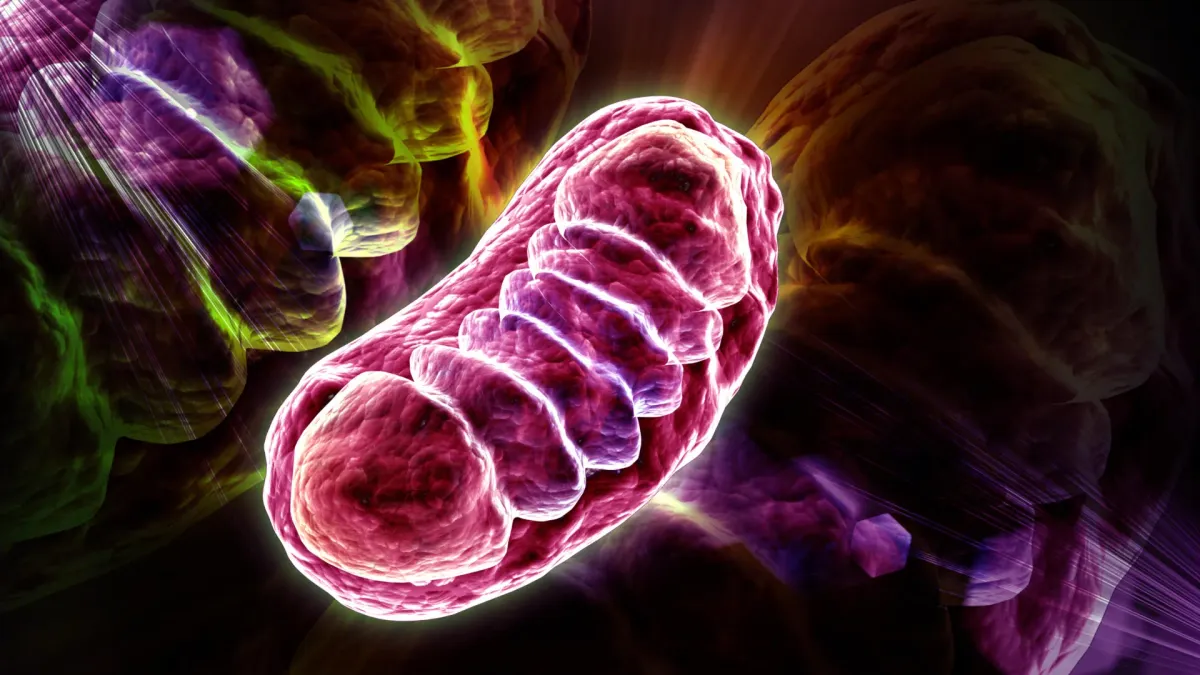
Mitochondria are the tiny dynamos constantly adjusting their output based on your cells' energy demands. Scientists knew diet played a role, but the exact mechanism was a bit of a mystery. Now, thanks to Professor Dr. Thorsten Hoppe and his team, we know leucine is the unsung hero.
We're a new kind of news feed.
Regular news is designed to drain you. We're a non-profit built to restore you. Every story we publish is scored for impact, progress, and hope.
Start Your News DetoxHere’s the deal: leucine is an "essential amino acid," meaning your body can't make it. You get it from things like meat, dairy, beans, and lentils. What the team discovered is that leucine stops specific proteins on the outside of the mitochondria from breaking down. These proteins are crucial for ferrying metabolic molecules into the mitochondria, keeping energy production humming along. Protect the bouncers, and the party inside keeps going strong.
Dr. Qiaochu Li, the study's first author, put it simply: the amount of leucine your cells have directly impacts their ability to crank out energy. More leucine, more efficient energy production, especially when the cell needs to kick into high gear.
The SEL1L Connection
But wait, there's more! The researchers also identified a protein named SEL1L. Normally, SEL1L is the cell's quality control officer, tagging damaged proteins for destruction. The study suggests that leucine might actually reduce SEL1L's activity, which sounds counterintuitive until you realize it means fewer mitochondrial proteins get prematurely broken down. The result? Better mitochondrial efficiency and a big boost in cell energy.
Li did offer a cautionary note: while tweaking leucine and SEL1L levels could ramp up energy, SEL1L also plays a vital role in preventing damaged proteins from accumulating, which is crucial for long-term cell health. It’s a delicate balance, like any good power surge.
Beyond Energy: Cancer and Fertility
The implications stretch far beyond just having more energetic cells. The team also looked at Caenorhabditis elegans roundworms (because, science) and found that issues with leucine breakdown could mess with mitochondrial function and even cause fertility problems. That's a pretty wide net for one nutrient to cast.
They even peered into human lung cancer cells, observing that some cancer mutations affecting leucine metabolism seemed to give cancer cells a survival edge. This hints that understanding this pathway could open new avenues for cancer research and treatment.
So, it turns out nutrients don't just fuel your body; they actively micromanage its energy production. By cracking the code of how leucine controls mitochondria, researchers are hoping to guide new treatments for everything from metabolic disorders to cancer. Just another reminder that what you eat might be doing more than you think. And probably more than your ex ever did for your energy levels.