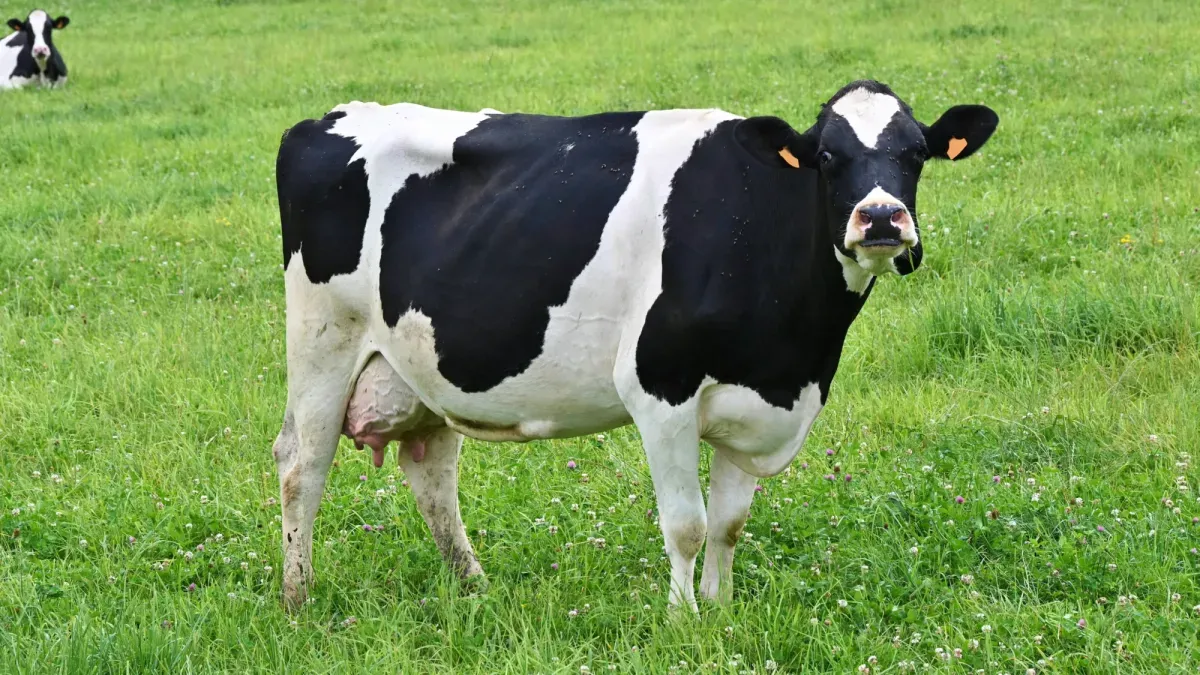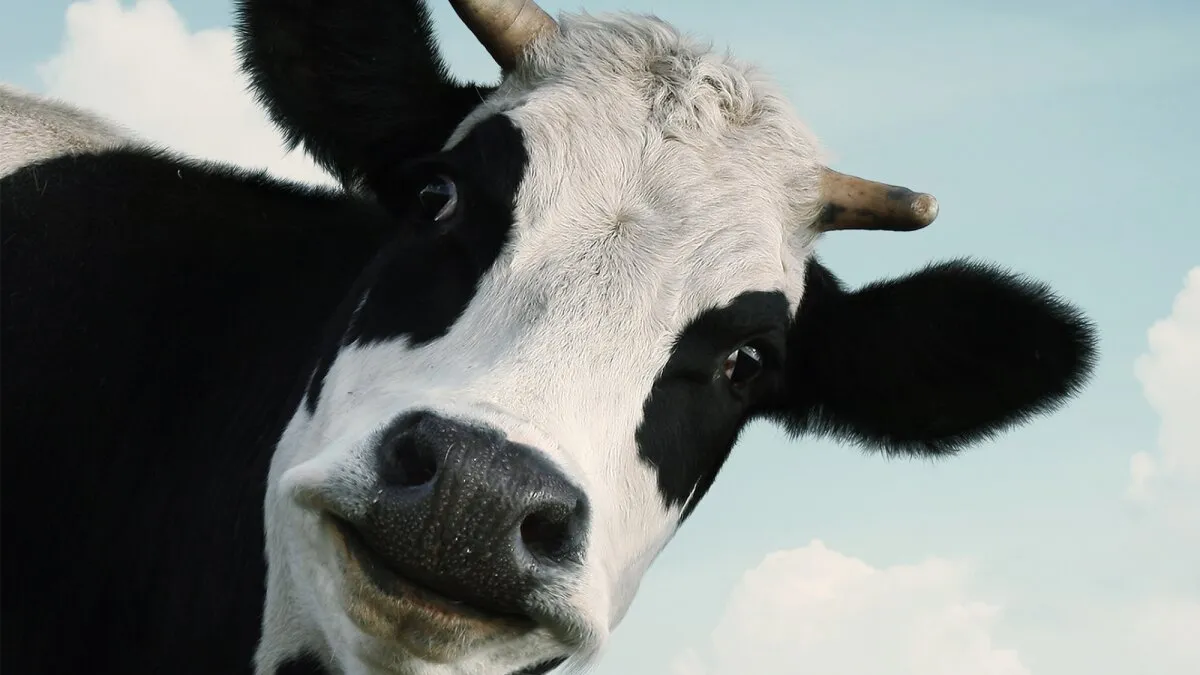
Humans and cattle have a long shared history. Cows were domesticated about 10,500 years ago from an extinct ox species. Today, they are a major source of protein, dairy, and leather worldwide.
While we know a lot about cows, it's less clear how much they know about us. Studies show some domestic animals, like sheep and pigs, can recognize individual humans. However, this ability had not been tested in cows until now.
Cows Recognize Human Faces
A new study shows that cows can tell the difference between familiar and unfamiliar faces. Léa Lansade, a senior researcher at the French National Research Institute for Agriculture, Food and Environment (INRAE), led this research.
We're a new kind of news feed.
Regular news is designed to drain you. We're a non-profit built to restore you. Every story we publish is scored for impact, progress, and hope.
Start Your News DetoxFacial recognition is key for social interaction among primates. Faces share important details like age, sex, and who a person is.
Lansade explained that people who work with cattle have different ideas about cow intelligence. Some think cows are simple, while others see them as observant and socially smart. The researchers wanted to add scientific data to this discussion. They aimed to understand what cows actually perceive, remember, and understand about humans.
The study involved 32 Prim’Holstein cows (Bos Taurus Taurus), aged 21 to 15 months. Four caretakers had looked after these cows daily since birth. The cows might have seen other people occasionally, like visitors to the farm. None of the cows had been part of similar experiments before.
Researchers filmed eight adult men, aged 30 to 60. This included the four familiar caretakers and four unfamiliar colleagues the cows had never seen.
Visual and Cross-Modal Tests
The team conducted two tests: a visual preference test and a cross-modal test. In the visual preference test, cows watched two silent videos at the same time. One video showed a familiar human face, and the other showed an unfamiliar face.
The cows stared longer at the videos of unfamiliar people. This suggests they noticed the difference.
In the cross-modal test, a voice played along with the videos. Sometimes the voice matched the face (congruent), and sometimes it didn't (incongruent). The cows looked much longer at videos where the voice matched the face.
These results show that cows don't see all humans as the same. They can tell familiar people from strangers. They also recognize people they have met before.
Cows can also link different details about a person, like their face and voice. This forms a complete picture of that person.
Lansade believes this cross-modal recognition means cows form mental images of familiar people. They process social information in a more complex way than once thought.
The researchers also checked the cows' heart rates during the videos. Neither familiar nor unfamiliar faces or voices changed the cows’ emotional response.
These findings suggest cows can combine information from different senses. This points to a higher level of thinking than just recognizing someone using only one sense.
The researchers noted, "In this study, using visual preference and cross-modal tests, we showed that cows are able to process human faces presented in 2D on videos and to associate familiar and unfamiliar faces with the corresponding voices by integrating multiple sensory modalities.”
The team hopes these findings will lead to more studies on cow cognition. They want to learn how cows gain knowledge, process information, and interact with humans.
Lansade shared, “These findings profoundly change the way we look at farm animals. And we know that the better we understand an animal, the better we tend to treat it.”
Deep Dive & References
Cows recognize a familiar human face - PLOS, 2024