Heat moves through most materials the way water flows downhill — it goes where physics says it has to go. But researchers at Oak Ridge National Laboratory just proved you can actually redirect it, using nothing but an electric field.
Here's what they found: when you apply electricity to certain ceramics called relaxor-based ferroelectrics, heat travels through them nearly three times faster in one direction than any other. That's not a small tweak. That's a fundamental shift in how we think about controlling temperature in electronics.
"Being able to control both how fast and in what manner heat flows could lead to devices that manage thermal energy far more efficiently," said Puspa Upreti, a postdoctoral researcher on the team.
We're a new kind of news feed.
Regular news is designed to drain you. We're a non-profit built to restore you. Every story we publish is scored for impact, progress, and hope.
Start Your News DetoxHow Phonons Got Obedient
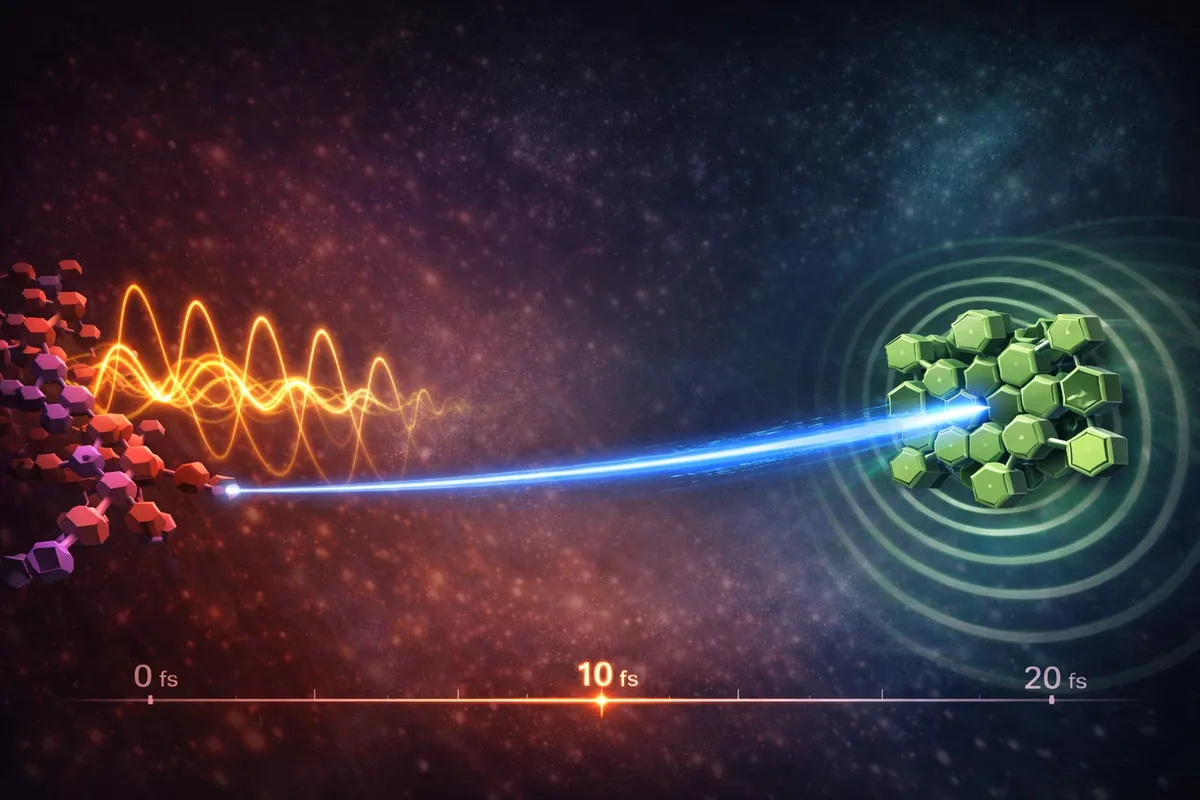
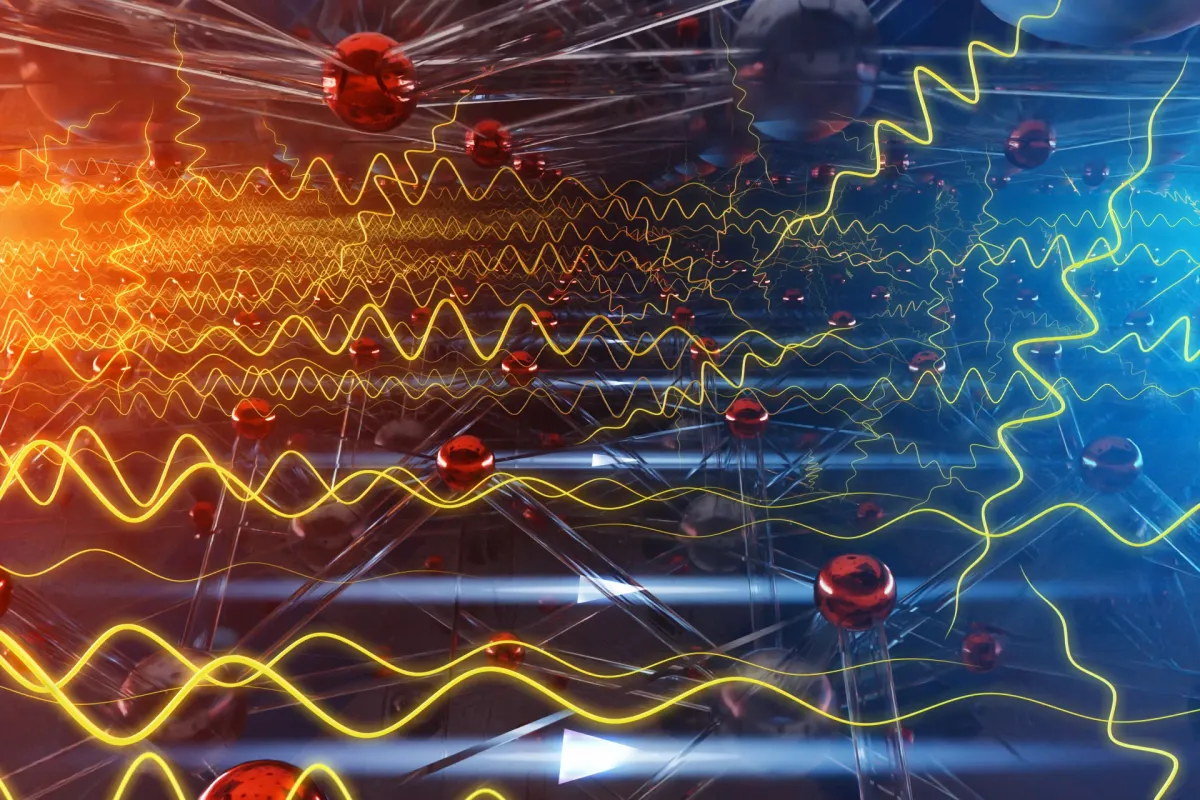
Heat isn't actually a thing — it's the movement of atomic vibrations called phonons. Think of them like tiny runners carrying energy through a crystal. Normally, these runners collide with obstacles constantly, losing energy and slowing down. The electric field acts like a traffic director, lining up the obstacles so phonons can sprint in one direction with barely any interruptions.
When atoms vibrate in the same direction as the applied electric field, the phonons last longer before fizzling out. Longer lifespan means they travel farther. Farther travel means heat moves faster. The math checks out — and the results are wild.
Previous research on similar materials had achieved only a 5–10 percent improvement in heat conduction. This new work showed a 300 percent enhancement. Michael Manley, the senior researcher who led the experiments, was direct about the gap: "While earlier work led us to expect only a modest effect, observing a threefold difference turned out to be a significant result."
Why This Matters for Your Phone (and Power Plants)
Every electronic device you own generates heat. Your laptop throttles performance when it gets too hot. Data centers spend billions on cooling. Power plants waste enormous amounts of energy as heat that could theoretically be recaptured. Better heat management touches all of it.
If engineers can build devices using these ceramics, they could create electronics that stay cooler with less power spent on fans and cooling systems. Heat-to-electricity converters could capture waste heat from industrial processes and turn it back into usable energy. Chip designs could become more efficient because heat wouldn't bottleneck performance.
The researchers proved this works by running experiments at Oak Ridge's Spallation Neutron Source — essentially a giant machine that fires neutrons at materials to watch how atoms move inside them. Neutron scattering lets you see atomic motion in a way normal imaging can't. The team watched phonons behave differently under an electric field and measured exactly how much heat moved through the material as a result.
The next step is scaling. Lab discoveries don't automatically become consumer products. But the physics is confirmed, the measurements are solid, and the improvement is too large to ignore. Engineers are already thinking about how to integrate these ceramics into real devices.
For a field that's been chipping away at thermal management problems for decades, this is the kind of breakthrough that changes the conversation — not because it solves everything, but because it proves a whole new approach actually works.