For decades, neuroscientists operated from a simple idea: the teenage brain mostly tears itself down. Synapses — the connections that let neurons talk to each other — peak in childhood and then get pruned away during adolescence, the theory went. Too much pruning, researchers thought, might explain conditions like schizophrenia.
Turns out that story was incomplete.
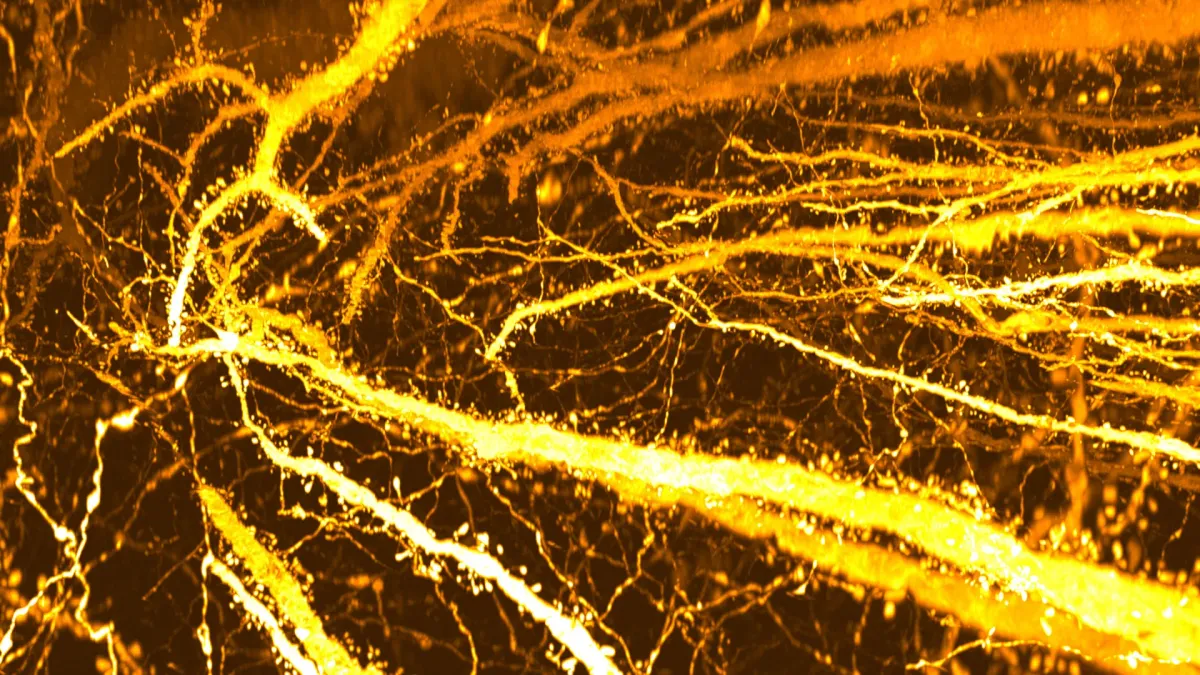
A team at Kyushu University has discovered something the field missed: while adolescent brains do prune connections, they're simultaneously building something new. Using advanced microscopy to peer into mouse brain tissue, the researchers found that during the teenage years, neurons create tightly packed clusters of synapses — what they call "hotspots" — in specific locations they didn't have before.
"We did not set out to study brain disorders," says Professor Takeshi Imai, the study's lead researcher. "After developing a high-resolution tool for synaptic analysis in 2016, we looked at the mouse cerebral cortex out of curiosity. Beyond seeing the beauty of the neuronal structure, we were surprised to discover a previously unknown high-density hotspot of dendritic spines."
We're a new kind of news feed.
Regular news is designed to drain you. We're a non-profit built to restore you. Every story we publish is scored for impact, progress, and hope.
Start Your News DetoxThe team focused on Layer 5 of the cerebral cortex — a region that collects signals from across the brain and sends the final output back out. Using tissue clearing agents and super-resolution microscopy, they mapped dendritic spines (tiny protrusions where connections form) across entire neurons for the first time. What emerged was striking: one section of the dendrite contained an unusually dense concentration of these connection points. This hotspot didn't exist early in life. It appeared specifically during adolescence.
Building, Not Just Breaking Down
This matters because it fundamentally changes how we should think about what goes wrong in certain brain conditions. When the researchers examined mice with mutations in genes linked to schizophrenia — including Setd1a, Hivep2, and Grin1 — they found something telling: during adolescence, these mice couldn't form synapses properly in the hotspot regions.
"While synaptic pruning occurs broadly across dendrites, synapse formation also takes place in specific dendritic compartments during adolescent cortical development," explains Ryo Egashira, the study's first author. "Disruption of this process may be the key factor in at least some types of schizophrenia."
The implication is significant. If schizophrenia involves a failure to build these crucial clusters — rather than excessive pruning — then researchers and clinicians might need to rethink both how the condition develops and how to intervene.
The next step is mapping which brain regions are building these new connections during the teenage years, and understanding what circuits are actually being constructed during this window. That knowledge could reshape how we understand both normal brain development and the roots of neuropsychiatric conditions that emerge in adolescence.