You know how plants lean into the light, soaking up all that good sunshine to grow big and strong? Well, it turns out light is also a bit of a frenemy. While it's essential for photosynthesis, new research suggests it also makes plants, shall we say, a little too strong, which actually slows down their growth.
It’s like giving a teenager a growth spurt, then immediately strapping them into a very tight, very sturdy corset. They’re strong, sure, but good luck getting them to expand much.
Scientists at Osaka Metropolitan University just peeled back another layer on this leafy paradox. They've uncovered a hidden balancing act between a plant’s structural integrity and its ability to expand, and it’s all thanks to the sun.
We're a new kind of news feed.
Regular news is designed to drain you. We're a non-profit built to restore you. Every story we publish is scored for impact, progress, and hope.
Start Your News DetoxLight Makes Plant Tissues Cling On For Dear Life
Professor Kouichi Soga and his team focused on young pea stems, because apparently, peas have all the secrets. They developed a rather clever method to measure just how tightly the outer skin (epidermis) of the stem clings to the squishier inner tissues. The results were pretty stark.
Plants that had been basking in the light had significantly stronger connections between these layers compared to their counterparts grown in the dark. "This finding is quite interesting," Professor Soga noted, with the kind of understated enthusiasm only a scientist can muster when they’ve found something genuinely novel. "It has never been reported before."
So, what’s light’s secret weapon in this plant-tightening scheme?
The Sticky Secret: p-Coumaric Acid
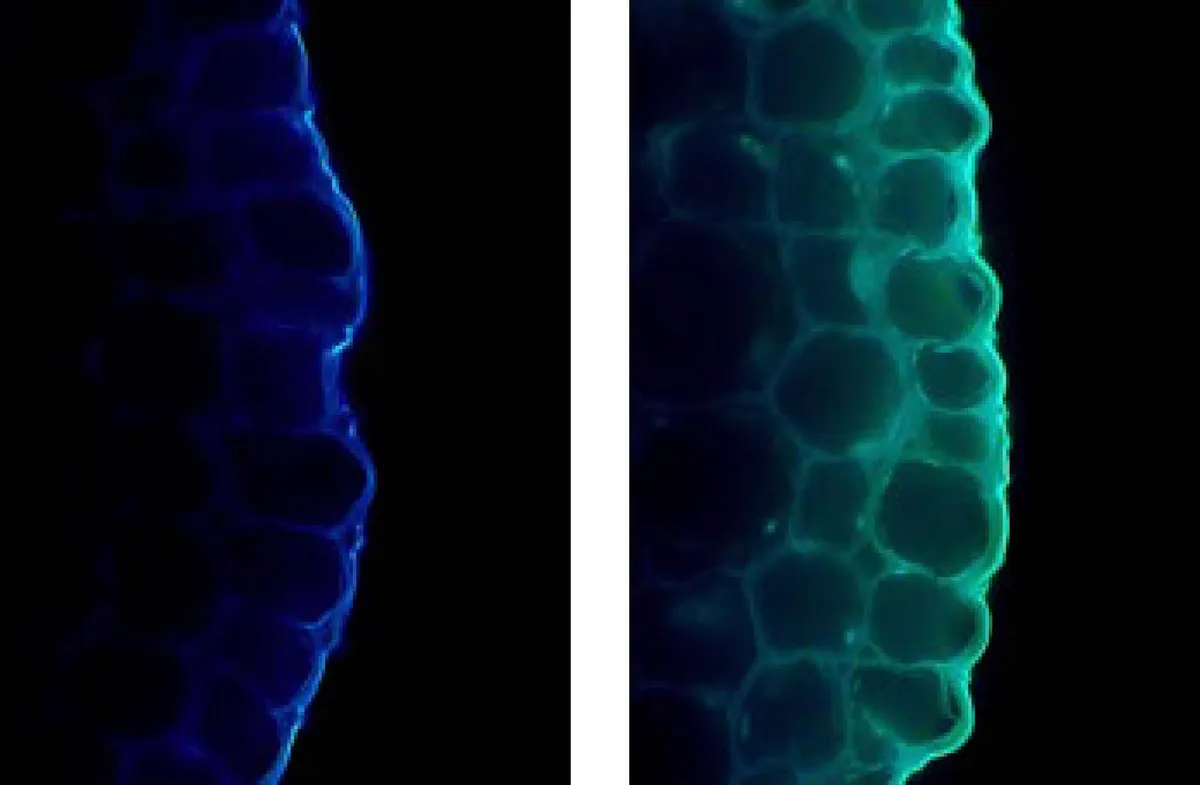
Using a fancy fluorescence microscope (because how else do you peer into the molecular drama of a pea stem?), the researchers found a culprit: a compound called p-coumaric acid. Stems grown in light had a lot more of this stuff.
This p-coumaric acid, as it turns out, is a key player in strengthening plant cell walls. And stronger cell walls mean those outer and inner tissues are basically super-glued together. Yuma Shimizu, a graduate student and lead author, confirmed this, highlighting p-coumaric acid’s role in creating a sort of internal plant rebar.
The Downside of Being Too Strong
Here’s the rub: while all this internal scaffolding makes a plant sturdier (great for standing up to a breeze, less great for rapid expansion), it also makes it harder for those inner tissues to, well, expand. Imagine trying to inflate a balloon that’s already been shrink-wrapped.
The upshot? Slower overall stem growth. So, light gives, and light also takes away, at least in terms of unbridled stretching. It helps the plant grow, but also subtly puts the brakes on by making its internal structure tighter.
The researchers suspect this push-pull mechanism might be a common way plants regulate their growth, a kind of natural growth governor. If they can figure out how to dial this stickiness up or down, it could mean growing crops that are either super resilient or super speedy – a win for farming, either way. Just published in Physiologia Plantarum, this study certainly sheds some new light on plant growth. Literally.