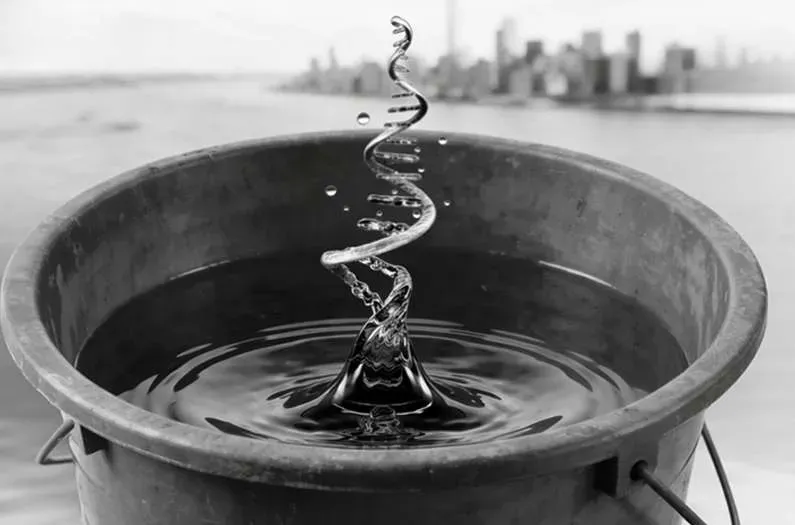
When scientist Mark Stoeckle went fishing in New York City's East River, he found more than just fish. He was testing if DNA in the water could show which fish lived in the polluted river between Manhattan, Brooklyn, and Queens.
The water samples he collected from Manhattan's edge revealed much more than just aquatic life. They also showed what New Yorkers were eating and how many rats and pigeons were around. This information was published in PLOS One. Each bucket of water offered a glimpse into the Anthropocene, the era shaped by human influence.
"Environmental DNA doesn’t just tell us what lives in the water," Stoeckle said. "It reveals insights into the entire ecosystem surrounding it, including the city itself."
We're a new kind of news feed.
Regular news is designed to drain you. We're a non-profit built to restore you. Every story we publish is scored for impact, progress, and hope.
Start Your News DetoxA New Way to Monitor City Life
These findings are more than just interesting. They could help track many important things. This includes changes in fish populations and how well environmental restoration efforts are working. It could also show trends in what people are eating and if New Yorkers are making progress against rats.
Stoeckle noted that monitoring urban biodiversity could expand greatly and cheaply. It would use minimal equipment at a low cost. He added that this ability to combine environmental and human signals makes eDNA a powerful tool for understanding the Anthropocene.
The main goal of this research was to see if environmental DNA (eDNA) testing could measure fish populations near a city. Organisms shed this DNA into the environment. It's seen as a powerful tool to detect species even if they are never seen. Scientists have used air quality monitors to find dozens of species. They have also counted species in zoos from air samples. Air and water samples have created detailed pictures of nearby life.
However, there have been challenges. It's one thing to know if a species is present. It's much harder to use DNA to estimate population size. Also, a lot of DNA in a crowded place like New York City might hide signals from fish. This is especially true when rainstorms send 18 billion gallons of raw sewage into waterways each year.
What the River Reveals
Jesse Ausubel, who leads The Rockefeller University’s Program for the Human Environment, explained that after heavy rain, the DNA of almost everything in the city ends up in the East River. He compared a rainstorm to Times Square on New Year’s Eve: crowded, noisy, and full of signals.
To study this, scientists collected two buckets of water each week from May 2024 to May 2025. They took samples from the same spot on the Manhattan side of the river. In the lab, they filtered the water and analyzed the residue for DNA. They then compared it to a library of known DNA patterns.
The results showed fascinating patterns for fish. While scientists couldn't count individual species populations, the amount of DNA from one species compared to another matched traditional net surveys. This means changes in DNA levels over time likely reflect real increases or decreases in their numbers.
Seasonal changes supported this connection. Fish DNA was lowest in winter when fish numbers are low. It surged tenfold in warmer summer months, matching population patterns.
The study also suggested that efforts to rebuild oyster reefs since 2015 are attracting fish. They found a lot of DNA from skilletfish and feather blenny, which are drawn to oyster reefs. A similar survey in 2016 found little sign of these species. This matches results from nearby fish traps, where these species started appearing in 2020.
Beyond the Water
More unexpected results came from the surrounding land. The levels of DNA from different commonly eaten meats matched what New Yorkers consume. Chicken was most common, followed by beef and pork. Traces of sheep, goat, turkey, salmon, and tilapia were also found.
They also found DNA from city wildlife. Norway rats had the highest concentration of DNA, followed by pigeons, Canada geese, and ring-billed gulls. Surprisingly, they also found DNA from less urban animals like white-tailed deer and beavers.
Ausubel said these results show that a simple, low-cost method could monitor cities worldwide. A year of monitoring cost $15,000 and some time, much less than traditional fishing surveys.
"Urban waterways worldwide could become distributed observatories of ecological change," Ausubel noted. They could report almost real-time what lives in and near them, including fish, bats, beavers, and foxes. He believes that with good coordination, this approach could become the backbone of urban coastal monitoring.
Deep Dive & References
Biomonitoring in the Anthropocene: Urban estuary environmental DNA tracks marine fish, terrestrial wildlife, and human diet - PLOS One, 2026