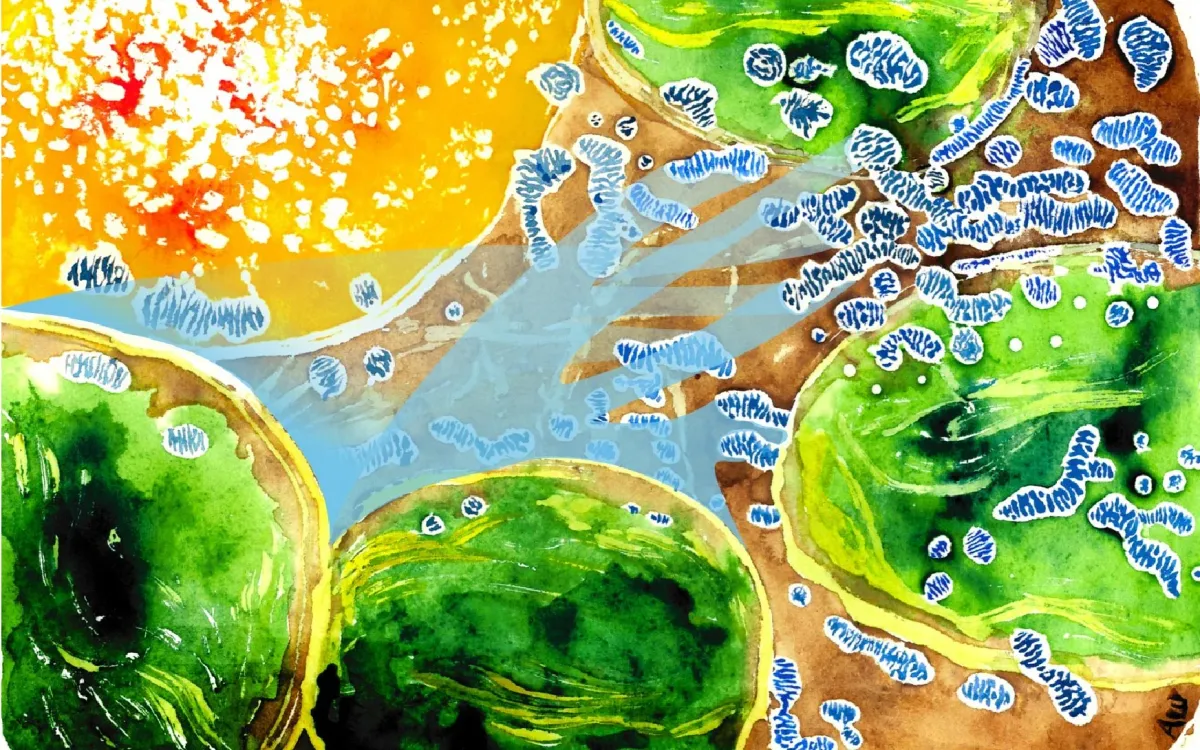
Scientists at the University of Helsinki found a new interaction inside plant cells. They discovered that mitochondria can pull oxygen away from chloroplasts. This shows a new way plants might control oxygen levels in their tissues. It also gives new insights into how plants handle stress.
Dr. Alexey Shapiguzov led the study. The results were published in the journal Plant Physiology.
Oxygen's Role in Plants
Oxygen is crucial for many plant functions. These include metabolism, growth, immune responses, and adapting to stress. Earlier research from the University of Helsinki showed oxygen can even start wound healing in plants. However, scientists still don't fully understand how plants control oxygen levels inside their tissues.
We're a new kind of news feed.
Regular news is designed to drain you. We're a non-profit built to restore you. Every story we publish is scored for impact, progress, and hope.
Start Your News DetoxTwo main parts of plant cells, mitochondria and chloroplasts, affect oxygen activity. Mitochondria use oxygen for cellular respiration to make energy. Chloroplasts create oxygen as a byproduct of photosynthesis.
Even though both processes are well-studied, how oxygen moves between these two parts was not clear.
How Mitochondria Affect Oxygen
The research team used genetically modified Arabidopsis thaliana plants. These plants had defects in their mitochondria, which made alternative respiratory enzymes active. This caused the mitochondria to use oxygen faster than usual.
The modified plants showed two key things:
- More mitochondrial respiration lowered oxygen levels in plant tissues.
- Chloroplasts in these plants became resistant to methyl viologen. This chemical usually creates harmful reactive oxygen species by diverting electrons to oxygen.
When researchers put the plants in low oxygen conditions using nitrogen gas, the electron transfer to oxygen dropped sharply. This meant methyl viologen was running out of oxygen.
Mitochondria Can Reduce Oxygen in Chloroplasts
These experiments revealed a new interaction within plant cells. When mitochondria use more oxygen during stress, they can lower the oxygen concentration inside chloroplasts.
This internal "oxygen drain" impacts photosynthesis and how reactive oxygen species are handled. These changes might help plants adapt to environmental shifts.
Dr. Shapiguzov noted that this is the first evidence of mitochondria influencing chloroplasts through oxygen exchange inside the cell. This discovery adds to our understanding of how plants manage energy and react to stress.
Future for Plant Stress and Crops
Understanding how respiration and photosynthesis interact through oxygen exchange helps explain plant energy management. It might also show how plants respond to challenges like day-night cycles or flooding.
This discovery could also lead to better ways to measure and image plant health. Such tools could help plant breeders and allow earlier detection of stress in crops.
Deep Dive & References
Mitochondria affect photosynthesis through altered tissue levels of O2 - Plant Physiology, 2025