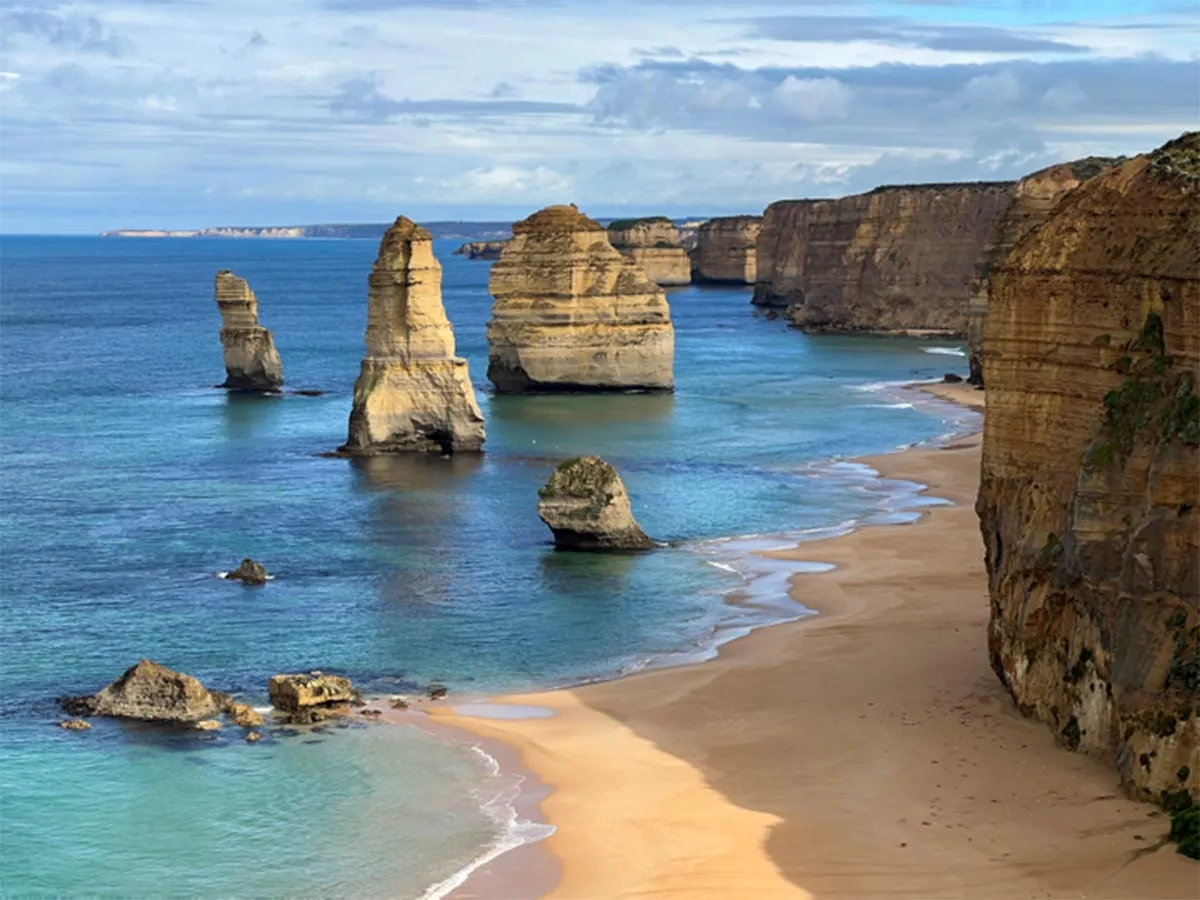
Australia's famous Twelve Apostles are towering limestone formations. Researchers at the University of Melbourne have finally explained how they formed.
Their study shows that slow movements of Earth's tectonic plates lifted and tilted these massive structures from the ocean floor over millions of years. The sea then carved them into the shapes we see today.
A Window into Earth's Past
Associate Professor Stephen Gallagher, who led the study, explained that the Apostles are like "environmental time capsules." Each layer holds information about Earth's climate, tectonic activity, plants, and animals from millions of years ago.
We're a new kind of news feed.
Regular news is designed to drain you. We're a non-profit built to restore you. Every story we publish is scored for impact, progress, and hope.
Start Your News DetoxThis includes a time about 13.8 million years ago when the climate was much warmer than it is now. Scientists are using this information to understand future temperatures and sea levels as climate change continues.
The researchers used microscopic fossils to get a more accurate age for the Apostles. They found the formations are between 8.6 and 14 million years old, which is younger than previous estimates.
Associate Professor Gallagher noted that only eight of the original twelve Apostles remain. This makes studying them even more urgent.
How the Apostles Were Formed
The research clarifies how these formations went from the ocean floor to coastal landmarks. Tectonic forces slowly pushed the rock layers upwards over millions of years.
However, the dramatic pillars we see today only appeared much later. After the last Ice Age, coastal erosion exposed and carved the limestone into the towering stacks along the shoreline.
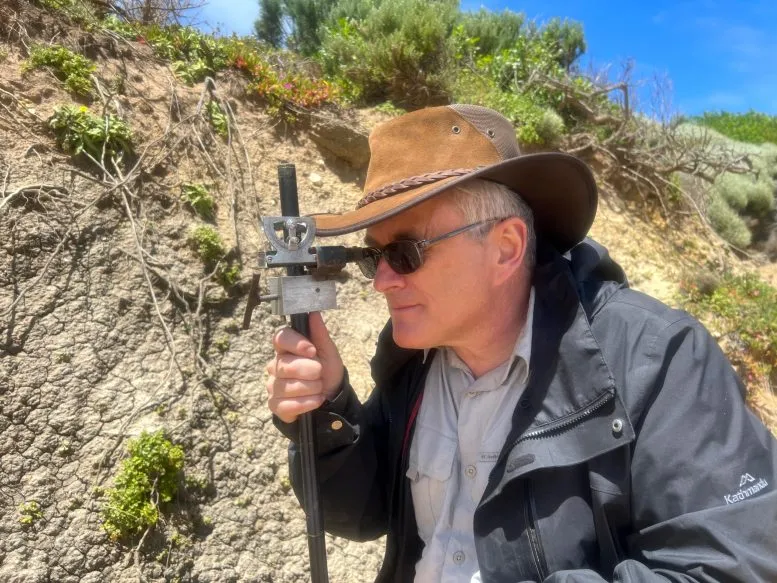 Lead researcher Associate Professor Stephen Gallagher, University of Melbourne, using a Jacob’s staff to measure the thickness of the Twelve Apostle layers. Credit: Mark Cuthell
The uplift was not smooth. The team found that the rock layers bent and fractured as they moved.
Associate Professor Gallagher explained that the limestone layers are tilted by a few degrees. Small fault lines, which are signs of ancient earthquakes, can also be seen in the cliffs.
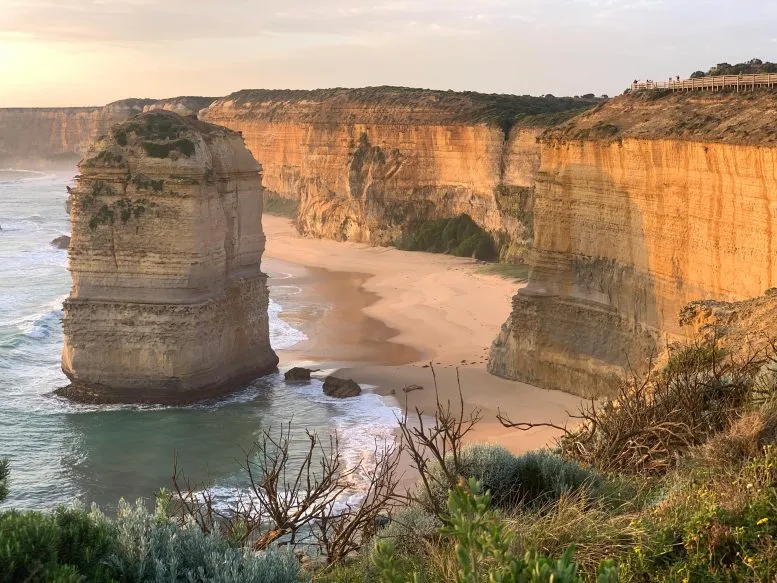
Scientists are now studying individual layers in more detail. They hope to reconstruct past climates, ocean conditions, and sea levels. This work will help them understand how ancient geological processes still shape modern coastlines and cause ongoing erosion.
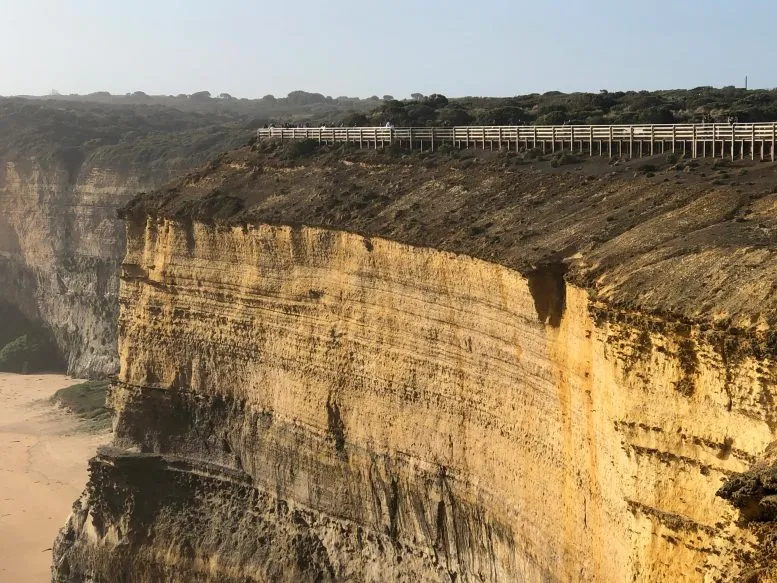 Layers can be seen in the cliffs next to the Twelve Apostles. Credit: Stephen Gallagher
Deep Dive & References
The geology of the Twelve Apostles in the Port Campbell Embayment in southeast Australia - Australian Journal of Earth Sciences, 2026