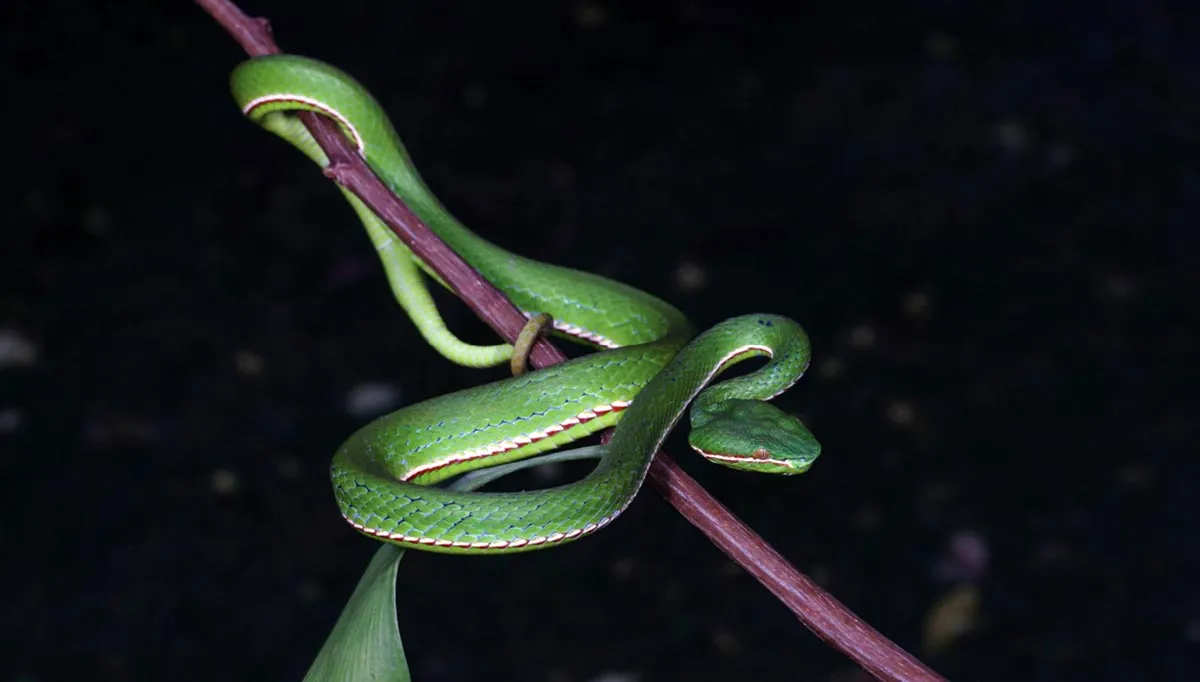
A bright green pitviper, previously mistaken for a common snake, has been identified as a new species in China's Sichuan mountains. Researchers named it Trimeresurus lii, also known as the Huaxi Green Pitviper.
The discovery was made by scientists from the Chengdu Institute of Biology and the Giant Panda National Park. They were surveying the West China Rain Zone, an area rich in biodiversity.
The snake's name, Trimeresurus lii, honors Li Er, an ancient Chinese philosopher known as Laozi. His teachings focus on humans and nature living together in harmony. This idea fits well with the conservation goals of the Giant Panda National Park where the snake was found.
We're a new kind of news feed.
Regular news is designed to drain you. We're a non-profit built to restore you. Every story we publish is scored for impact, progress, and hope.
Start Your News DetoxUncovering a Hidden Species
The Huaxi Green Pitviper is the 58th known species in its genus, Trimeresurus. It is only the second of its specific subgenus found in Sichuan Province. For many years, people thought these snakes were the same as the bamboo pitviper (T. stejnegeri) because they look so similar.
However, detailed genetic tests and close physical examination showed they are a distinct species. DNA analysis revealed that this snake population forms its own unique evolutionary branch. Researchers also found specific physical traits, like perfectly smooth head scales, that set it apart from related snakes.

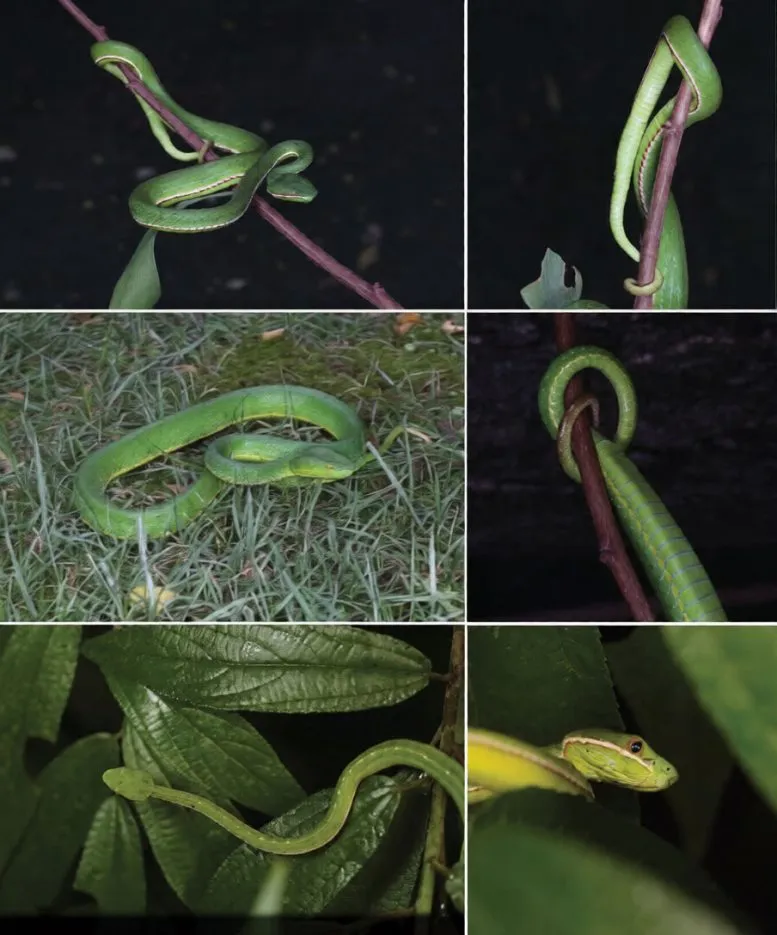
The discovery was published in the journal Zoosystematics and Evolution. The snake is well-adapted to its environment and has striking features. Both male and female Huaxi Green Pitvipers are grassy green. However, males have red-and-white stripes on their sides and amber eyes, while females have yellow stripes and orange-yellow eyes.
A Venomous Resident of Sichuan's Rainforests
Like other Trimeresurus species, the Huaxi Green Pitviper is venomous. Its bite can cause serious health issues. These snakes often live near mountain communities, which means they could pose a risk to local people and visitors.
The pitvipers can grow up to about 31 inches long. They live in the humid forests of Mt. Emei and Xiling Snow Mountain. The West China Rain Zone is a global hotspot for biodiversity, and many species there are still not well understood.
Researchers say this discovery shows that much wildlife remains unknown, even in places that seem well-explored. They emphasize the importance of continuing field surveys in biodiversity hotspots.
 Map showing the type localities of Trimeresurus (Viridovipera) species and the localities of Trimeresurus lii sp. nov. Credit: Bo Cai
Deep Dive & References
A new species of the genus Trimeresurus Lacépède, 1804 (Squamata, Viperidae) from western Sichuan Province, China - Zoosystematics and Evolution, 2026