For decades, paleontologists have puzzled over why Triceratops had such an unusually massive nasal cavity—nearly as big as its brain case. A team from the University of Tokyo may have finally figured it out: the dinosaur's oversized snout wasn't primarily for smelling. It was an engineering solution to a heat problem.
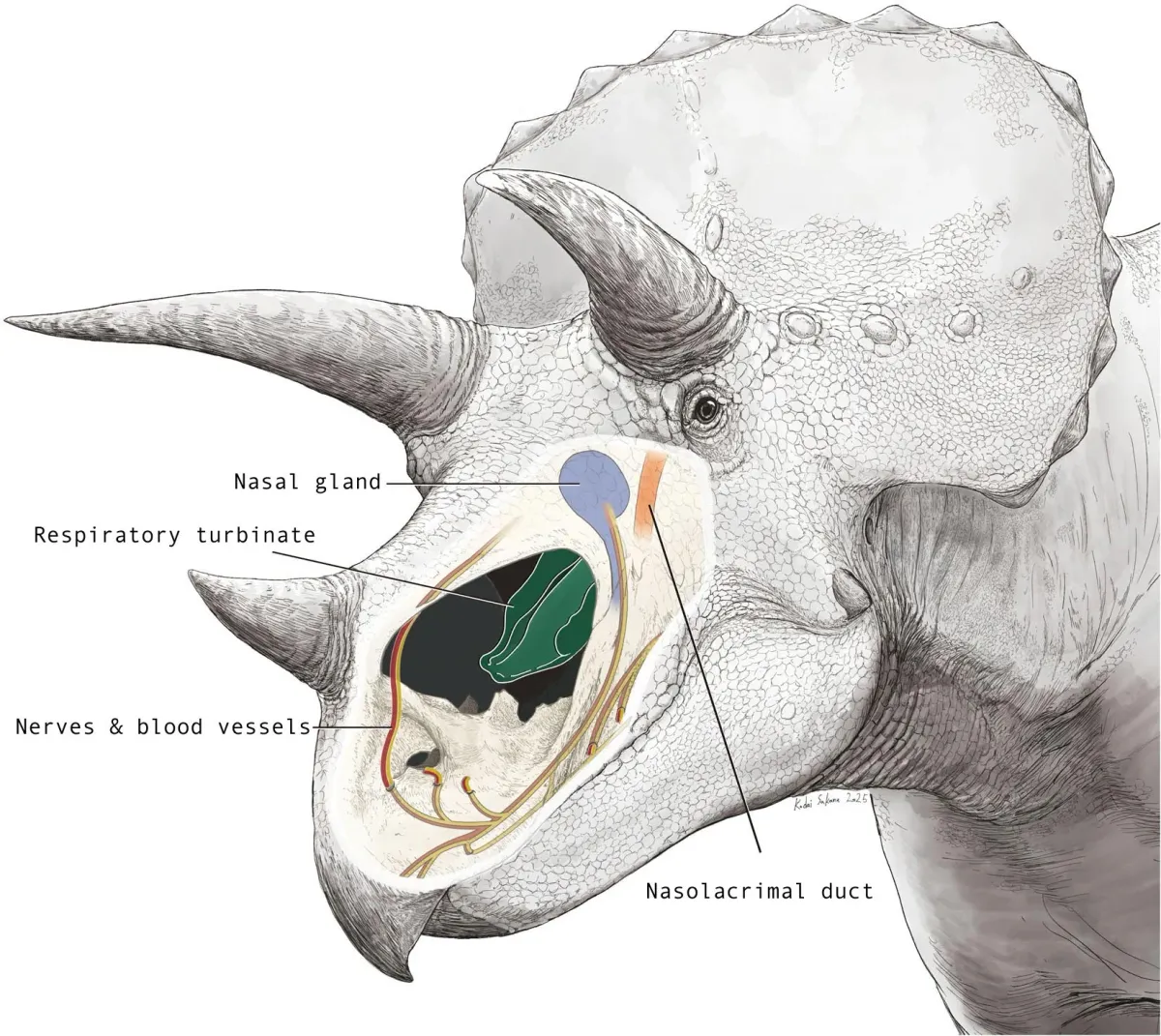
By reconstructing the soft tissues inside fossilized Triceratops skulls using CT scans and comparing them to the nasal anatomy of modern birds and crocodiles, researchers discovered that the dinosaur's nose contained specialized structures for regulating temperature and conserving moisture. For a 9-ton animal living in a warm climate, shedding excess heat efficiently could mean the difference between thriving and overheating.
How the Puzzle Came Together
Seishiro Tada, a research associate at the University of Tokyo Museum, became obsessed with this mystery while examining a fossilized Triceratops specimen. "I couldn't figure out how the organs fit within it even though I remember the basic patterns of reptiles," he said. The challenge was that Triceratops had evolved an unusual internal wiring system. In most reptiles, nerves and blood vessels traveling to the nose take a route through the jaw. But Triceratops' distinctive skull shape—with its massive horns and bony frill—blocked that pathway. Instead, these structures had to reroute entirely through the nasal region itself.
We're a new kind of news feed.
Regular news is designed to drain you. We're a non-profit built to restore you. Every story we publish is scored for impact, progress, and hope.
Start Your News Detox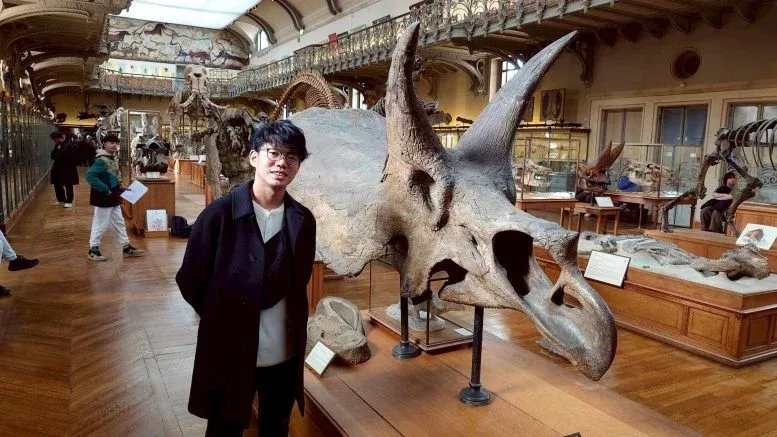
Tada used 3D-printed pieces of Triceratops skulls to reconstruct how this anatomy worked. The puzzle revealed something remarkable: the dinosaur's nasal cavity contained respiratory turbinates—thin, curled structures that expand surface area for heat exchange between blood and air. Modern birds and mammals have them. Most dinosaurs don't. But Triceratops and its horned relatives appear to have evolved them independently, suggesting they served a critical function.
Why This Matters for Understanding Dinosaurs
This discovery reshapes how we think about dinosaur physiology. Triceratops wasn't fully warm-blooded like modern mammals, but it wasn't cold-blooded either. The presence of respiratory turbinates suggests it occupied a middle ground—a metabolic strategy that required active temperature management. For a massive herbivore moving through warm Cretaceous landscapes, the ability to cool down while conserving precious water would have been genuinely valuable.
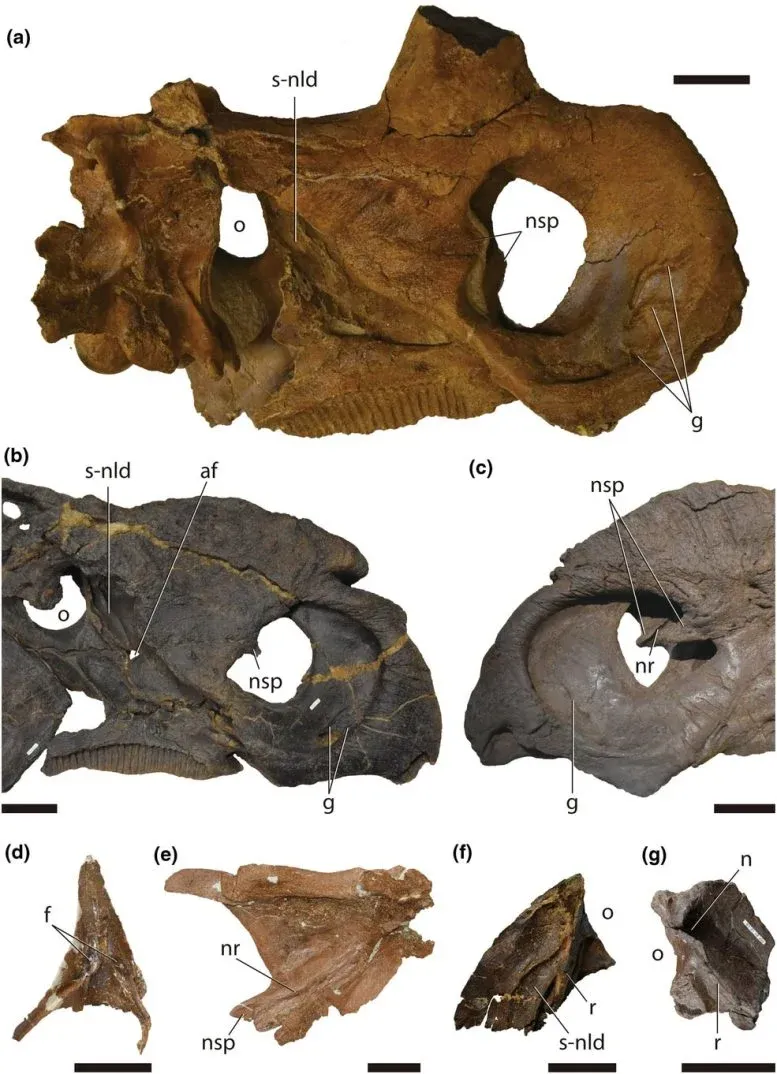
The research also fills a significant gap in paleontological knowledge. Horned dinosaurs were among the last major dinosaur groups to have their soft-tissue anatomy investigated in this way. "Our research has filled the final piece of that dinosaur-shaped puzzle," Tada noted. Every discovery like this—reconstructing the invisible biology that once animated these animals—makes the Cretaceous feel a little less alien and a little more real.
The next frontier is equally intriguing: understanding the anatomy and function of Triceratops' characteristic bony frill, a structure that still holds secrets about how these dinosaurs lived.