For years, if you wanted to turn an old crop field into a thriving, buzzing wildflower meadow, conservationists would tell you to throw money at it. We're talking expensive seed mixes, topsoil removal, maybe some deep plowing for good measure.
Then, a group of researchers from UCL decided to try something radical: absolutely nothing. Well, almost nothing. They just let nature do its thing on an abandoned field in Norfolk, UK. And after a decade, the results are making everyone rethink how we bring back these vital habitats.
The Great Un-Farming Experiment
The field in question was abandoned in 2005. Starting in 2011, researchers simply cut the vegetation for hay once a year and removed it. No fancy seeds, no heavy machinery, no frantic attempts to speed up Mother Nature. Just a regular haircut, essentially.
We're a new kind of news feed.
Regular news is designed to drain you. We're a non-profit built to restore you. Every story we publish is scored for impact, progress, and hope.
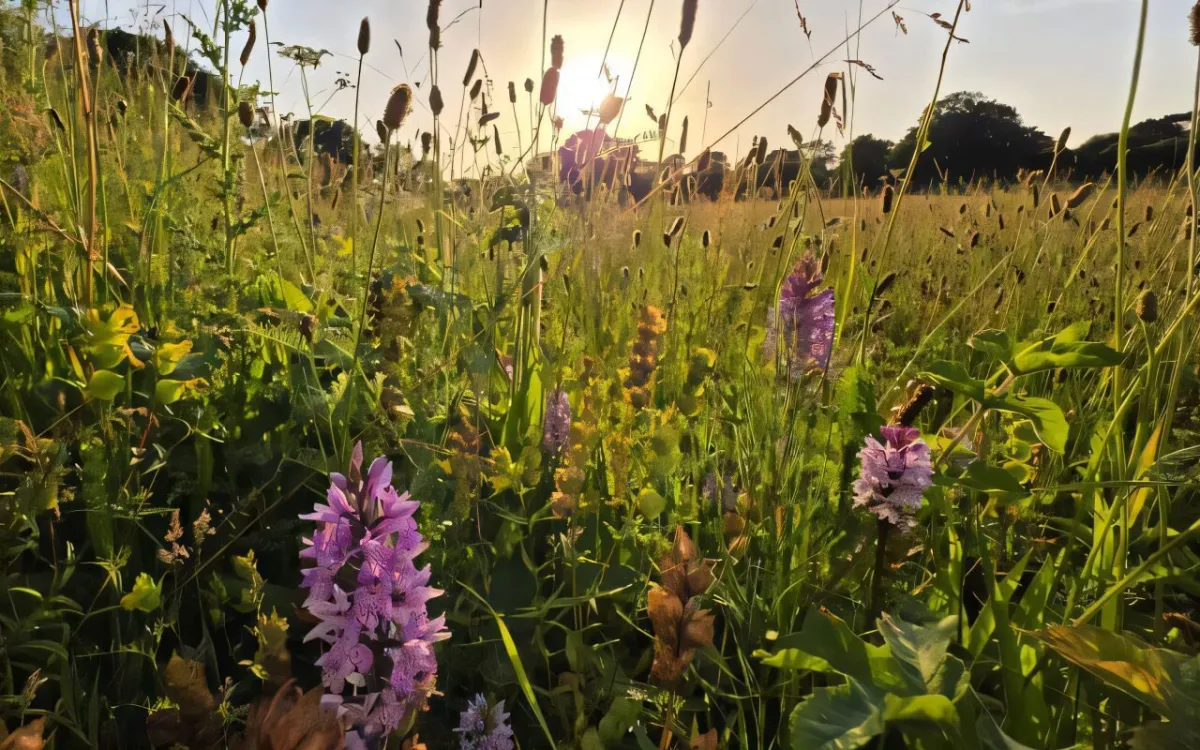
Start Your News DetoxFast forward to 2022, and the field wasn't just a wildflower meadow; it was a rich, diverse wildflower meadow. It had welcomed back species that were rare in the area, like the southern marsh orchid and yellow rattle. The average number of plant species in their observation plots nearly doubled, going from about 10 to almost 20. Eventually, there were so many orchids, they stopped trying to map them individually. Because, apparently, that's where we are now: too many orchids to count.
This goes against the grain for many conservation programs that insist on commercial seed mixtures. But wildflower meadows aren't just pretty faces; they're critical homes for pollinators and other wildlife, and over 90% of them have vanished from the UK since World War II. So, figuring out how to restore them is a pretty big deal.
Professor Carl Sayer, who led the study, said that letting nature lead is not only effective but also better for genetic diversity. It ensures local species thrive, making the meadows unique rather than generic commercial versions. Plus, it's a whole lot cheaper and less labor-intensive than the usual methods, which is great news for governments looking to restore vast tracts of abandoned farmland.
How did those rare seeds get there? The nearest known populations were a fair distance away. Researchers have a theory: deer, acting as tiny, unwitting seed couriers, might have brought them in. Because, of course, nature always has a trick up its sleeve.
Professor Sayer's family actually owns the field. He decided to trust nature after an oilseed rape crop in 2005, despite everyone telling him to use seeds. He was, understandably, “thrilled” when the first orchids appeared. Now, it's a vibrant habitat enjoyed by locals, proving that sometimes, the best intervention is simply stepping back and letting the land remember what it's meant to be. Which, if you think about it, is both impressive and slightly terrifying.