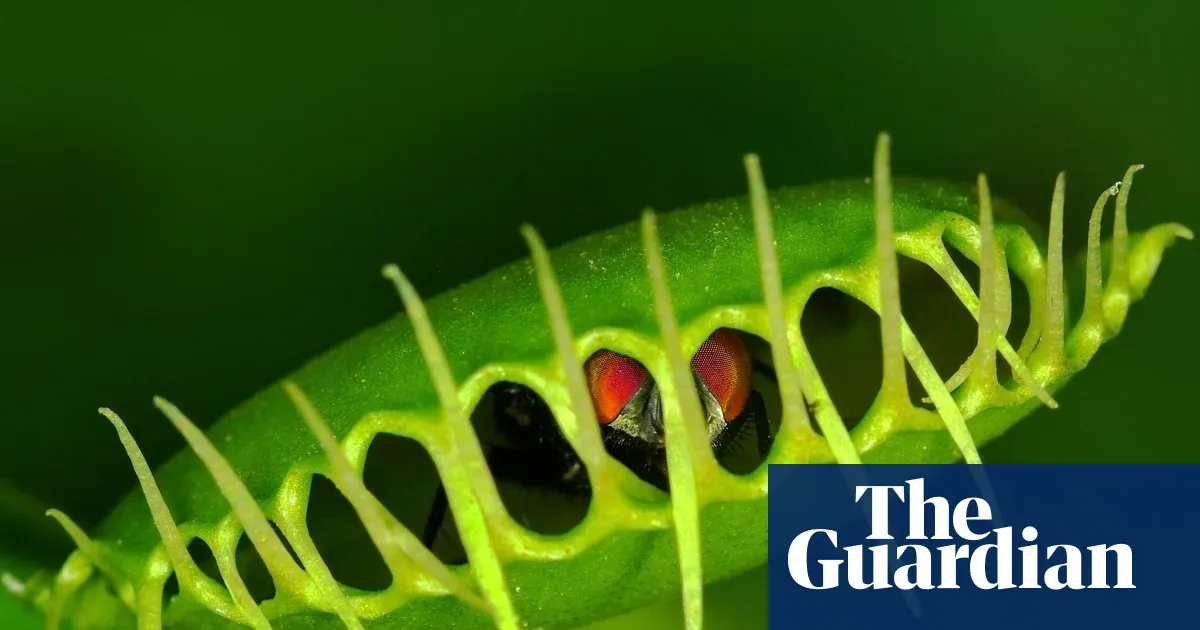
For centuries, the Venus flytrap has been nature's most dramatic diner, luring unsuspecting insects with nectar before snap! — instant incarceration. Charles Darwin himself was utterly baffled by how such a plant could move with such speed. He even hypothesized it had muscles or nerves. Bless his heart, he was close, but also, very wrong. Plants, as we know, are not built for bicep curls.
Turns out, the flytrap's secret isn't about flexing. It's about… softening. Because apparently that's where we are now: plants that can go from rigid to rubbery in the blink of an eye.
The Great Softening
When a hapless bug lands on one of those inviting leaves, it triggers a rapid detection system. This system, in a move that would make any structural engineer gasp, tells the cells on the outer part of the leaf to suddenly become incredibly pliable. Think of it like a perfectly tensioned spring suddenly deciding to take a nap. That instantaneous softening causes the trap to flip shut in less than a second.
We're a new kind of news feed.
Regular news is designed to drain you. We're a non-profit built to restore you. Every story we publish is scored for impact, progress, and hope.
Start Your News DetoxDr. Yoël Forterre, a physicist at the French National Centre for Scientific Research (CNRS), has been on this case for two decades, ever since a colleague brought a flytrap into the lab. Forterre explains that for over a hundred years, scientists had theories, but the actual mechanism remained elusive. The idea that plant cell walls could so rapidly alter their properties was, frankly, a bit wild.
Studying this botanical acrobatics wasn't easy. The team had to carefully hold the leaves still with dental glue (because science often requires surprising applications of everyday items) to observe the trigger without the full snap. They used a nanoindenter — essentially a tiny metal tip that pokes the leaf's surface like you'd poke a balloon — to measure the pressure. It showed a dramatic drop in rigidity right after activation.
This isn't about water rushing out of cells, which was a popular theory. It's the cells themselves becoming more flexible, much like how a dome-shaped rubber toy will flip inside out when pressed. Forterre says he doesn't know of any other plant that can pull off such a swift cellular transformation. Which, if you think about it, is both impressive and slightly terrifying. Imagine if your house could decide to just… soften.
So, while Darwin was pondering plant muscles, the humble Venus flytrap was perfecting the art of the cellular magic trick. All to catch dinner. Plants, it seems, are far more dramatic than we give them credit for.