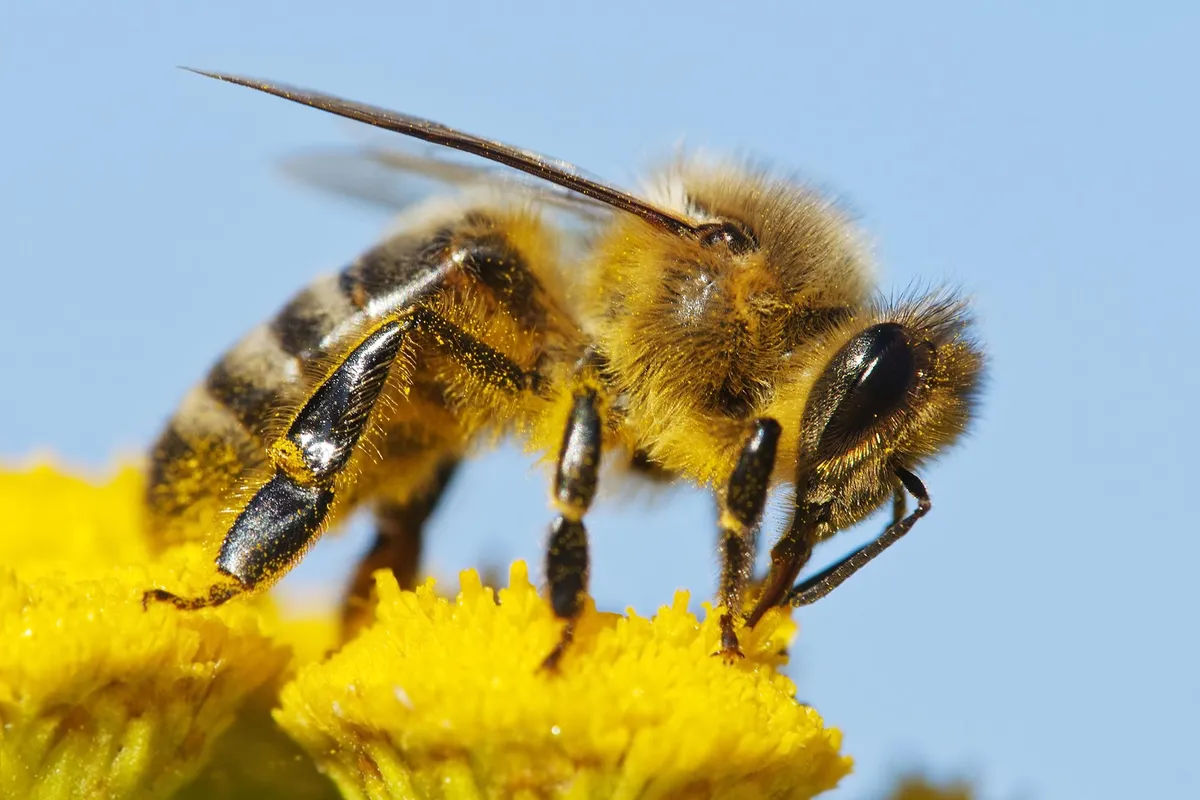
Researchers have tracked honey bees in 3D, uncovering their precise navigation skills. They used a high-speed drone system in a natural farm setting. The findings show bees use visual landmarks to fly consistent routes between their hive and food.
Tracking Bees in 3D
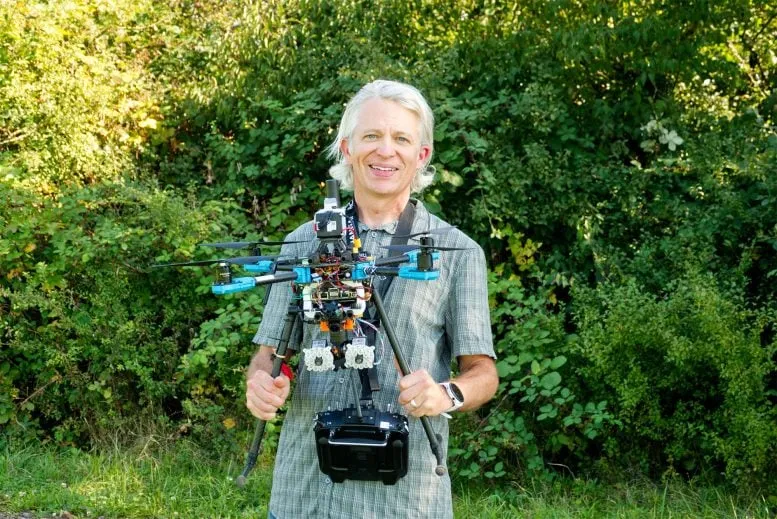
A team at the University of Freiburg, led by neurobiologist Prof. Dr. Andrew Straw, studied how honey bees fly. They tracked bees over about 120 meters (394 feet) in an agricultural area.
The team used a method called "Fast Lock-On (FLO) Tracking." This involved putting a tiny reflective marker on each bee. A computer on the drone then detected the bee's reflected light. This allowed the drone to continuously track the bee's position.
We're a new kind of news feed.
Regular news is designed to drain you. We're a non-profit built to restore you. Every story we publish is scored for impact, progress, and hope.
Start Your News DetoxThe study found that each honey bee follows its own unique path. It repeats this path very precisely on both trips to and from the food source. Bees rely on visual cues in their environment to navigate.
Straw explained that their system recorded high-resolution 3D flight paths for the first time. He noted that each bee has its own preferred route and flies it very accurately. He even suggested that each bee has its own "personality."
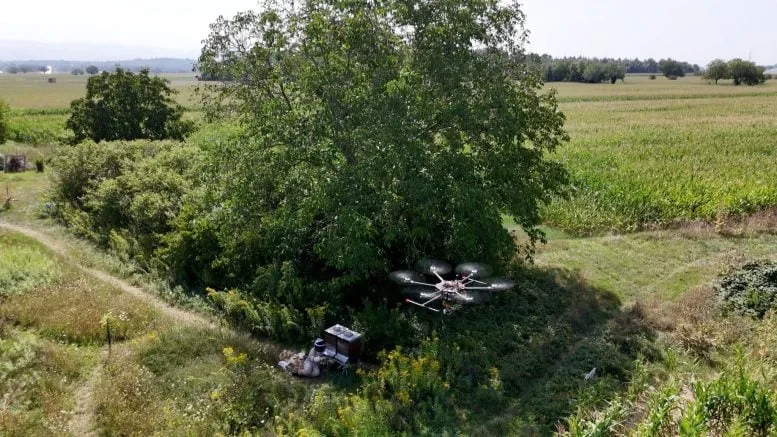 A team from the University of Freiburg shows that honeybees fly individually chosen routes with high precision. Credit: Andrew Straw
Precision Navigation and Landmarks
The researchers analyzed 255 flight paths near the Kaiserstuhl region in Germany. This area had hedges, a cornfield, and a tree that blocked the direct path between the hive and food.
Straw highlighted the high precision in the flight paths. Individual bees repeated their routes almost exactly, often flying just a few centimeters from their previous paths.
The smallest deviations happened near clear features like the tree. However, the greatest variation occurred over the cornfield, where the scenery looks the same everywhere.
Straw explained that visual landmarks help bees navigate and make their flights more precise. In visually plain environments, the bees' uncertainty increases.
Rethinking the Waggle Dance
This study also offers new insights into the waggle dance. Bees use this dance to tell others where food is. It was known that the directional information in the waggle dance is not perfectly accurate. For food sources about 100 meters away, the dance's direction can be off by about 30 degrees.
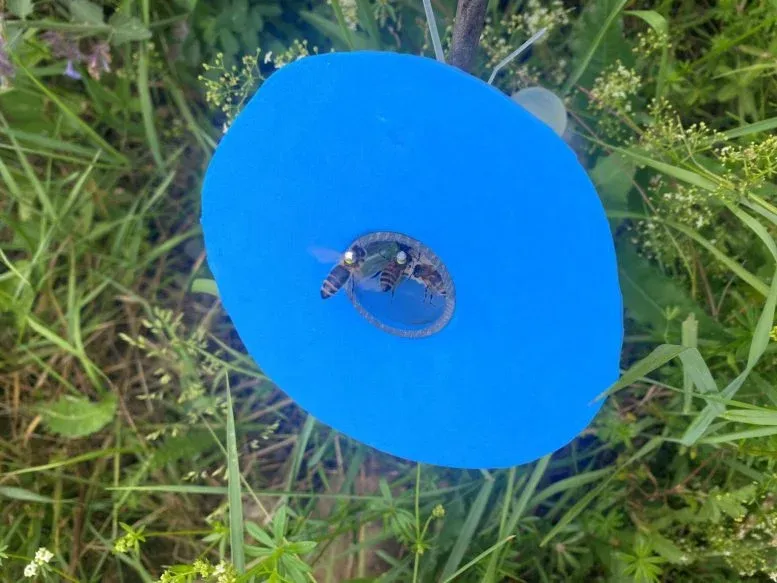 Honeybees equipped with small reflector markers enable precise tracking of their flight paths—the results show that individual bees navigate to known destinations much more accurately than the directional information provided by the waggle dance would suggest. Credit: Andrew Straw
Straw noted that individual bees navigate much more accurately to familiar places. Even where their paths vary most, they only stray a few degrees from their route.
He concluded that the waggle dance's inaccuracy is not due to poor navigation skills. Instead, individual bees are much better at finding their way than their dance suggests.
Deep Dive & References
Precise, individualized foraging flights in honeybees revealed by multicopter drone-based tracking - Current Biology, 2026