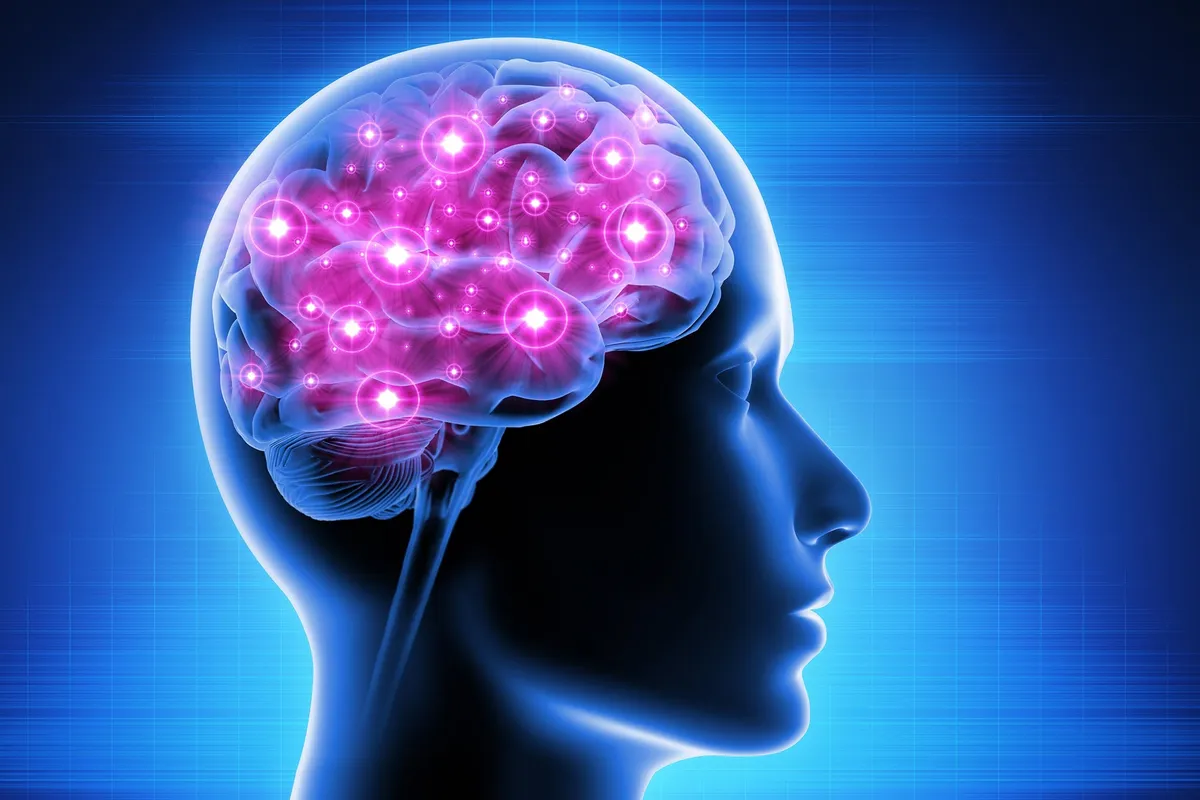
Turns out, your adult brain isn't just a meticulously organized filing cabinet for memories. It's also apparently a hoarder. Scientists at MIT just stumbled upon millions of “silent synapses” — unused connections between brain cells, just sitting there, waiting for their moment. Think of them as tiny, highly adaptable memory slots, ready to spring into action when you learn something new.
For ages, the scientific consensus was that these silent connections were a baby-brain thing, helping little ones wire up their nascent neural networks before vanishing into the ether. But nope. According to the new study, about 30% of the synapses in the outer layer of an adult mouse brain are just chilling, silent and ready. Which, if you think about it, is both impressive and slightly terrifying.
The Brain's Backup Plan
Learning a new skill or remembering where you parked means constantly rewiring your brain's complex network of trillions of synapses. The big problem? Messing with existing connections could accidentally erase crucial older memories, like how to tie your shoes or the lyrics to that one song from the 90s. (We all have that one song.)
We're a new kind of news feed.
Regular news is designed to drain you. We're a non-profit built to restore you. Every story we publish is scored for impact, progress, and hope.
Start Your News DetoxBut the brain, being the overachiever it is, found a workaround. Instead of constantly tweaking established circuits, it simply activates a silent synapse, converting it into a fully functioning memory hub. This keeps your foundational knowledge stable while still allowing for a lifetime of new trivia, embarrassing anecdotes, and the occasional foreign language lesson.
This unexpected discovery came about when the MIT team was using a super-detailed mapping method called eMAP to study dendrites, the branch-like extensions of neurons. They weren't looking for silent synapses at all. They were looking for something else entirely.
What they found instead were “filopodia everywhere.” These tiny, finger-like protrusions from dendrites were previously thought to be rare in adults. But eMAP revealed them in droves — about ten times more than anyone expected, particularly in the visual cortex.
And these filopodia? They were home to synapses equipped with NMDA receptors but zero AMPA receptors. Normal synapses need both to pass electrical signals. Without AMPA, the NMDA receptors stay blocked, rendering the synapse silent. It's like having a perfectly good phone line but no one to pick up the call.
The 'Aha!' Moment
To confirm their suspicions, the researchers zapped individual filopodia with bursts of glutamate. Crickets. Nothing happened. But when they unblocked the NMDA receptors, suddenly, the synapses sprang to life. Proof: they were indeed inactive under normal conditions.
The real kicker? They could turn them on naturally. When glutamate was released alongside a brief electrical signal, AMPA receptors quickly flooded the synapse. Within minutes, the silent connection was fully active. Mature synapses, by contrast, needed a much stronger signal to change, likely to keep those precious old memories locked down.
This means your brain has a built-in flexible learning system, ready for action. It suggests why we can keep learning throughout life without constantly overwriting our mental hard drive. And it opens up a whole new line of questioning about aging, habit formation, and why it gets harder to learn new tricks as the years tick by. If we can figure out how to keep those silent synapses plentiful and active, the possibilities for improving learning and memory could be pretty loud indeed.