Nobody loves a trip to the dentist, let alone the thought of a surgical biopsy. Good news: A new oral cancer test developed by researchers at Queen Mary University of London and their partners in India promises results in under an hour, all without the need for a scalpel. Because apparently, we're finally getting around to making medical diagnostics a little less… medieval.
The test, charmingly dubbed qMIDS (which stands for quantitative Malignancy Index Diagnostic System, naturally), involves a simple brush. In a trial with 545 patients sporting suspicious mouth lesions, qMIDS clocked an impressive 95.5% accuracy. Both false positives and false negatives stayed under five percent. Let that satisfying number sink in.
Oral cancer often starts as a persistent sore or a discolored patch that, let's be honest, you'd probably just ignore until it became really annoying. Most of these are harmless, but the tricky ones need watching. The problem? Current methods, like those aforementioned surgical biopsies, are painful enough to make many patients ghost their follow-up appointments. This new brush test sidesteps that whole unpleasantness.
We're a new kind of news feed.
Regular news is designed to drain you. We're a non-profit built to restore you. Every story we publish is scored for impact, progress, and hope.
Start Your News DetoxOral cancer cases and deaths have more than doubled globally since 1990 — a statistic that's both sobering and a solid argument for making early detection as frictionless as possible. Muy-Teck Teh, an oral oncologist at Queen Mary, highlighted the beauty of qMIDS: it’s fast, accurate, non-invasive, and crucially, repeatable. This means doctors can actually keep an eye on pre-cancerous lesions and catch the real trouble much sooner.
How It Works (Without the Ouch)
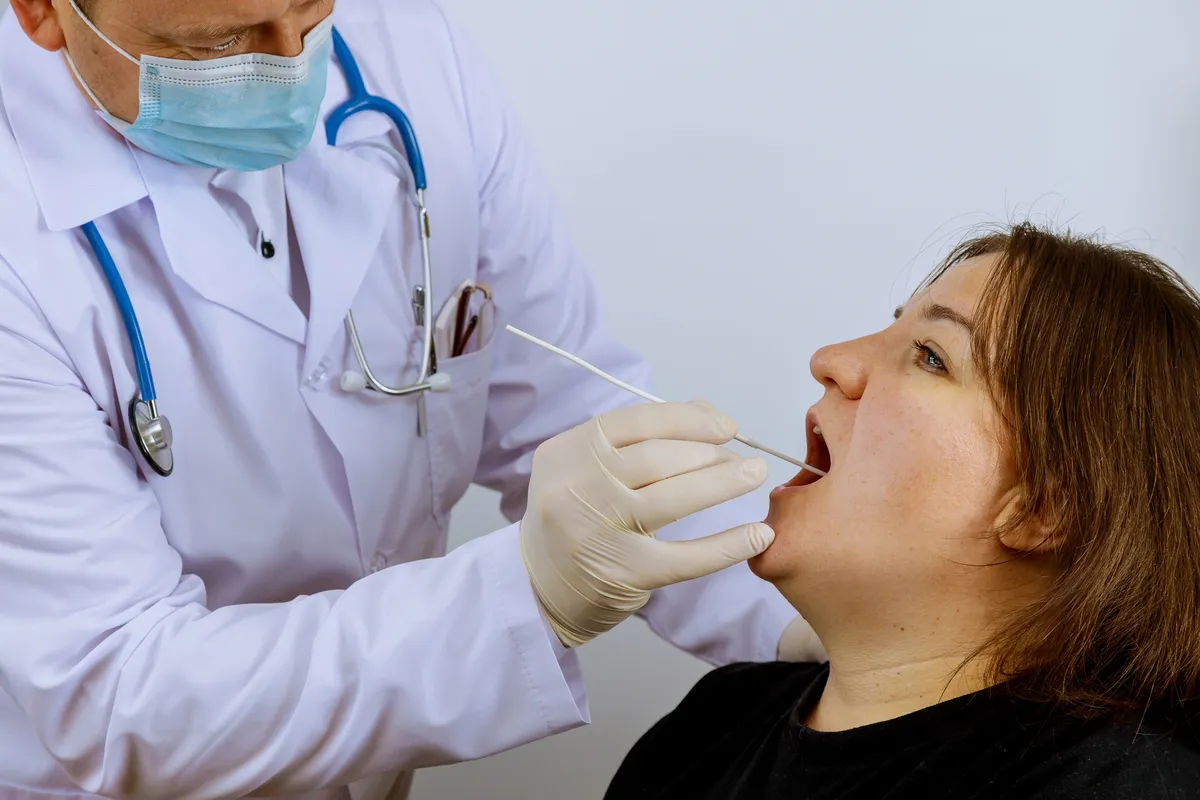
The qMIDS test is pretty straightforward. A doctor gently brushes a suspect lesion, collecting a sample. That sample is then analyzed for mRNA from four specific genes known to throw a party when oral cancer is present. A second swab from a healthy part of the mouth acts as a control, just to keep things honest.
This isn't their first rodeo; this is the third iteration of the qMIDS system. Earlier versions showed promise, and this latest study really sealed the deal on its ability to distinguish between cancerous and benign lesions. The team was genuinely surprised by its performance, with Teh noting its accuracy was on par with a microbiopsy. Which, if you think about it, means those surface cells collected by a brush are basically shouting their biological signals loud and clear.
The researchers are now hustling to get this test commercially available, hoping it'll be in clinics within two years. So, soon you might just get a little brush-off from your doctor that could save your life. And you won't even have a good story about stitches.