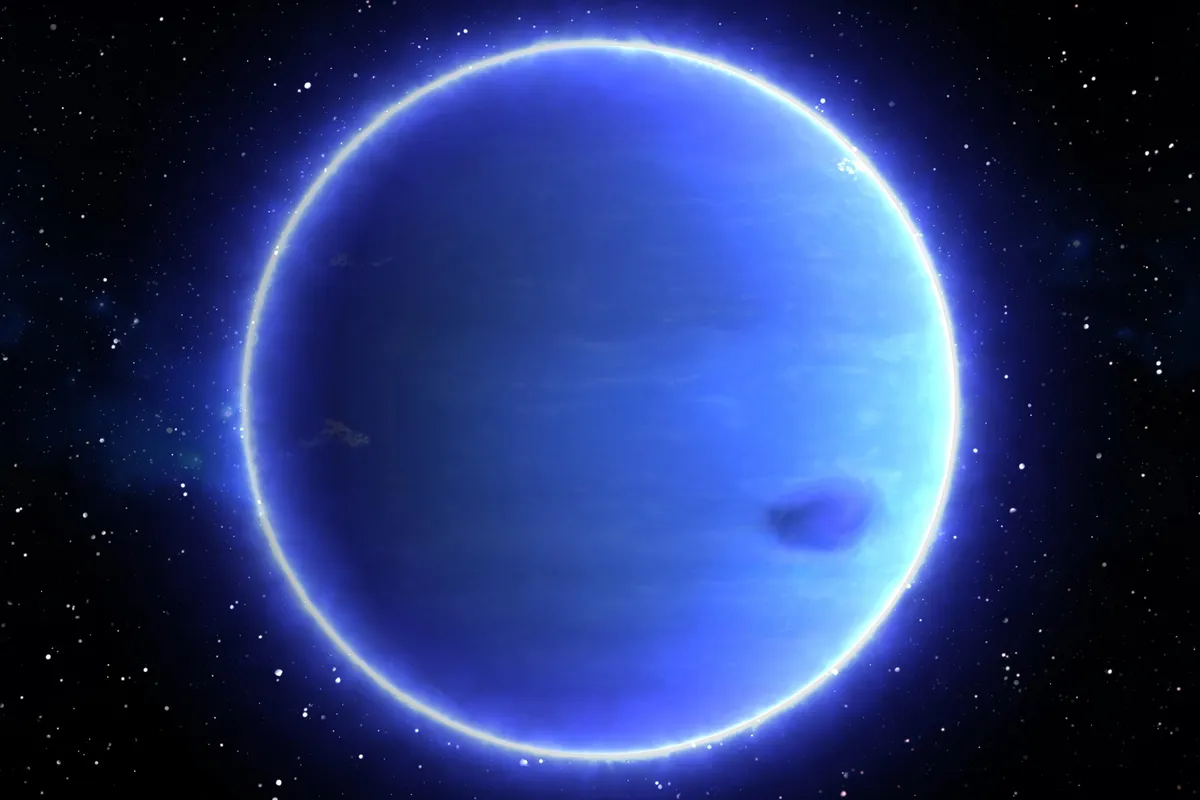
Turns out, the universe still has plenty of surprises up its sleeve—even in our own cosmic backyard. Scientists have just theorized a brand-new state of matter, and it's not in some far-flung galaxy. It's likely chilling (or, more accurately, superheating) deep within Uranus and Neptune.
Imagine a substance that's both solid and liquid at the same time, but with a twist. That's the gist of what researchers Cong Liu and Ronald Cohen from Carnegie cooked up in their computer models. Their work, published in Nature Communications, suggests that carbon hydride can transform into a "quasi-one-dimensional superionic state" under the truly bonkers pressures and temperatures found inside these ice giants. Because apparently that's where we are now: discovering new states of matter in our planetary neighbors.
The "Hot Ice" Disco
Uranus and Neptune are basically giant, icy onions. Between their gassy hydrogen and helium atmospheres and their rocky cores, there are layers of what scientists call "hot ices." We're talking water, methane, and ammonia, but not as you know them. Under these extreme conditions, these familiar compounds get…weird.
We're a new kind of news feed.
Regular news is designed to drain you. We're a non-profit built to restore you. Every story we publish is scored for impact, progress, and hope.
Start Your News DetoxTo figure out what's really happening in there, Liu and Cohen used some seriously advanced computing and machine learning. They ran quantum-level simulations of carbon hydride (CH) at pressures 5 million to 30 million times Earth's atmospheric pressure, with temperatures soaring to 6,740 to 10,340 degrees Fahrenheit. Just try to picture that for a second. Your morning coffee would be vaporized before you could even say "superionic."
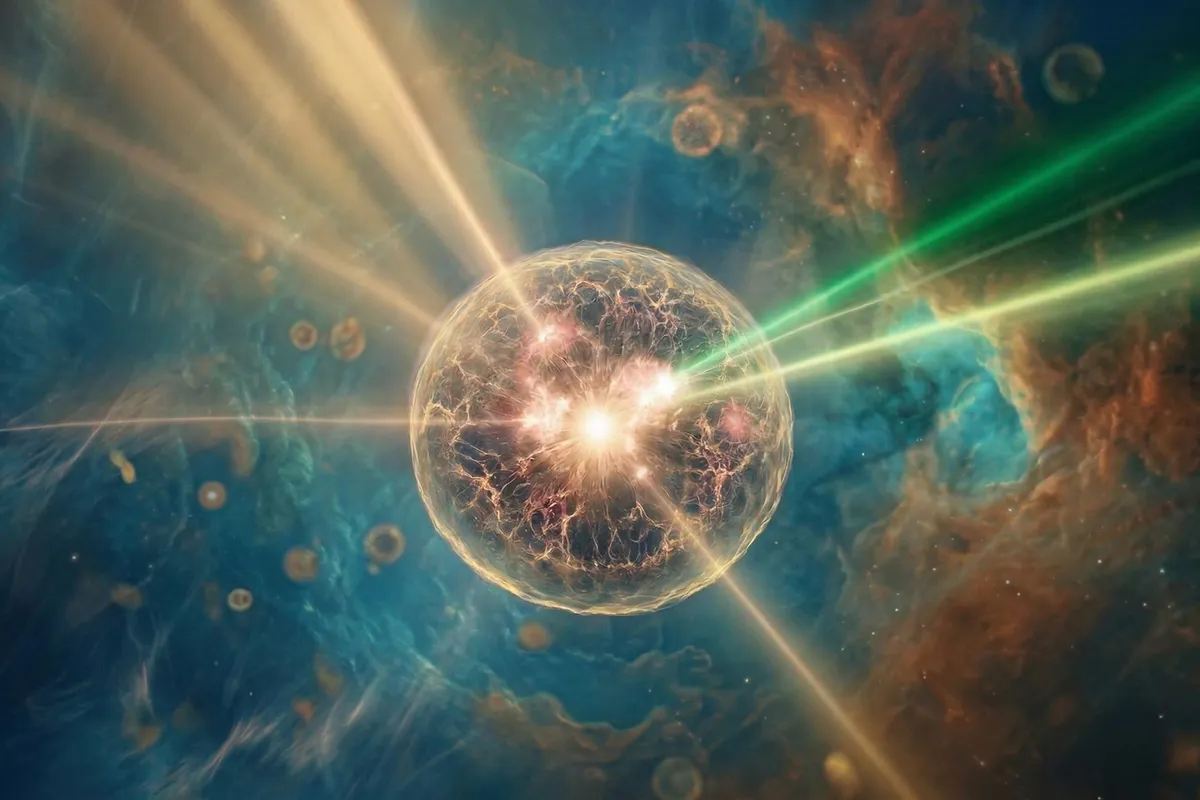
What they found was a hexagonal structure where hydrogen atoms literally dance along spiral paths. This creates that "quasi-one-dimensional superionic state." Think of it like a solid carbon lattice, but with hydrogen atoms zipping through it like tiny, frantic ghosts, mostly in one direction. Cohen explains that this directional movement is the key — hydrogen isn't just wiggling around; it's on a very specific, spiraling journey.
This isn't just a fun fact for your next dinner party. This strange new state could dramatically change how heat and electricity move through these planets, influencing their magnetic fields. It's a reminder that even common elements like carbon and hydrogen can pull off some wild transformations when you crank up the heat and pressure. And who knows? Understanding these extreme behaviors might just unlock new materials for us right here on Earth. Or, at the very least, make us look at Uranus in a whole new, slightly weirder light.