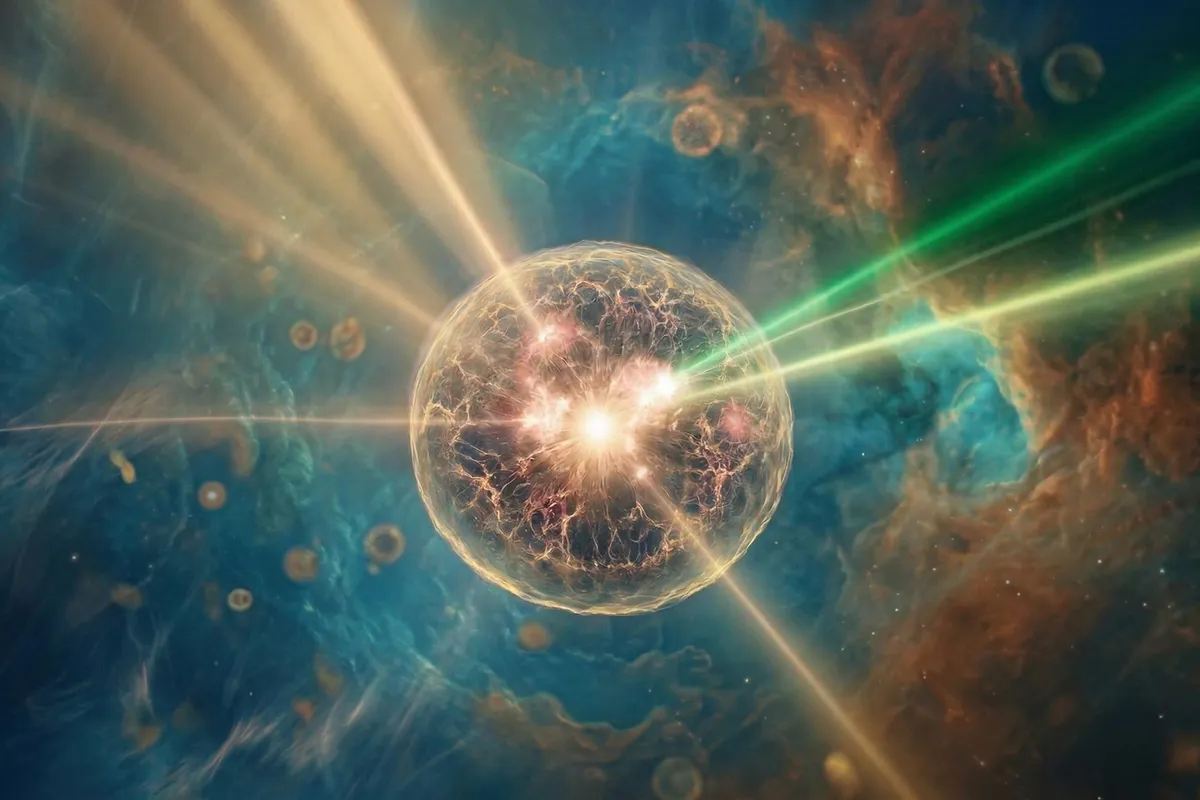
The "nanozymes hypothesis" suggests that tiny mineral particles helped kickstart life on early Earth. These particles, called mineral nanozymes (MN-zymes), might have driven chemical changes that turned non-living matter into the first forms of life.
For a long time, scientists have tried to figure out how life began from simple chemicals. Many ideas exist, like the "RNA world" or "lipid world," but none fully explain the whole process. It's tough to piece together exactly what happened billions of years ago.
The Nanozymes Hypothesis
Professor Yongdong Jin from Shenzhen University proposed the nanozymes hypothesis to fill these gaps. He believes natural MN-zymes, and later versions mixed with small organic molecules, were key to life's emergence.
We're a new kind of news feed.
Regular news is designed to drain you. We're a non-profit built to restore you. Every story we publish is scored for impact, progress, and hope.
Start Your News DetoxThese nanozymes likely helped change simple chemicals into early biological molecules. One important way they did this was through "inorganic photosynthesis" under the conditions of early Earth.
The model suggests MN-zymes did many important jobs. They acted as catalysts, helped bind molecules, protected them from UV radiation, and controlled energy flow. These actions supported chemical reactions and helped organize energy into forms that life could use, store, and copy.
Earth as a Natural Lab
This idea sees Earth as a giant, self-sustaining chemical system. It could create life from non-living conditions. The planet acted like an "all-in-one" natural laboratory.
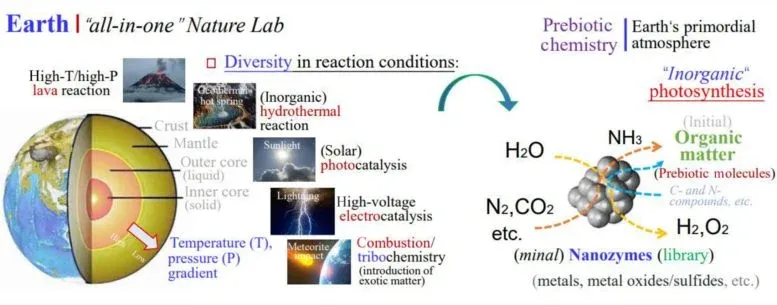
Temperature and pressure changes inside Earth, especially near volcanoes, created perfect conditions for nanozymes to form. These processes are similar to how artificial nanozymes are made in labs today.
Over time, these early nanozymes might have evolved and renewed themselves. Some even became part of living systems, affecting both biology and Earth's environment. These changes then helped further chemical evolution and early life.
Abundance of Natural Nanozymes
Mineral nanoparticles are very common on Earth. Thousands of terragrams (one terragram equals a trillion grams) move through ecosystems every year. Many act like enzymes and are found in oceans, soils, and the atmosphere. They play big roles in Earth's natural cycles.
Recent discoveries show that nanozymes might form more easily than once thought. They can develop from mineral weathering in water droplets or from UV light exposure. Sunlight and lightning can also create nanozymes and other molecules needed for life on Earth's surface.
The "Au World" and Other Conditions
The hypothesis also points to a possible role for gold nanoparticles (AuNPs), calling it the "Au world." These particles might have been very effective nanozymes, even though their importance has often been overlooked.
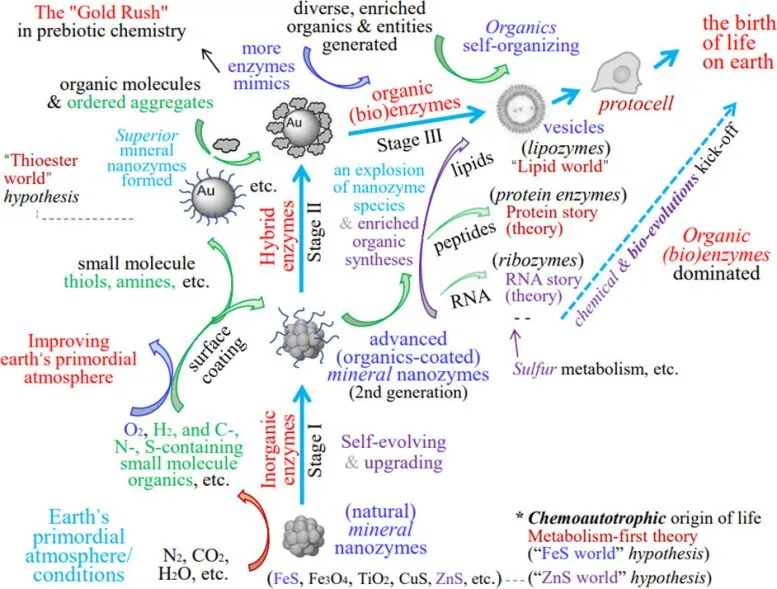
While free AuNPs are usually unstable, they could have existed on mineral surfaces or in stable forms once small organic molecules became available. This would have allowed them to take part in early chemical processes.
The hypothesis also highlights key conditions for early life, such as wet-dry cycles, self-assembly of molecules, and catalytic activity. It also looks at bigger questions, like the role of water, how molecules cooperated, and the origin of molecular chirality (the "handedness" of molecules).
The nanozymes hypothesis aims to answer long-standing questions about life's origins. It offers a more complete explanation and could lead to more research into how nanozymes shaped early life.
Deep Dive & References
On the Origin of Life on Earth: The Nanozymes Hypothesis, and More - Research, 2025