Researchers at City University of Hong Kong have built a water-based battery that can charge and discharge 120,000 times without degrading—and when it finally dies, it can be safely thrown away anywhere. The ingredient that made it work: the same mineral salts used to coagulate soy milk into tofu.
This matters because we're about to have a lithium-ion battery waste crisis on our hands. As electric vehicles and renewable energy storage systems proliferate—especially across China, now the world's largest EV producer—millions of tons of spent lithium-ion batteries will need processing annually. The problem is that lithium-ion batteries are genuinely dangerous. They contain flammable solvents that can ignite if the casing cracks, and once they catch fire, water won't extinguish them. They're so risky that airlines ban portable power banks from checked luggage. Beyond fire risk, they leach toxic compounds into soil and water.
The forgotten path forward
Water-based batteries have been theoretically possible for over 200 years. They solve the fire problem entirely—no flammable solvents means no explosion risk. But they've never scaled because finding the right electrolyte (the chemical medium that lets ions move) has been nearly impossible. Most candidates were either too acidic or too alkaline, trading one set of problems for another.
We're a new kind of news feed.
Regular news is designed to drain you. We're a non-profit built to restore you. Every story we publish is scored for impact, progress, and hope.
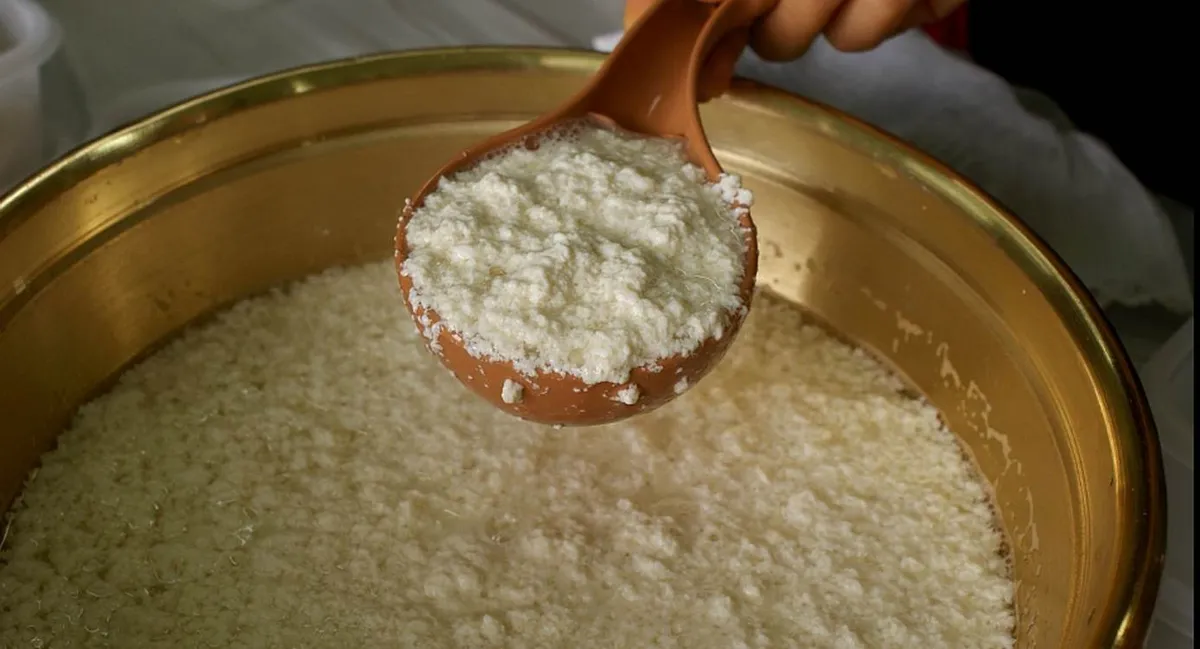
Start Your News DetoxThe Hong Kong team needed something water-based, nontoxic, and chemically neutral. They looked at food additives already deemed safe for human consumption: magnesium chloride and calcium chloride. Both are used in tofu production as coagulants—they're what transforms liquid soy milk into solid curds. They're also naturally occurring minerals that break down harmlessly in soil.
When the team published their results in Nature Communications in February, they reported that their battery delivered "exceptional long-term cycling stability" under neutral conditions. That 120,000 charge cycle figure means a battery built this way could power an electric vehicle for roughly a decade of daily driving before needing replacement—and at end of life, the electrolyte poses minimal environmental risk.
The real significance here isn't that tofu-making chemistry is clever (though it is). It's that the researchers found a genuine alternative to lithium-ion that doesn't require inventing entirely new materials or processing infrastructure. Magnesium and calcium are abundant. The chemistry is straightforward. The safety profile is demonstrably better.
The technology is still experimental—these aren't in phones or cars yet. But the pathway from laboratory to manufacturing is clearer than it's been for water-based batteries in decades. As EV adoption accelerates and the first generation of electric vehicle batteries reaches end-of-life, having a genuinely safer, disposable alternative in the pipeline could reshape how we think about energy storage.