Invisible to the naked eye, trillions of microscopic plankton are quietly reshaping Earth's climate by pulling carbon from the atmosphere and locking it away in the deep ocean. But here's the problem: the computer models scientists use to predict our planet's future have largely ignored them.
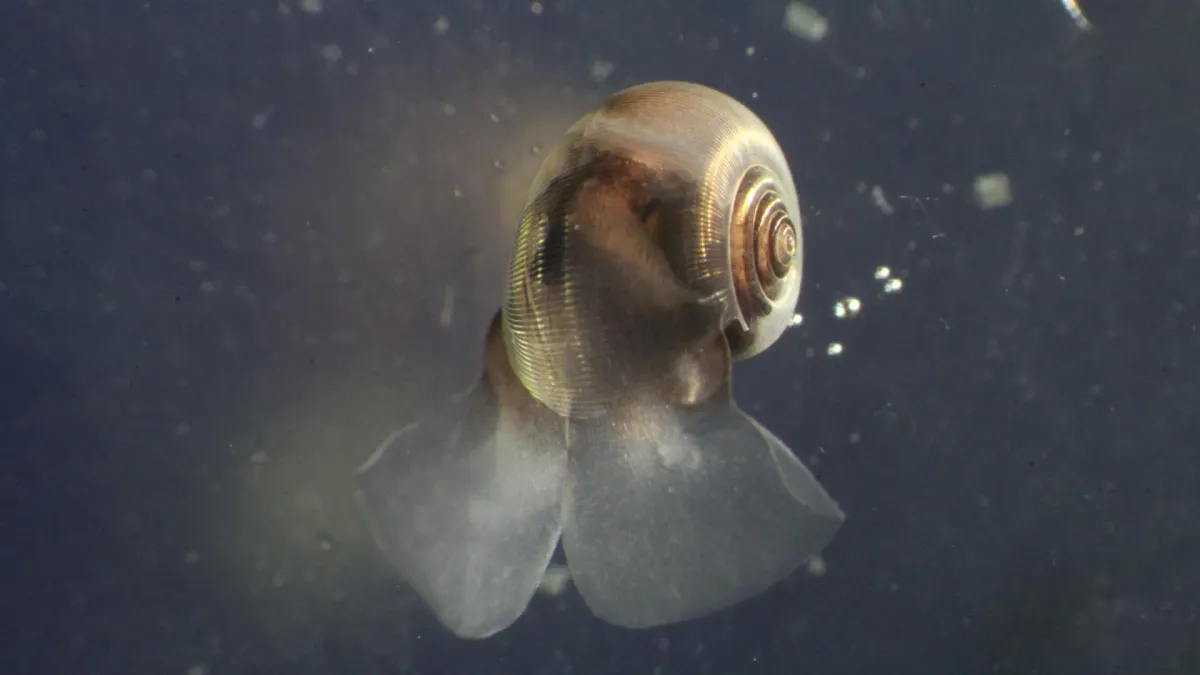
These calcifying plankton—organisms that build shells from calcium carbonate—are so small that their collective impact has been easy to overlook. Yet new research published in Science shows that leaving them out of climate models means we're missing fundamental processes that determine how the ocean responds to warming.
"Plankton shells are tiny, but together they shape the chemistry of our oceans and the climate of our planet," says Patrizia Ziveri, the ICREA research professor at ICTA-UAB who led the study. "By leaving them out of climate models, we risk overlooking fundamental processes that determine how the Earth system responds to climate change."
We're a new kind of news feed.
Regular news is designed to drain you. We're a non-profit built to restore you. Every story we publish is scored for impact, progress, and hope.
Start Your News DetoxThe Carbon Pump Nobody's Modeling
When these plankton die, they sink, carrying carbon with them—a process oceanographers call the ocean carbon pump. It's one of the mechanisms that has kept Earth's climate relatively stable for millennia. But the story gets more complicated when the shells don't make it to the ocean floor.
A significant portion of the calcium carbonate dissolves in the upper ocean, broken down by predators, clumping particles, and microbial activity. This "shallow dissolution" fundamentally changes ocean chemistry, yet it's almost entirely absent from the Earth System Models (CMIP6) that inform global climate assessments. Without accounting for it, climate models may seriously misjudge how carbon moves through the ocean and how the system responds to stress.
The consequences ripple outward. These models shape policy decisions affecting billions of people. If they're missing a key piece of how the ocean actually works, the predictions they generate could be systematically off.
Not All Plankton Are Created Equal
The research also reveals that treating calcifying plankton as a single group obscures the real complexity. Coccolithophores produce the most calcium carbonate, but they're uniquely vulnerable to ocean acidification because they lack the cellular mechanisms to handle excess acid. Foraminifers and pteropods have better defenses against acidity, but they're more sensitive to low-oxygen zones and warming water.
Each group lives in different parts of the ocean, responds to different stressors, and plays a different role in storing and recycling carbon. Lumping them together in models is like treating all trees the same when modeling a forest—you miss the actual dynamics.
What Comes Next
Ziveri and her colleagues are calling for urgent work to measure exactly how much calcium carbonate each plankton group produces, dissolves, and exports to deeper waters. Incorporating this biological detail into the next generation of climate models would sharpen predictions about ocean-atmosphere interactions, long-term carbon storage, and how past climates actually worked—knowledge scientists extract from ocean sediments.
The gap between what we know and what our models capture is narrowing, but it matters. Getting the ocean's smallest organisms right could mean the difference between predictions that miss crucial tipping points and ones that actually reflect how the Earth system behaves.