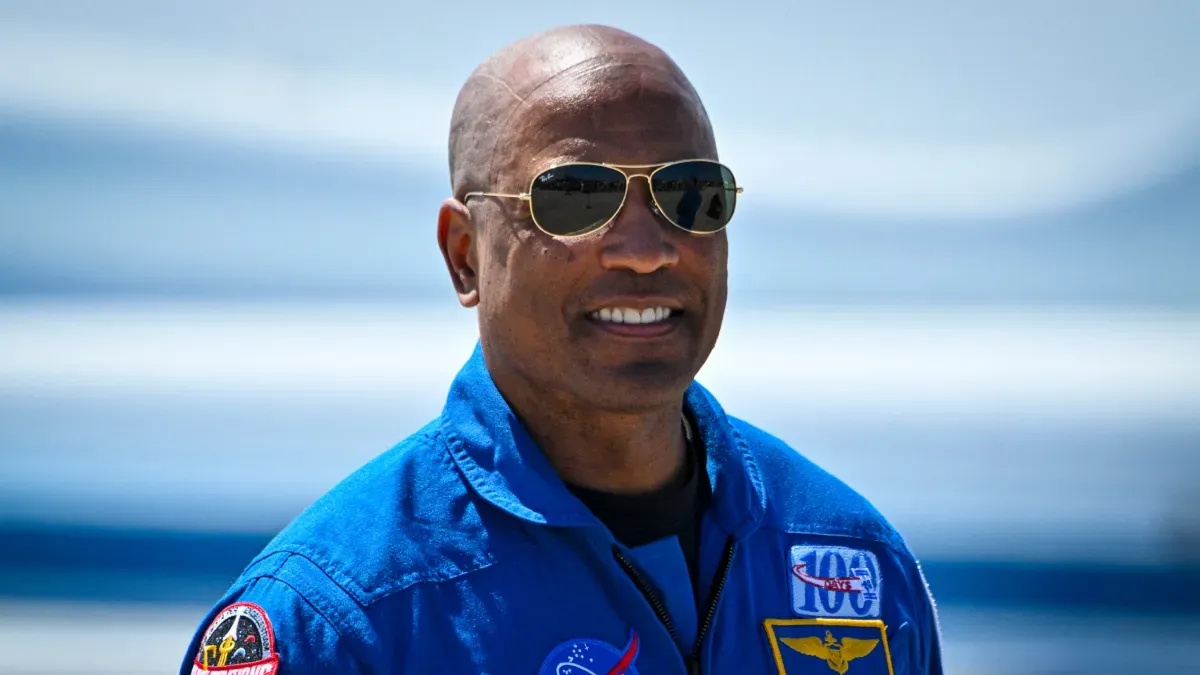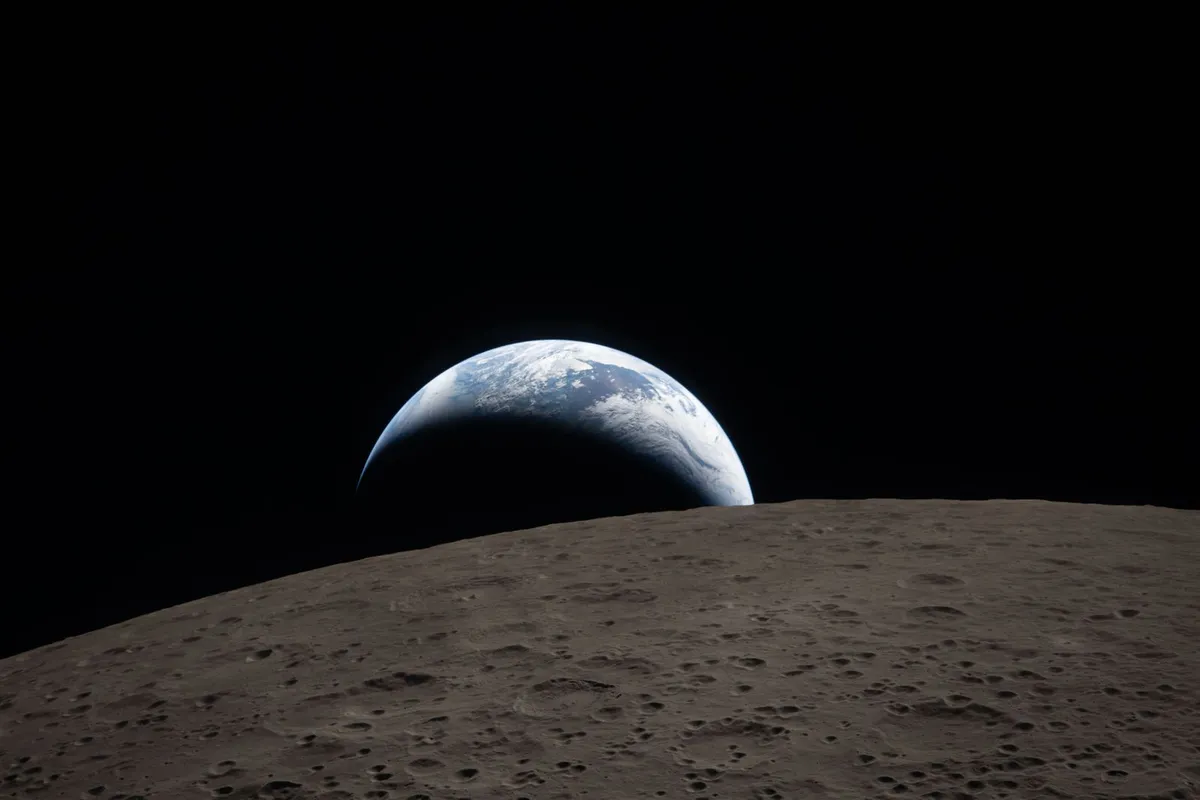
The four astronauts on the Artemis 2 mission have traveled farther from Earth than anyone before. They are the first humans to visit the moon's vicinity, including its far side, in over five decades. They have captured breathtaking photos to share their journey.
A new gallery of images shows the beauty of the lunar flyby. On Monday at 6:44 p.m. Eastern time, the Orion spacecraft went behind the moon. This started a planned 40-minute blackout of communication with NASA. The moon itself blocked the radio signals.
A Moment of Silence and Discovery

This silence was "exciting in a slightly scary way," said Derek Buzasi, an astronomer at the University of Chicago. He told Agence France-Presse that the same thing happened during the Apollo missions. "We all held our breaths a little bit."
We're a new kind of news feed.
Regular news is designed to drain you. We're a non-profit built to restore you. Every story we publish is scored for impact, progress, and hope.
Start Your News DetoxVictor Glover, the Artemis 2 pilot, said, "We will see you on the other side." He added, "We’re still going to feel your love from Earth."
Taking photos was a main task during the flyby. From Earth, we always see the same part of the moon. This is because of how the moon rotates as it orbits Earth. The Artemis 2 astronauts saw parts of the moon never before seen by human eyes.

There is no "dark side" of the moon, despite the popular Pink Floyd album. We only see one side from Earth. However, the other side gets sunlight throughout the lunar cycle. It does not experience permanent night. Scientists prefer the term "far side."
Earlier on Monday, the Artemis astronauts broke a record. They traveled farther from Earth than anyone ever had. They surpassed the Apollo 13 crew's distance of 248,655 miles from 1970. By the end of the day, they reached 252,756 miles from Earth.
Naming Craters and Witnessing an Eclipse

The team suggested names for two craters on the moon. One, northwest of the Orientale Basin, should be called Integrity. This is the name of their Orion spacecraft.
They proposed Carroll for the other crater. This was after commander Reid Wiseman’s late wife, Carroll Taylor Wiseman, who passed away in 2020. After Canadian astronaut Jeremy Hansen made the request, the crew shared an emotional embrace.
The International Astronomical Union will process these suggestions after the mission. This group oversees the naming of objects in space.

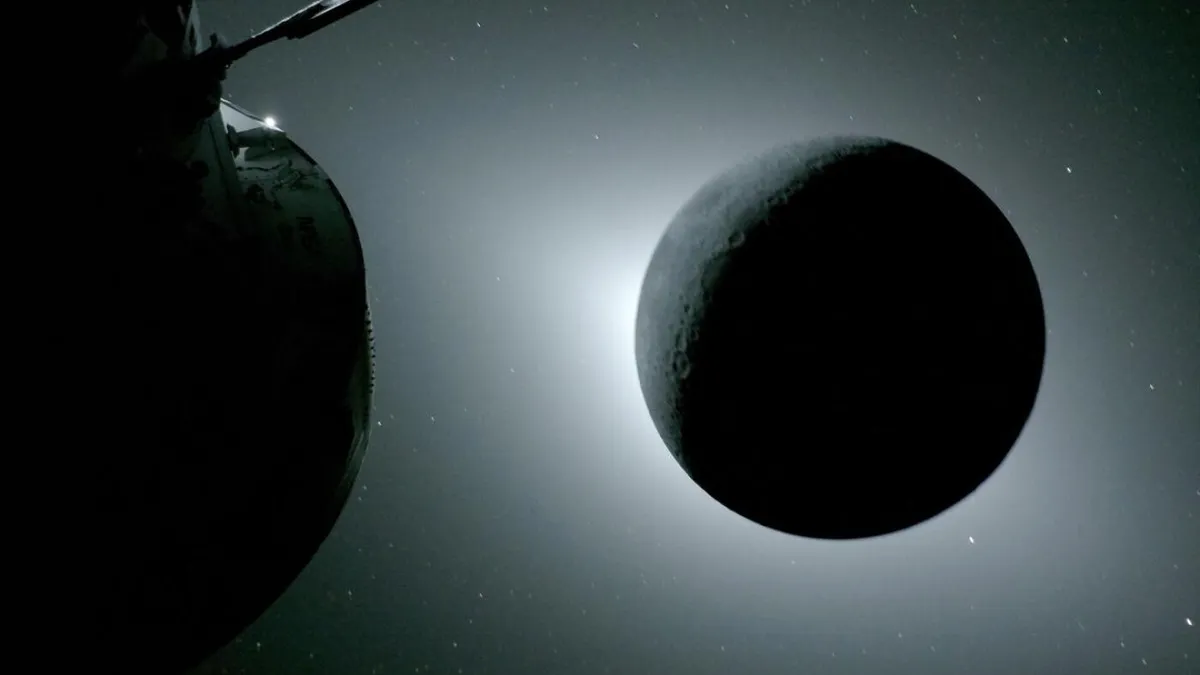
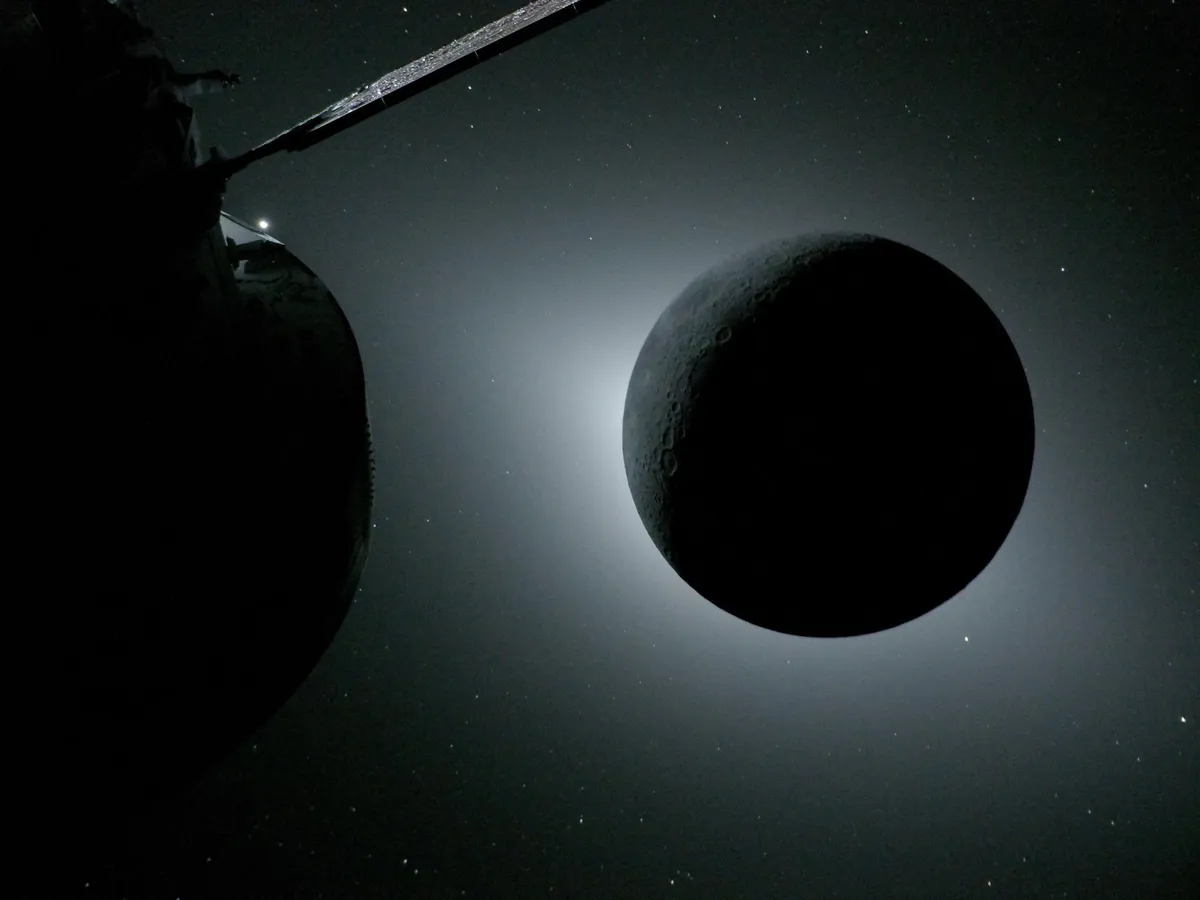
After emerging from behind the moon, the astronauts saw another amazing sight: a solar eclipse. For about an hour, they watched the moon block the sun. They saw quick flashes on the moon's surface from micrometeoroid impacts. Earthshine, a bluish glow from our planet, lit the moon. Wisps of the sun’s outer atmosphere, called the corona, appeared from behind the moon as the eclipse ended.
"No matter how long we look at this, our brains are not processing this image in front of us," Wiseman said. "It is absolutely spectacular, surreal."
Glover added, "Humans probably have not evolved to see what we’re seeing. It is truly hard to describe. It is amazing."

Here are some of the newest images sent back from space.