For nearly 20 years, astronomers have been squinting at a fuzzy map of dark matter made by the Hubble Space Telescope. Now they can finally see it clearly.
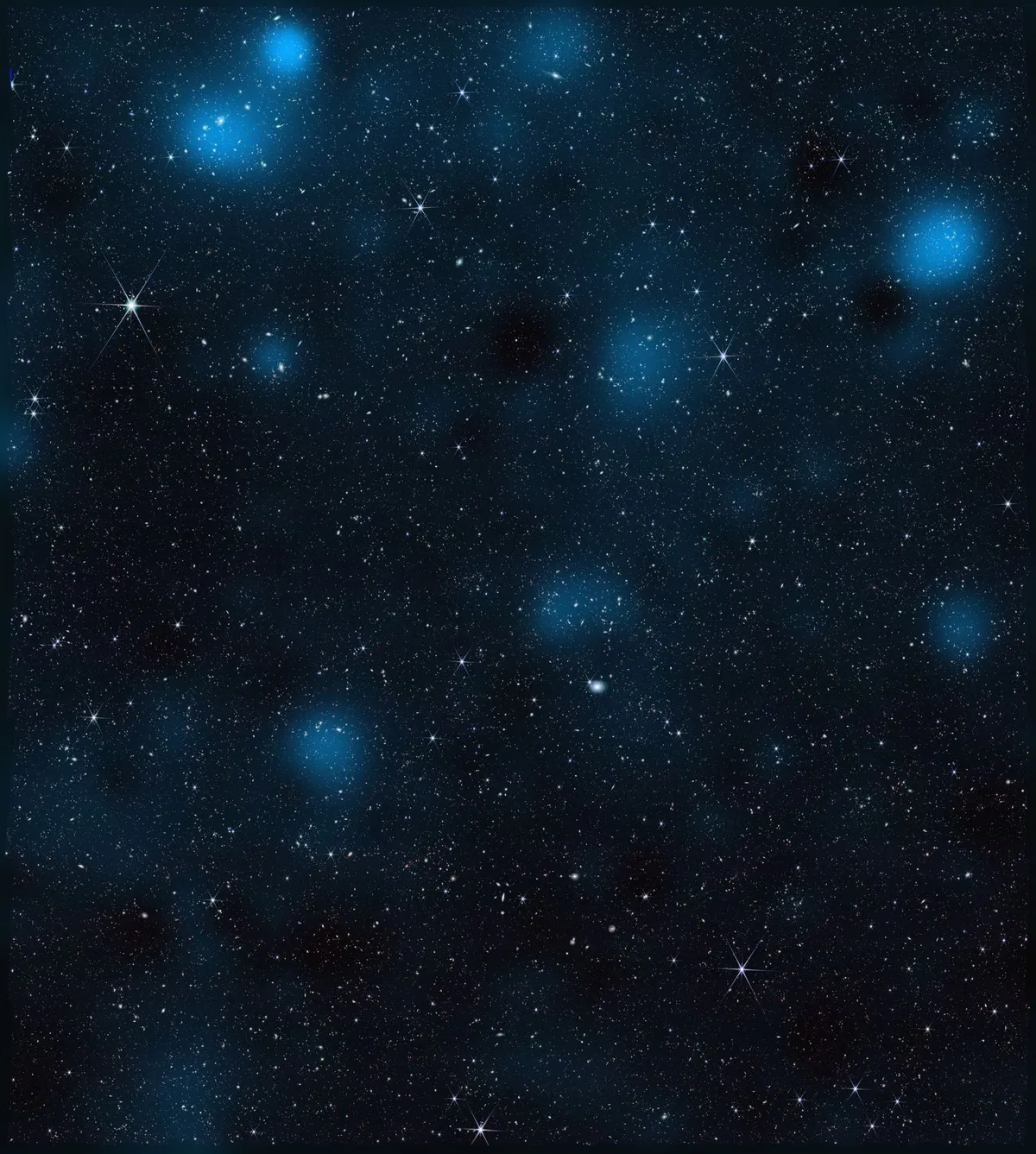
The James Webb Space Telescope spent 255 hours in 2023 and 2024 staring at the same patch of sky Hubble examined two decades ago. What it found: a dark matter map more than twice as detailed, revealing nearly 800,000 galaxies and the invisible scaffolding holding them together.
Here's what makes this matter. Dark matter makes up 85% of all the matter in the universe, yet we can't see it directly. It doesn't emit light, reflect it, or absorb it. We only know it's there because of gravity—the way it warps space and bends light from distant galaxies, like looking at the world through a funhouse mirror.
We're a new kind of news feed.
Regular news is designed to drain you. We're a non-profit built to restore you. Every story we publish is scored for impact, progress, and hope.
Start Your News DetoxThe technique is called gravitational lensing. When light from a distant galaxy passes through a clump of dark matter on its way to us, that dark matter's gravity bends the light slightly, distorting the galaxy's shape. By measuring how much the shape warps, astronomers can calculate how much dark matter sits between us and that galaxy. Do it for 800,000 galaxies at once, with sharper images than ever before, and you get a map that reveals structures previously hidden.
"It's the gravitational scaffolding into which everything else falls and is built into galaxies," says Richard Massey, a physicist at Durham University who worked on the study published in Nature Astronomy. "And we can actually see that process happening in this map."
JWST's advantage is simple: it sees fainter, more distant galaxies with sharper detail than any telescope before it. More galaxies means a denser grid of reference points. Sharper images mean more precise measurements of how their light gets bent. Put those together and you get a sharper map of the invisible universe.
The researchers aren't done yet. This map is just one patch of sky—detailed but small. NASA's Nancy Grace Roman Space Telescope, launching soon, will help generate larger dark matter maps across bigger portions of the universe, though at lower resolution. The goal is to understand not just where dark matter is, but how it shapes galaxy formation and evolution over cosmic time.
What astronomers learn from this map could reshape our understanding of how the universe works at the largest scales. It's the kind of incremental, unglamorous progress that moves science forward—better glasses for looking at the cosmos, revealing what was always there but invisible.