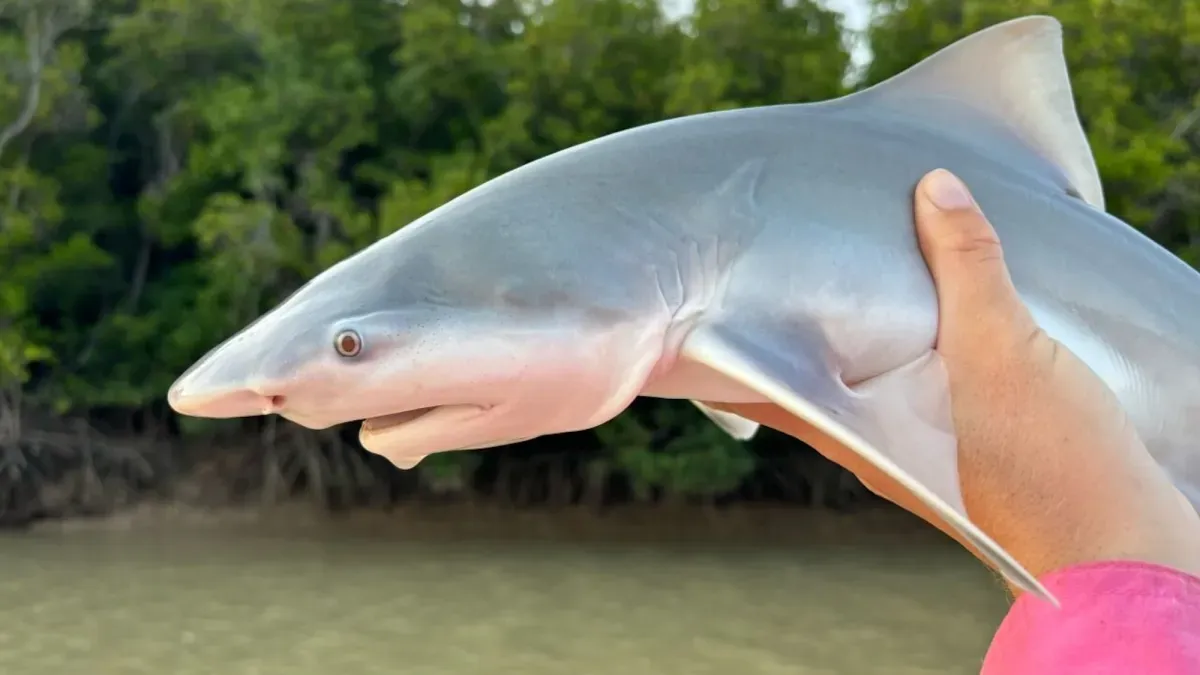
Combining lasers and sharks sounds like a rejected B-movie title, but Australian marine ecologists are using this surprisingly effective duo to save threatened species. Their target? The snub-nosed speartooth shark, a creature so elusive and vulnerable that scientists barely know how long it lives.
Turns out, a well-aimed laser beam can tell you more about a shark's life story than a detective with a magnifying glass. And it's all thanks to some fancy optical tech and geochemistry.
Shark Bones Don't Lie (With Lasers)
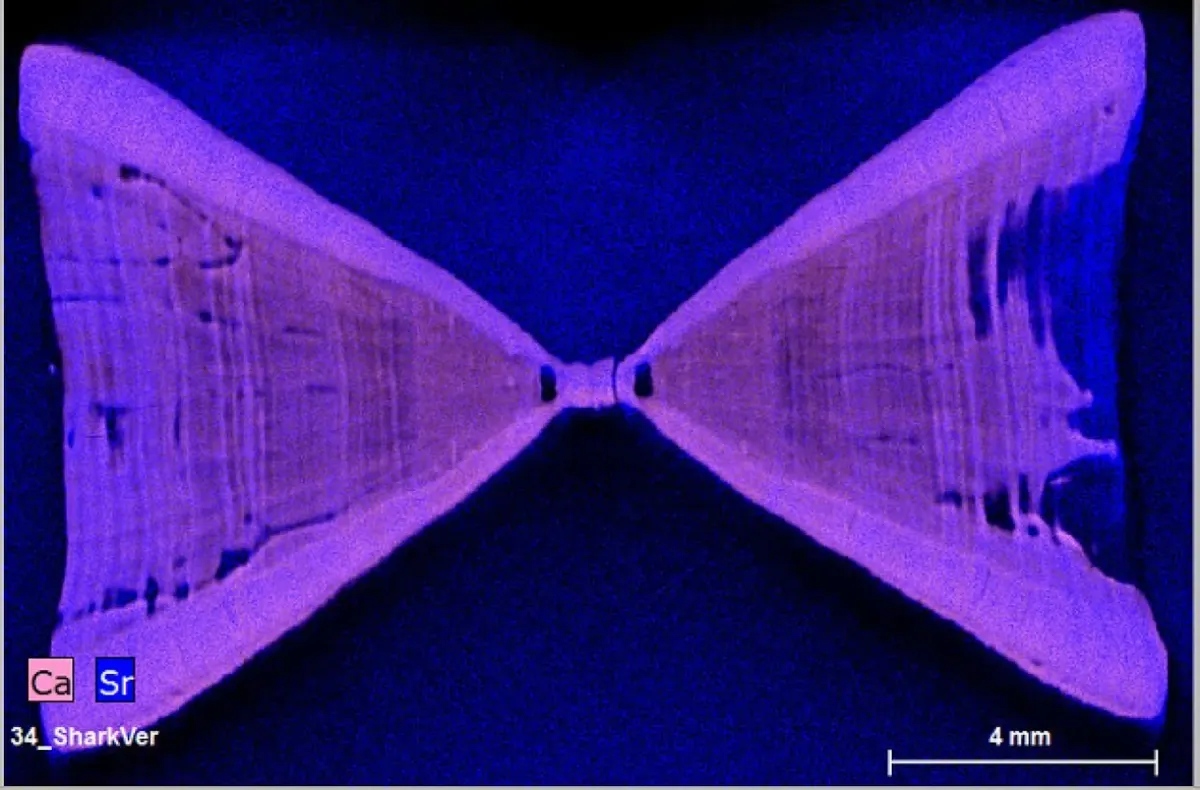
For years, scientists have been trying to figure out a shark's age the same way you'd age a tree: by counting rings. Sharks, like trees, have growth patterns in their vertebrae. Slice a spine thin enough, pop it under a microscope, and voilà — you've got an age estimate. One band, one year. Easy, right?
We're a new kind of news feed.
Regular news is designed to drain you. We're a non-profit built to restore you. Every story we publish is scored for impact, progress, and hope.
Start Your News DetoxNot so fast, say researchers at the University of Melbourne. That old method might be a bit... off for some species. Especially for the speartooth shark (Glyphis glyphis), a critically endangered species with only about 2,500 adults left roaming the rivers and estuaries of Australia and Papua New Guinea. When a species is that vulnerable, you want your data to be spot-on.
So, earth scientist Brandon Mahan and his team decided to get futuristic. They took samples from sharks that had, shall we say, retired from swimming (either naturally or from accidental fishing) and zapped them. Their weapon of choice: a focused laser beam, part of a technique called laser ablation inductively coupled plasma mass spectrometry (LA-MC-ICP-MS). It's a mouthful, but essentially, the laser turns a tiny bit of shark bone into a fine mist, which a mass spectrometer then analyzes. Think CSI, but for fish and ancient molecules.
The Shark's Geochemical Diary
This high-tech zapping allows them to create a geochemical fingerprint of the shark's life. Mahan points to strontium as an example. Strontium, an element, builds up in a shark's vertebrae. The amount of strontium reflects the levels in the water the shark was swimming in at the time. By comparing these readings with local rainfall records, the team could link the shark's bone composition and age to the region's wet and dry seasons.
What they found was a game-changer: the traditional ring-counting method was a less accurate way to estimate the age of speartooth sharks. Knowing a shark's true age is, as Mahan puts it, "crucial for monitoring population health and creating conservation plans." It's hard to save a species if you don't even know how long they're supposed to live.
So, next time you hear "shark lasers," don't picture supervillains. Picture scientists, quietly revolutionizing conservation, one precisely zapped vertebra at a time.