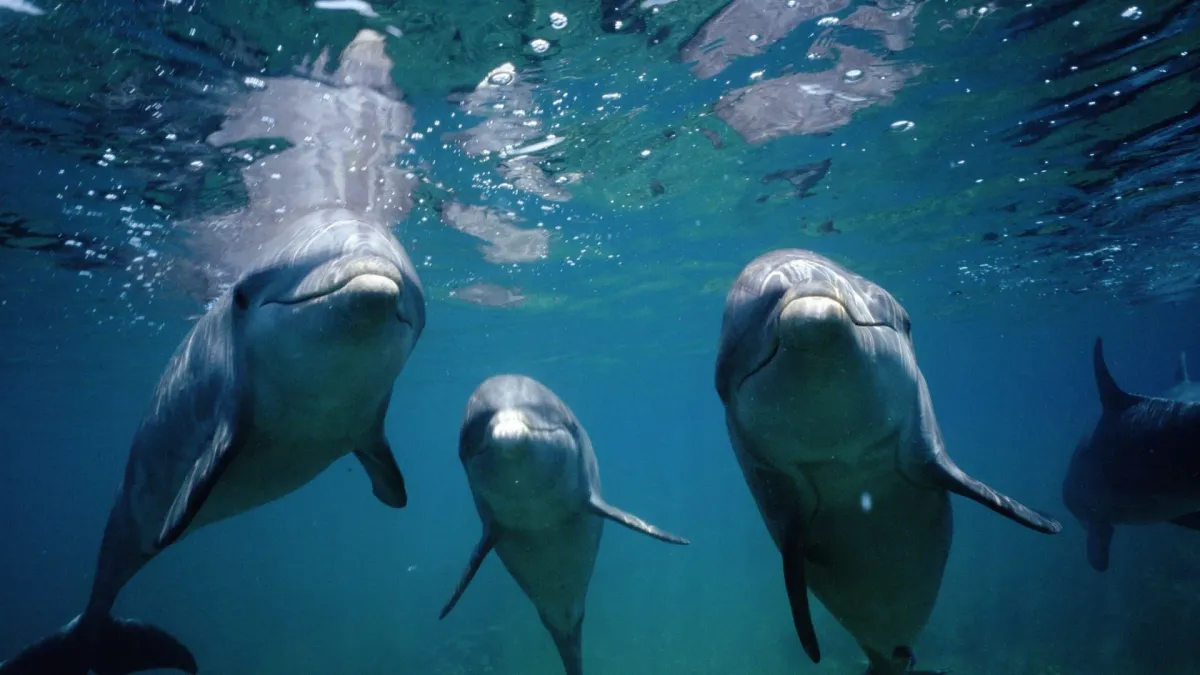
Researchers at Osaka University used supercomputer simulations to figure out how dolphins swim so fast and move so well. They looked at the swirling water patterns made by a dolphin's tail.
The simulations showed that dolphins move forward by creating huge, strong vortex rings in the water.
"We want to know which parts of the turbulent flow help dolphins swim quickly," said Yutaro Motoori, the lead author. "A supercomputer lets us simulate and break down the flow to see what's most important."
We're a new kind of news feed.
Regular news is designed to drain you. We're a non-profit built to restore you. Every story we publish is scored for impact, progress, and hope.
Start Your News DetoxHow Dolphins Use Water to Sprint
Experts have always known dolphins are fast, but the exact way they propel themselves was a mystery.
For many years, "Gray's Paradox" suggested that dolphin muscles couldn't possibly overcome water resistance. This led to a wrong idea that their skin had special anti-drag features. This new study solves the paradox. It shows the secret is in how water moves, not just in their biology.
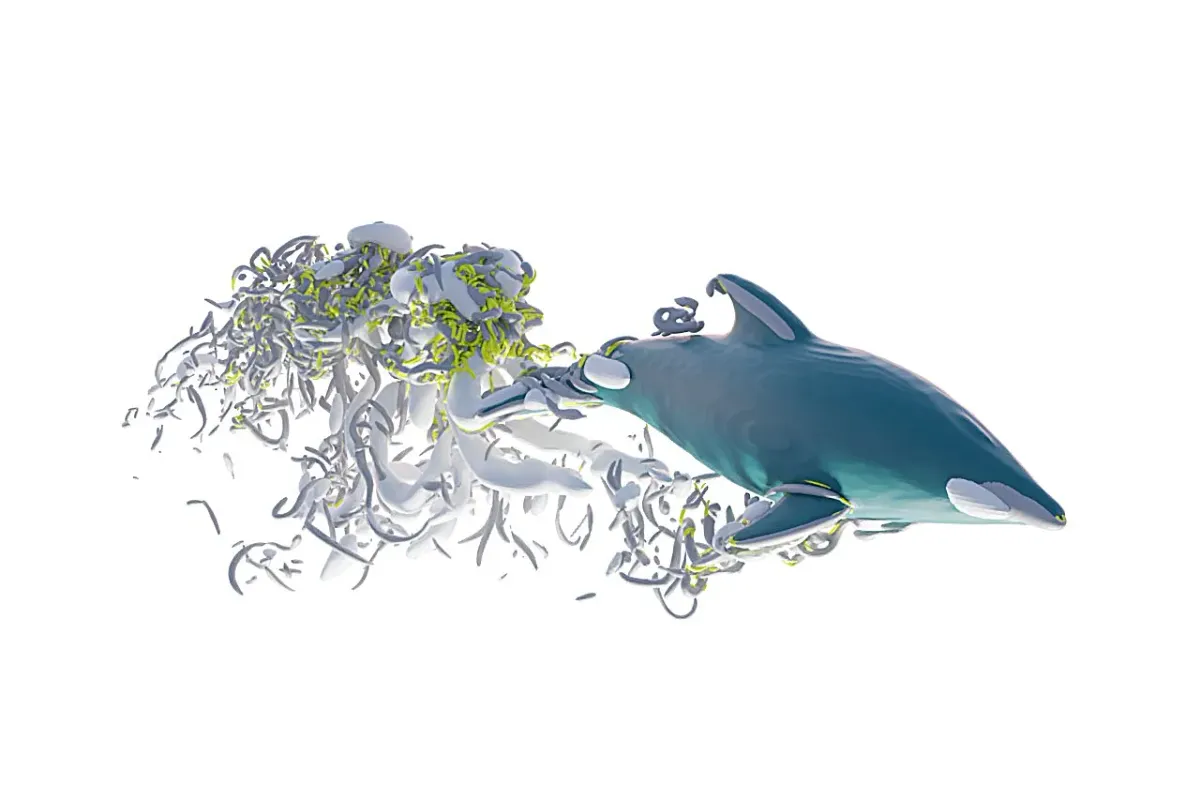
Dolphins push themselves by moving their tails up and down in a powerful kicking motion. This pushes water backward and creates a complex, turbulent wake. This movement makes a "hierarchy of vortices"—a mix of large, powerful swirls and smaller, chaotic ripples.
The many overlapping water patterns made it hard for scientists to find out which part of the flow caused the dolphin's amazing speed.
It turns out the answer was hidden in the complex, bubbly turbulence from their strong movements. The Osaka team used large computer simulations. They found that the dolphin's kick makes powerful, large vortex rings. The study shows that only the biggest of these vortices provides the actual push needed for speed.
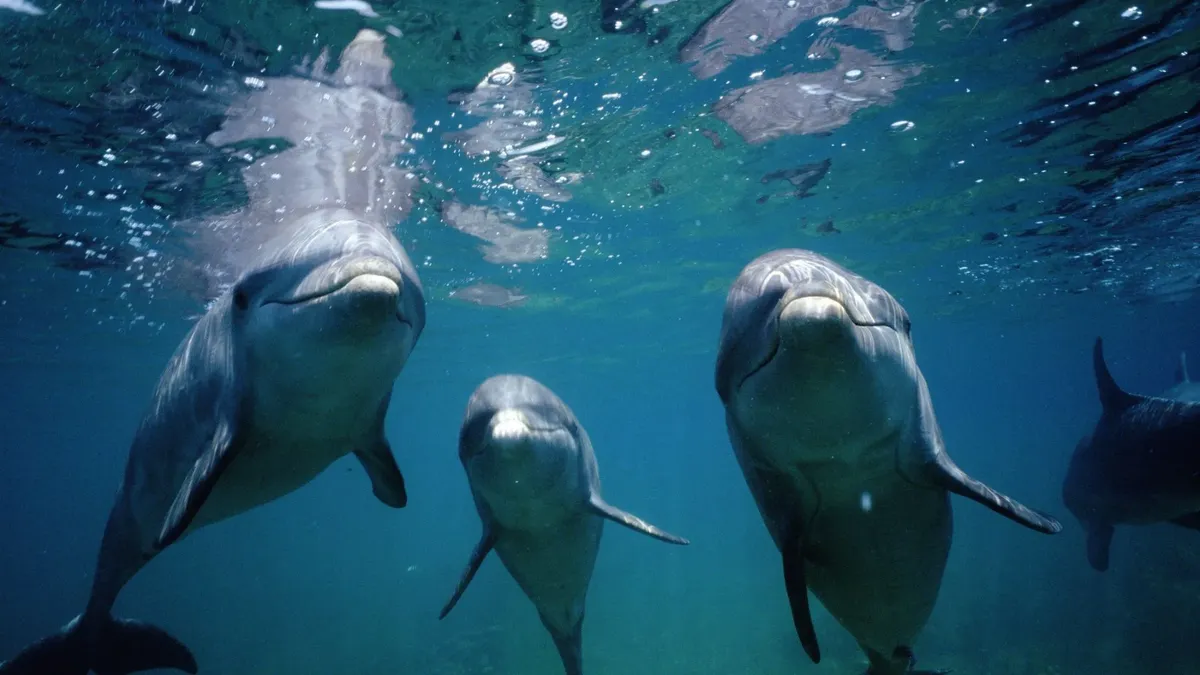
The researchers noted, "The simulations showed that the dolphin’s tail makes strong, large vortex rings that push water backward and create thrust. Then, these large vortices create smaller ones. Even though these smaller vortices are many, they don't help much with the dolphin's forward movement."
Supercomputer Power Reveals Secrets
Using powerful simulations, the researchers saw fluid motion in a way that's almost impossible with real-world experiments. This digital method allowed them to easily test different situations. It confirmed that the dolphin's propulsion works the same way at different swimming speeds.
This computer study gave a clear, controlled view of complex physics that real-world tests couldn't capture.
These discoveries about dolphin propulsion could help marine engineering in the future. They could lead to faster, more energy-efficient underwater robots and better systems for controlling turbulence.
Researchers can now use these biological "shortcuts" in human-made technology. They can isolate the specific ways dolphins create thrust.
While these practical uses are still to come, the study shows how physics can explore nature to solve old mysteries.
Deep Dive & References
Turbulence-mediated thrust and drag in dolphin swimming - Physical Review Fluids, 2024