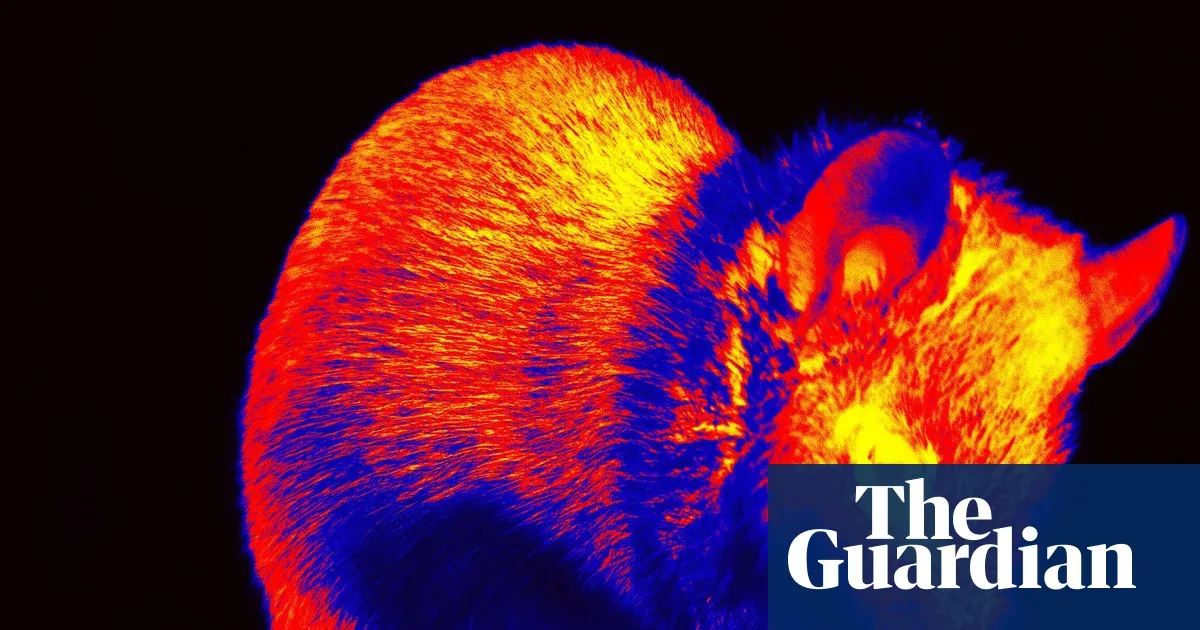
Scientists just decoded what's happening inside a mouse's brain when it watches the world—and they turned those electrical signals into grainy, pixellated video clips. The reconstructed footage is blurry and crude, but it shows exactly how mice processed videos of people doing gymnastics, riding horses, and wrestling.
It's a small window into animal perception, and it hints at something bigger: a way to finally answer questions we've never been able to ask. What do animals dream about? Are they fooled by optical illusions? Do they hallucinate?
"The nice thing with humans is you can just ask someone, what did you dream about?" said Dr Joel Bauer at the Sainsbury Wellcome Centre at University College London. "But we don't have that access with animals in the same way."
We're a new kind of news feed.
Regular news is designed to drain you. We're a non-profit built to restore you. Every story we publish is scored for impact, progress, and hope.
Start Your News DetoxReading the Visual Cortex
The breakthrough came from an AI program that won a recent competition to predict how neurons fire in a mouse's visual cortex based on what it's watching. Researchers used an infrared laser to record brain activity as mice watched 10-second video clips. Then they fed blank video into the AI and gradually adjusted the imagery until it matched the exact neural patterns they'd observed in the mice.
The result: a window into mouse vision. It's not pretty. Mice have worse eyesight than humans, so the reconstructed videos look like you're peering through a pinhole. But Bauer thinks they could make the footage roughly seven times sharper with more work. Eventually, researchers might even reconstruct an entire field of view by combining signals from both eyes.
The findings, published in eLife, are early-stage. But the implications are wild. This same approach is being developed for humans too—and that's where things get complicated.
The Privacy Question
Other research teams are working on reconstructing images from human brain scans. Theoretically, this could eventually let someone decode not just what you see, but what you imagine. What you think about in private. Bauer is cautious about where that leads.
"The risk in humans would be if you can reconstruct not what they see, but what they imagine," he said. "We don't necessarily want to share everything that's happening in our heads. The privacy of our neural data is important and will become more and more important."
For animals, though, Bauer sees only upside. This technology could answer decades-old questions about animal experience—whether they're fooled by the same visual tricks we are, what their dreams look like, even whether they hallucinate on psychedelic drugs. Down the line, he imagines, it might be possible to reconstruct not just what an animal sees, but the emotions attached to it. A kind of deep empathy, finally understanding what it's like to be a bat.
The work is still in its infancy, but as the technology sharpens, so does our ability to peek inside another mind.