Scientists have found something unexpected hidden in the DNA of some of our most distant relatives: a small cluster of genes that appears to have fundamentally changed how complex animals evolved.
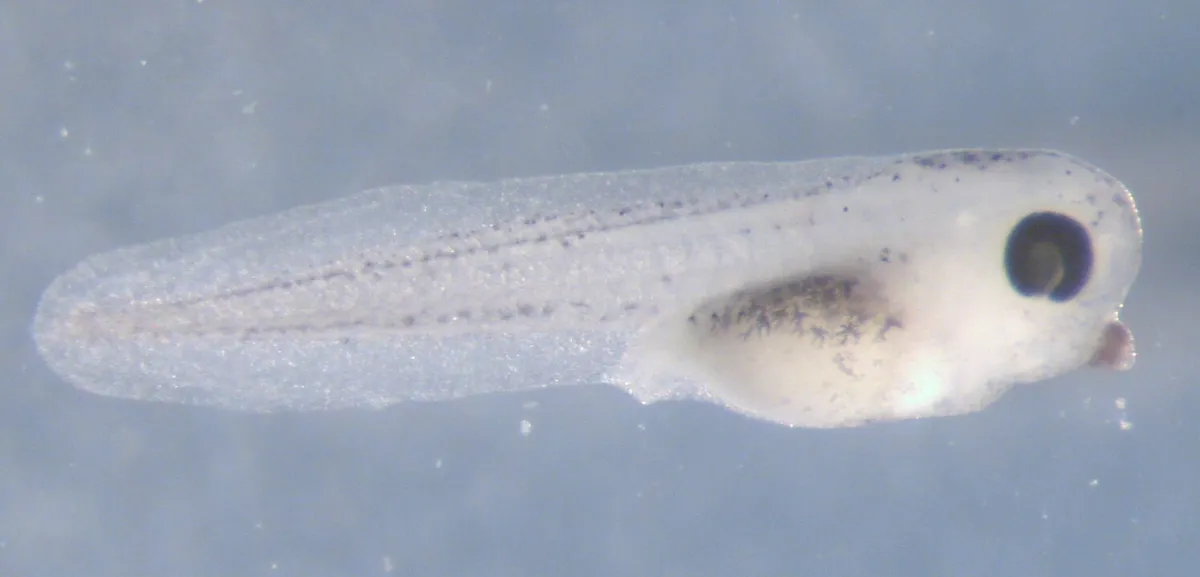
Researchers at the University of St Andrews studied three creatures that sit at crucial points in vertebrate history—sea squirts (which are invertebrates), lampreys (early vertebrates), and frogs (more modern ones). Using a new sequencing technique that can read long stretches of DNA, they discovered that certain "signaling output" genes—the ones that act like traffic controllers for cell communication—behaved in a strikingly different way in vertebrates compared to invertebrates.
The traffic controllers of life
Every cell in your body needs to talk to its neighbors. They do this through signaling pathways—chemical conversations that tell cells what to become, where to go, and what job to do. These pathways are ancient; they exist in sea squirts, in us, in fish, in everything with cells. But the output genes—the ones that actually execute the final decision—are what make the difference.
We're a new kind of news feed.
Regular news is designed to drain you. We're a non-profit built to restore you. Every story we publish is scored for impact, progress, and hope.
Start Your News DetoxIn sea squirts, each signaling output gene produces one main protein. Simple, straightforward. But in lampreys and frogs, the same genes were making multiple different versions of proteins from a single gene. This multiplying effect appears to have happened right at the evolutionary moment when invertebrates became vertebrates.
Why does this matter? Because these signaling pathways control how embryos develop, how organs form, how body complexity emerges. If vertebrates suddenly had the ability to generate more protein variations from the same genes, they could create more cell types, more tissue diversity, more complexity. It's like going from a simple instruction manual to one with dozens of footnotes and variations.
"It was very surprising to see how this small selection of very particular genes stands out," said Professor David Ferrier, who led the research. "It will be exciting to determine how these different protein forms work in distinct ways to generate the diversity of cell types we now see in vertebrates."
This discovery does something deeper than just explain our evolutionary past. These same signaling pathways and output genes are involved in disease. Understanding how they work—and how they went from simple to sophisticated—could eventually help researchers develop better treatments for conditions where these pathways go wrong.
The next step is figuring out exactly what each of these protein variations actually does inside a developing animal. That work has only just begun.