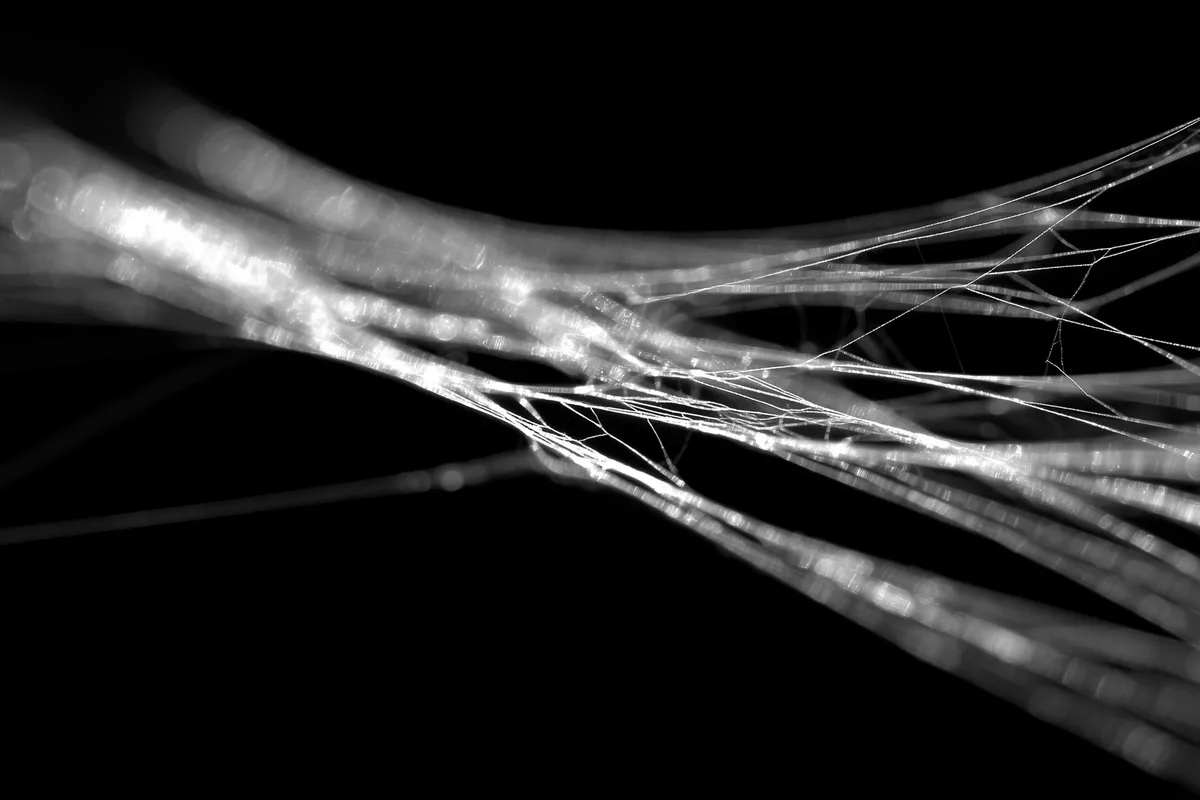
Spider dragline silk is stronger than steel by weight and tougher than Kevlar. For decades, scientists have watched spiders spin this material and wondered: how do they do it? A new study finally answers the question at the molecular level — and the answer opens doors far beyond the web.
Researchers from King's College London and San Diego State University have identified the precise chemical interactions that give spider silk its impossible combination of strength and flexibility. The work reveals that two amino acids — arginine and tyrosine — act like molecular stickers, repeatedly binding and releasing as the silk forms. These reversible connections allow the proteins to organize themselves into a structure that can both stretch and bear enormous loads without snapping.
"The potential applications are vast," says Chris Lorenz, who led the UK side of the research. "Lightweight protective clothing, airplane components, biodegradable medical implants, and even soft robotics could benefit from fibers engineered using these natural principles."
We're a new kind of news feed.
Regular news is designed to drain you. We're a non-profit built to restore you. Every story we publish is scored for impact, progress, and hope.
Start Your News DetoxUnderstanding how spider silk works has proven harder than it sounds. Spiders create the material inside a silk gland, where proteins exist as a dense liquid called "silk dope." As the spider spins, this liquid transforms into solid fiber — but the exact molecular steps that bridge this phase change have remained mysterious until now.
The team used molecular dynamics simulations, AlphaFold3 structural modeling, and nuclear magnetic resonance spectroscopy to trace the process atom by atom. What they found was surprising: spider silk relies on a deeply sophisticated molecular choreography. The same amino acid interactions that organize the silk also show up in human neurotransmitter receptors and hormone signaling.
This connection to human biology may matter more than the material science. "The way silk proteins undergo phase separation and then form ordered structures mirrors mechanisms we see in neurodegenerative diseases such as Alzheimer's," explains Gregory Holland, who led the US research team. "Studying silk gives us a clean, evolutionarily-optimized system to understand how this process can be controlled."
In other words, by studying how spiders build their webs, researchers may learn how to prevent the protein misfolding that damages the brain. The same reversible molecular stickers that make silk strong might help explain why those stickers sometimes fail in disease — and how to fix them.
The research was published in the Proceedings of the National Academy of Sciences in 2025. The next step is moving from understanding to engineering: can scientists replicate these molecular interactions in synthetic fibers, and can those fibers match what a spider produces in seconds.