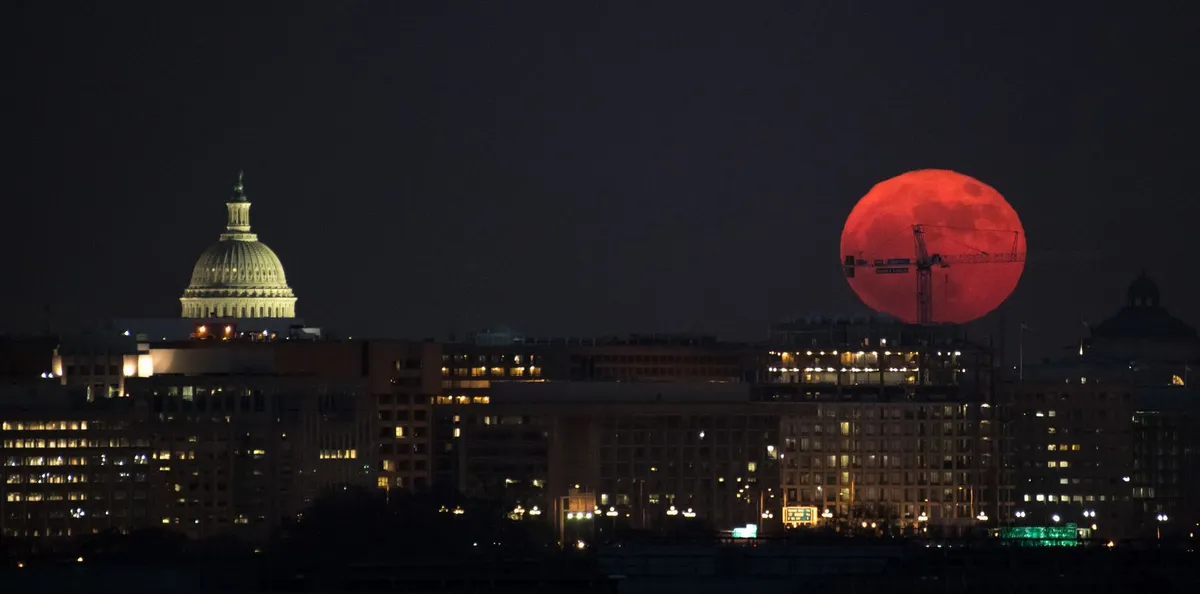
The first weekend of 2026 offers something rare: a supermoon at maximum brightness and the Quadrantid meteor shower peaking on the same night. The wolf supermoon reaches its brightest on Saturday, January 3 at 5:03 A.M. Eastern time, while the Quadrantids fire across the sky that same evening into Sunday morning. Both are visible without equipment, though they'll be competing for your attention.
The catch is real. A full supermoon can wash out fainter meteors—it's roughly 30 percent brighter than an ordinary full moon, though the difference is hard to notice with your eyes alone. "The biggest enemy of enjoying a meteor shower is the full moon," says Mike Shanahan, planetarium director at Liberty Science Center. But this isn't a reason to skip it. It's a reason to be strategic.
How to Actually See Them
Head out early in the evening, before the moon climbs high, to somewhere away from city lights. The early dawn hours of Sunday offer another window. NASA suggests lying flat on your back with your feet pointing northeast, then letting your eyes adjust for about 30 minutes—that's when the streaks become visible. You might spot five Quadrantid meteors per hour at peak, some leaving persistent trails that glow for a few seconds after they burn out.
We're a new kind of news feed.
Regular news is designed to drain you. We're a non-profit built to restore you. Every story we publish is scored for impact, progress, and hope.
Start Your News DetoxThe Quadrantids are unusual. Most meteor showers come from comets, but these originate from an asteroid discovered in 2003—or possibly a "dead comet" or an entirely new type of space object. Either way, what you're seeing is cosmic debris colliding with Earth's atmosphere at medium velocity, burning up and creating those colorful tails.
The wolf moon gets its name from January's traditional association with hungry wolves howling during winter scarcity, though the name is mostly folklore now. What's certain is that this supermoon is the last in a series that began in October. The next one won't arrive until November 24, making this weekend the final chance for months to see the moon at its closest and brightest.
Best viewing is from the Northern Hemisphere. Look toward the end of the Big Dipper's handle, and you might also catch fireballs—larger, longer-lasting bursts of light that are even more striking than regular meteors. The supermoon will dominate the sky if you're not careful, so timing matters. Early evening or early morning gives you the best shot at both events.