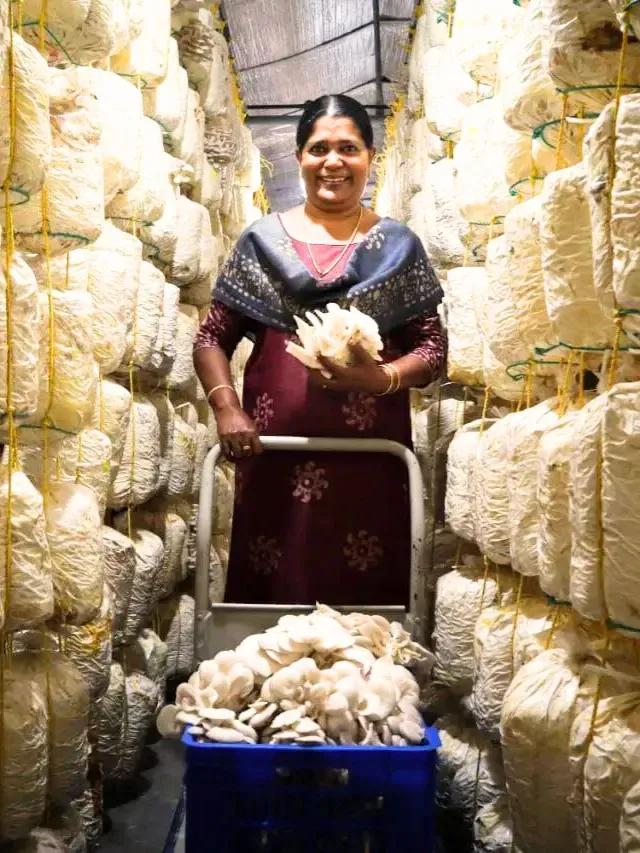
Jithu Thomas was 19 when he first planted mushroom seeds in a packet at home in Ernakulam, Kerala. His mother Leena joined him. Fourteen years later, they're harvesting 100 kilograms a day and earning Rs 35,000 to Rs 40,000 daily from what started as a corner of their house.
What made the difference wasn't a business degree or family farming background. Jithu finished post-graduation in social work, worked for an NGO, and learned mushroom cultivation through a training course at KVK (Krishi Vigyan Kendra) Kumarakom and self-study. When he realised the market demand was real, he made the leap to full-time farming.
Today, Leena's Mushroom Farms sprawls across 5,000 square feet near their home in Piravom. The operation is precise by necessity. Mushrooms need carefully controlled climates — the temperature must stay above 30 degrees Celsius. Jithu designed the growing rooms so efficiently that they fit 20,000 beds in a space where standard setups would hold only 5,000. The farm survived two floods and the pandemic by applying what he'd learned: effective planning and scientific method.
We're a new kind of news feed.
Regular news is designed to drain you. We're a non-profit built to restore you. Every story we publish is scored for impact, progress, and hope.
Start Your News Detox
The mushrooms are packed in 200-gram packets and sold at Rs 80 each to vegetable shops, supermarkets, and bakeries within a 30-kilometre radius. Beyond fresh produce, they also sell seeds to other farmers starting out. Jithu trains beginners at government institutions, quietly building the ecosystem that helped him succeed.

What's striking here isn't just the numbers. It's that this works because Jithu treated the first six months as a real trial period — not a hobby to abandon at the first setback, but not a full commitment before he knew it could work. He watched videos, attended workshops, chose oyster mushrooms because they grow fast and reliably. He learned from people who'd already done it. Then he scaled thoughtfully.

For anyone considering mushroom farming at home, the path is clearer now: source quality seeds from experienced farmers or verified online sellers, start with oyster varieties, give yourself six months to learn before scaling up, and find training through local government programmes. Jithu's example suggests the real advantage isn't access to land or capital — it's patience, method, and the willingness to learn from people who've already figured it out.