Your hard drives will be obsolete in 50 years. The data centers humming across the planet right now — the ones consuming enough electricity to power small countries — might one day fit inside a molecule.
Scientists have just moved that possibility from "someday" to "within reach." Two new studies show that DNA, the molecule that's been quietly storing the blueprint for life for billions of years, can do something else entirely: store humanity's data with a density and durability that makes today's storage technology look primitive.
The problem DNA solves
We're drowning in data. Every second, we create roughly 2.5 quintillion bytes of it — from your Netflix history to satellite imagery to medical scans. The servers storing all this information are energy hogs, they degrade over time, and they take up enormous physical space. We need something better. DNA offers something almost absurd: a single gram of it can theoretically hold 215 petabytes of data. For context, that's about 1,000 times the entire Library of Congress, compressed into something you can barely see.
We're a new kind of news feed.
Regular news is designed to drain you. We're a non-profit built to restore you. Every story we publish is scored for impact, progress, and hope.
Start Your News DetoxThe catch? Reading DNA has always been slow and expensive. You have to sequence it — chemically decode each letter of the genetic alphabet — which takes time and money. Researchers at the University of Illinois and collaborating institutions just found a way around that problem.
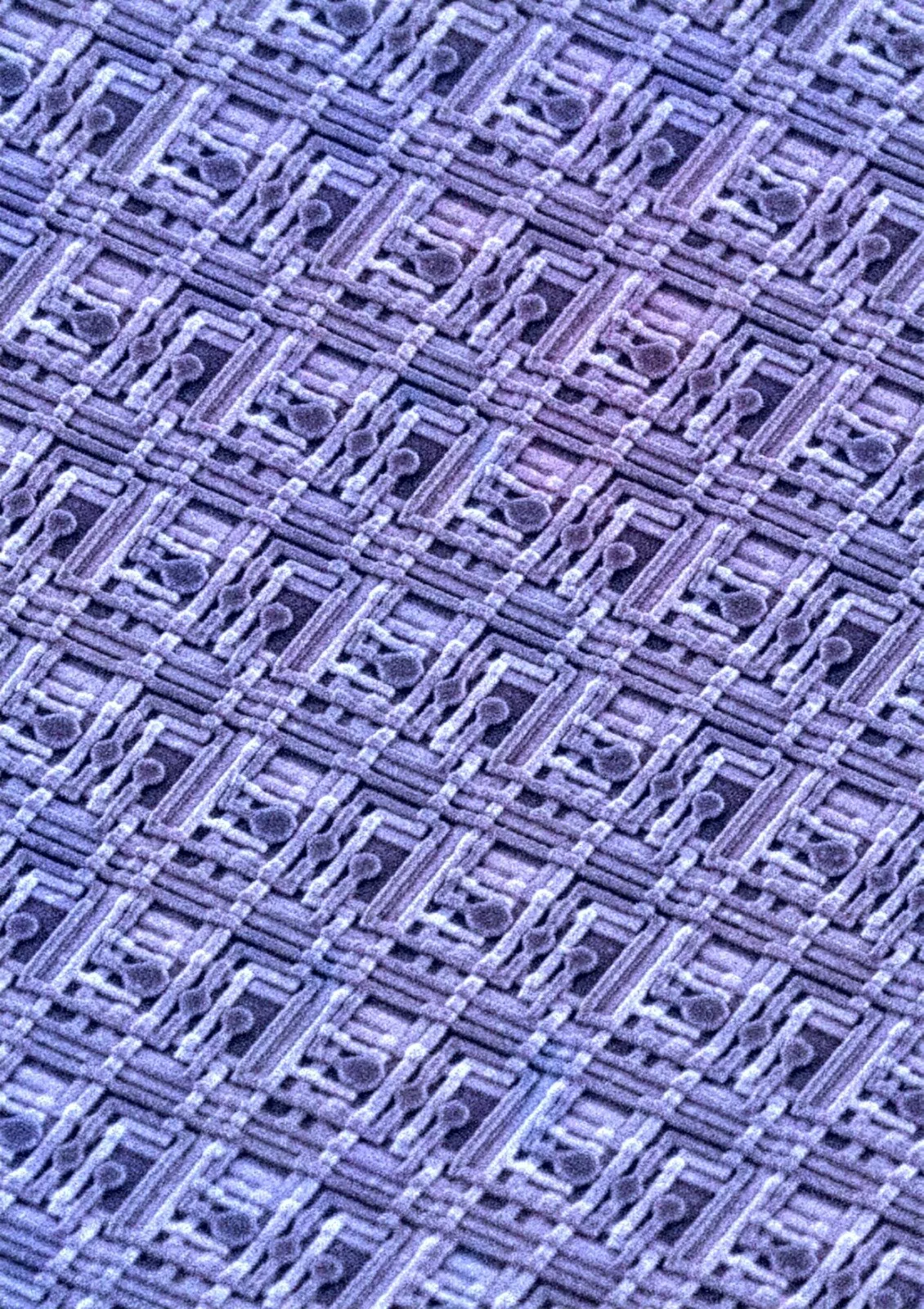
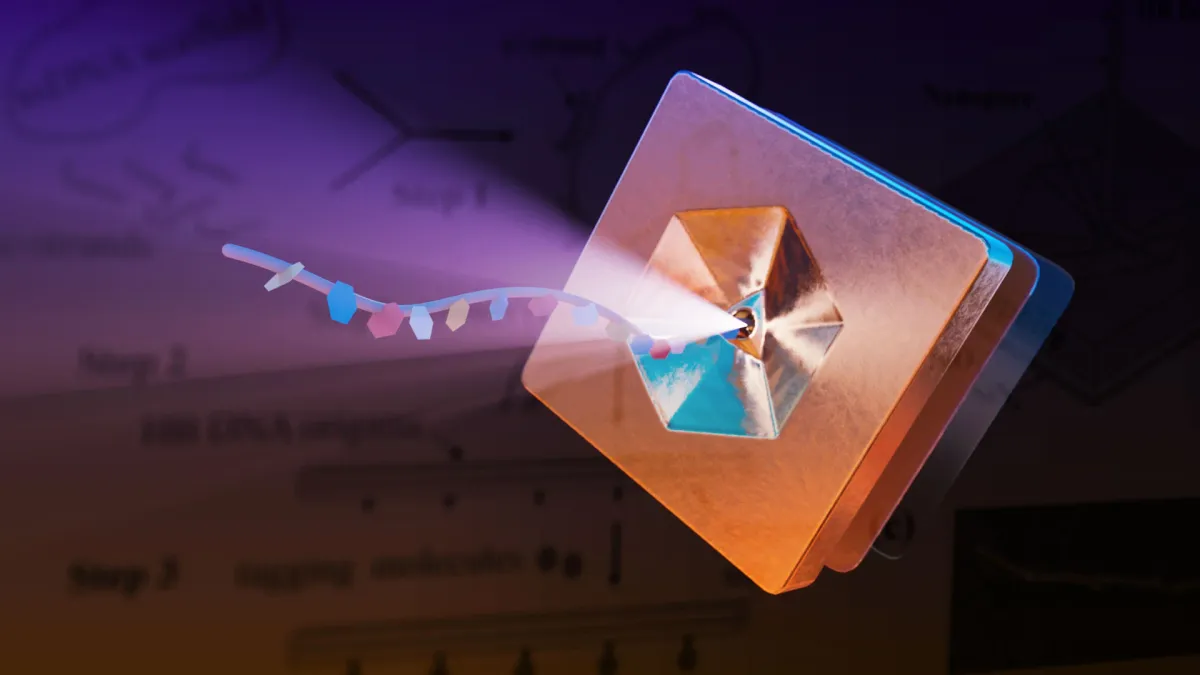
Instead of relying on genetic sequencing, they created tiny, folded DNA structures — origami-like arrangements of DNA strands — and used their physical shape as the information carrier. When these nanoscale structures pass through a sensor, they produce electrical signals that a machine learning algorithm can read instantly. Think of it like reading the shape of letters rather than analyzing their molecular composition. The system works with remarkable accuracy, reconstructing text and messages without needing to chemically decode anything.
Security written into molecules
But storage is only half the problem. The second study tackles something equally critical: how do you keep sensitive information actually secret at the molecular level.
The team designed DNA structures where information isn't just stored — it's encrypted into the three-dimensional arrangement of the strands themselves. Without the right decoding framework and microscopy tools, the patterns are meaningless noise. It's security built into the molecule's geometry. To read it, you need advanced super-resolution microscopy and machine learning software trained on the exact patterns. Unauthorized access becomes exponentially harder because the number of possible molecular codes is essentially infinite.
What makes this elegant is that DNA doesn't care about temperature swings, radiation, or time. Researchers recovered intact DNA from Greenland ice dating back roughly 2 million years. Your hard drive will fail in a decade. DNA might preserve data for millennia.
What this means
Right now, this is still laboratory work. We're not uploading Netflix to DNA anytime soon. But the trajectory is clear: a storage medium that's smaller, more durable, more secure, and potentially cheaper than anything we have. Medical records archived for centuries. Scientific datasets preserved through climate catastrophe. Cultural heritage stored in a format that outlasts the civilizations that created it.
The research points to something deeper too — a convergence between biology and information technology. We're learning to treat DNA not as a biological molecule but as an engineering platform. That shift opens doors we're only beginning to understand.