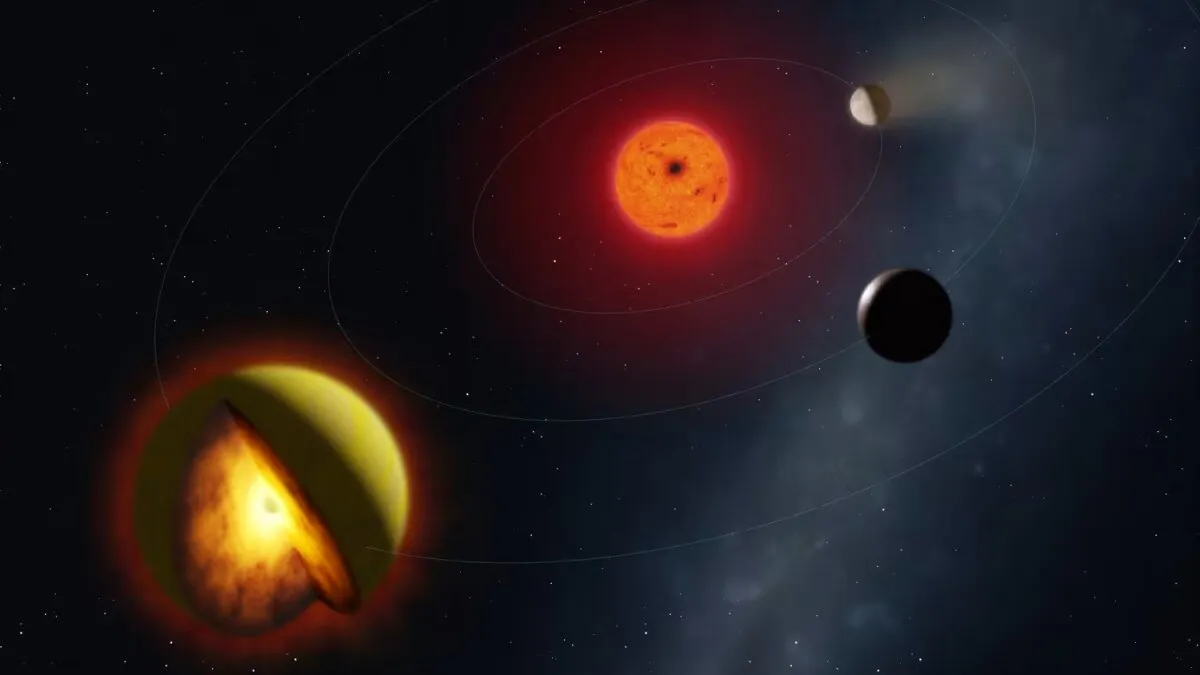
Mercury, the solar system's smallest planet, has always been a bit of an enigma. It's got an iron-poor, sulfur-rich crust and is the most chemically "reduced" planet out there, meaning its substances are constantly gaining electrons. Basically, it's not like us.
"Mercury's surface looks completely different than Earth's," says Rajdeep Dasgupta, a professor at Rice University. Which, if you think about it, is a pretty polite way of saying all our Earth-based assumptions about volcanism were probably dead wrong. So, how do you study a planet that's so… other?
Turns out, you bring a piece of it to the lab.
The Ancient Rock That Holds Mercury's Secrets
Enter the Indarch meteorite. This rock, which dramatically fell in Azerbaijan way back in 1891, has a chemical makeup so eerily similar to Mercury's that scientists basically consider it a long-lost cousin. It's as chemically reduced as Mercury's rocks and is thought to be a potential building block of the planet itself. Talk about a cosmic coincidence.
We're a new kind of news feed.
Regular news is designed to drain you. We're a non-profit built to restore you. Every story we publish is scored for impact, progress, and hope.
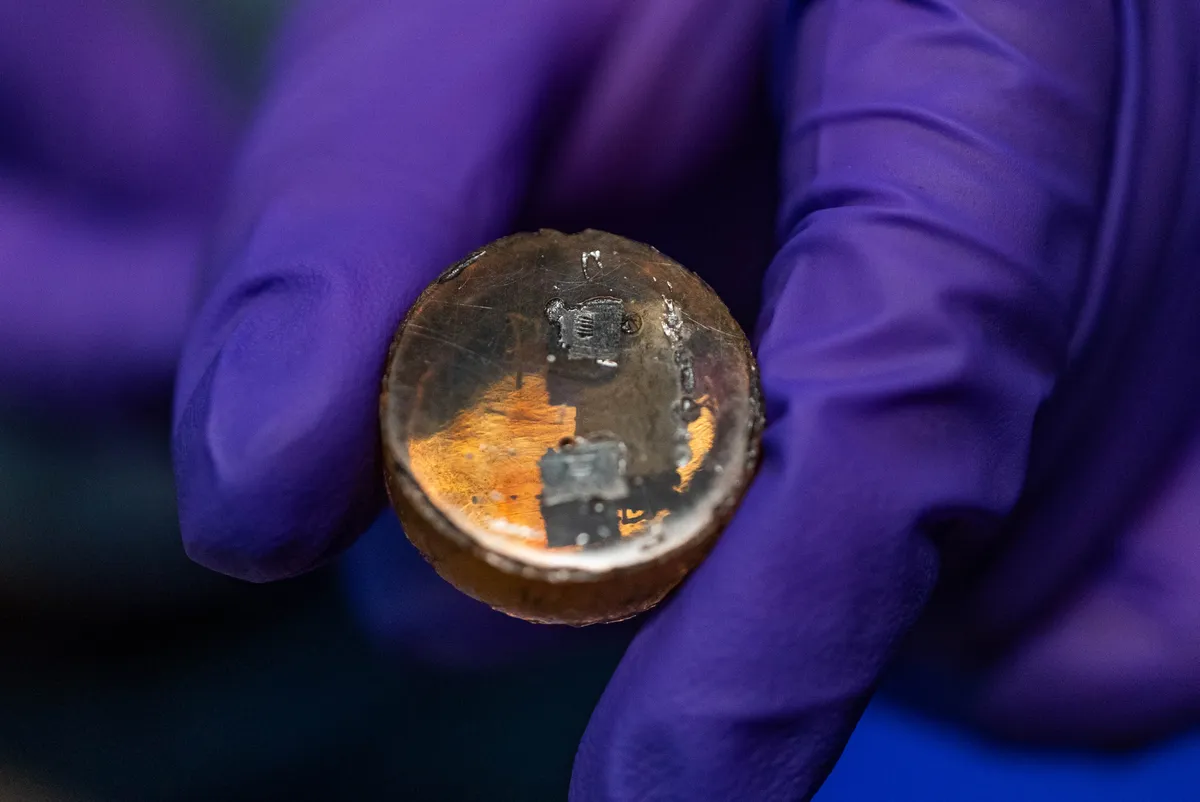
Start Your News Detox"Cooking a rock can show us what happened chemically inside of Mercury," explains Yishen Zhang, a postdoctoral researcher who basically became a planetary chef. He took the Indarch meteorite's ingredients, popped them into a tiny glass vial, and then cranked up the heat and pressure to mimic Mercury's brutal environment. The goal? To see how magmas form and behave under those very specific, very un-Earth-like conditions.
Sulfur: Mercury's Secret Sauce
What Zhang discovered is that sulfur, in Mercury's unique low-iron, high-sulfur, reduced state, does something wild: it lowers the temperature at which molten rock starts to crystallize. This means Mercury's sulfur-rich magmas can stay gooey and molten at temperatures where Earth's equivalent would already be solidifying. Your lava lamp, but on a planetary scale.
On Earth, sulfur loves to cozy up to iron. But with Mercury's iron deficiency, sulfur has to find other dance partners, like magnesium and calcium. And here's the kicker: on Earth, these rock-forming elements usually bond with oxygen, creating a strong, stable network. But when sulfur steps in for oxygen on Mercury, that network weakens. The whole thing crystallizes at a much lower temperature.
"These experiments show that Mercury likely formed with sulfur taking a structural position that oxygen holds on Earth," Zhang notes. Which fundamentally changes how the planet's mantle solidified. Let that sink in: a tiny change in atomic seating arrangements, and you get a whole different planet.
Dasgupta sums it up perfectly: "What water or carbon does to Earth's magmatic evolution, sulfur does on Mercury." It's a fascinating reminder that in the grand cosmic scheme, our planet's rules are just that: our planet's rules. Everywhere else, the universe is just making it up as it goes along. And sometimes, a 133-year-old rock holds the key.