Remember the thymus? Probably not. Most scientists didn't either, assuming this little organ in your chest basically clocked out after puberty. Turns out, it's been quietly pulling overtime, and a pair of new studies just gave it a much-deserved promotion.
Researchers at Mass General Brigham, armed with some serious AI, decided to take a fresh look. They scanned thousands of CT images and found something rather intriguing: adults with a "healthier" thymus were living longer, healthier lives. We're talking lower risks of heart disease, cancer, and generally defying the odds.
Because apparently, your thymus isn't just a childhood one-hit wonder. It's still in the business of training T cells, those tiny immune system warriors that keep infections and diseases at bay. And if your thymus is doing its job, your T cells are diverse and ready for anything. If it's not? Well, things get a bit dicier.
We're a new kind of news feed.
Regular news is designed to drain you. We're a non-profit built to restore you. Every story we publish is scored for impact, progress, and hope.
Start Your News DetoxThe Unsung Hero of Your Immune System
For decades, the thymus was the organ equivalent of that reliable character actor everyone recognizes but can't quite name. It shrinks with age, makes fewer new T cells, and was largely dismissed as irrelevant in adulthood. But Dr. Hugo Aerts, who led these studies, thinks we've been missing a trick.
His team's first study crunched data from over 25,000 adults in a lung cancer screening program and another 2,500 from the Framingham Heart Study. They measured the thymus's size, structure, and makeup to create a "thymic health" score. The results? People with higher scores had a roughly 50% lower risk of death overall, a 63% lower risk of dying from heart disease, and a 36% lower risk of lung cancer. Let that satisfying number sink in.
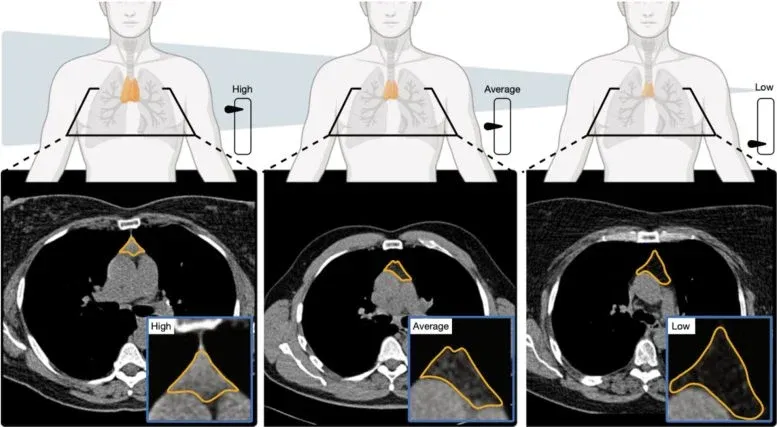
These findings held true even after accounting for age and other health factors. It suggests that a robust thymus isn't just a byproduct of good health; it might be a contributor to it.
Then came the second study, which looked at over 1,200 cancer patients undergoing immunotherapy. This treatment relies on the body's own immune system to fight cancer. The patients with better thymic health had a 37% lower risk of their cancer worsening and a 44% lower risk of death. Which, if you think about it, is both impressive and slightly terrifying that we've overlooked this for so long.
So what affects thymic health? The studies hinted at some usual suspects: ongoing inflammation, smoking, and higher body weight were all linked to a less-than-stellar thymus. It seems our lifestyle choices might be impacting this unsung immune hero more than we realized.
While these studies are just the beginning, they suggest that giving the thymus the attention it deserves could open up new avenues for preventing disease and boosting our immune defenses as we age. Because who doesn't want to live longer, just by giving a forgotten organ a little love?